qixinwei-pcba


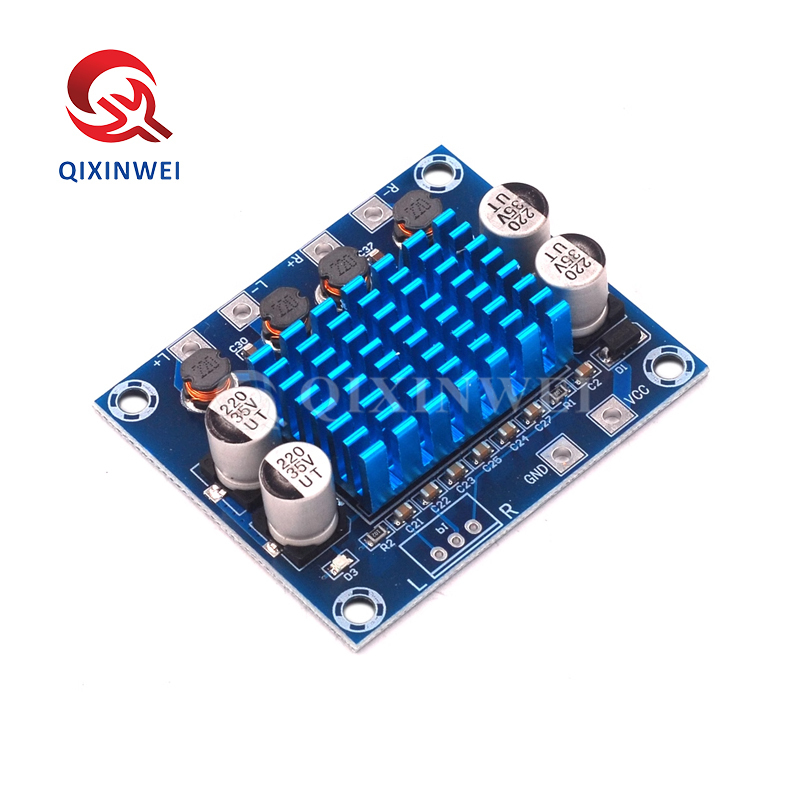
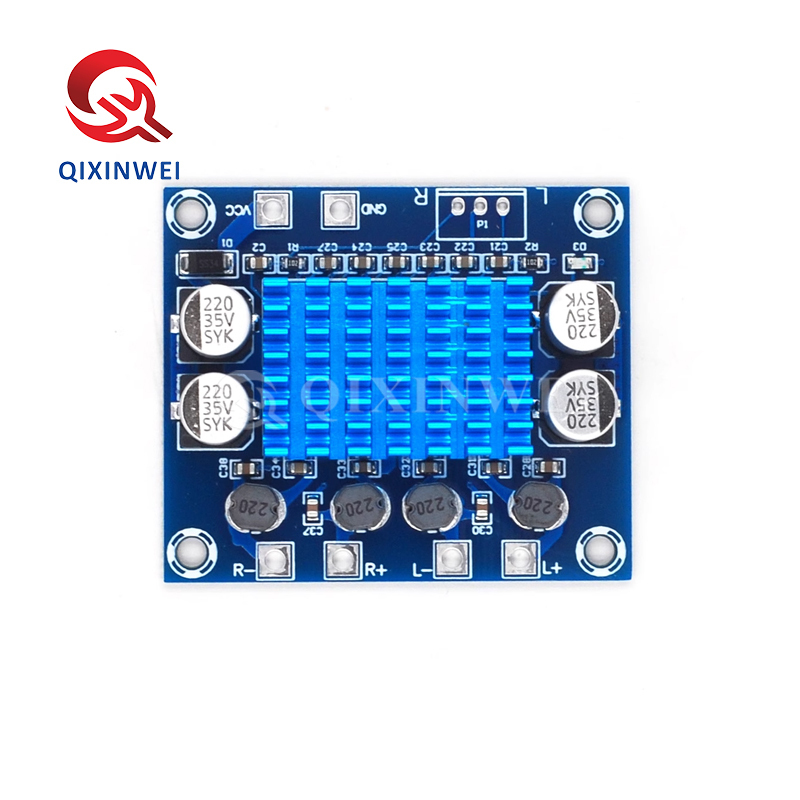
XH-A232 TPA3110 2x30W Digital Amplifier Board – DC8-26V Stereo Class D Module
XH-A232 TPA3110 2x30W Digital Amplifier Board Application Features
Core Chip
◆ Amplifier IC
TPA3110 (Texas Instruments Class D digital amplifier)
◆ Technical Advantages
BTL bridge circuit for higher efficiency, low idle loss, stable and fast operation
◆ Audio Quality
High-definition digital audio amplification for Hi-Fi sound
Onboard Features
◆ Input Sensitivity
Onboard preamp IC for enhanced input sensitivity and HD sound quality
◆ Circuit Design
High-quality components, no solder joints on back, integrated chip capacitors to prevent short circuits
Applications
◆ PC Speakers
Upgrade original speaker sound, computer multimedia audio
◆ Car Audio
Direct DC12V vehicle power for car audio upgrades
◆ DIY Desktop Amps
Home theater, bookshelf speaker amplifier projects
◆ DIY Mini Speakers
Core amplifier module for portable speaker projects
◆ Other Uses
PC audio, multimedia, surround sound speakers
Key Advantages
◆ High-Quality Sound
Class D digital design with 100dB SNR, clear and loud sound
◆ Wide Voltage Range
DC8-26V input compatible with 12V and 24V power supplies
◆ Compact Size
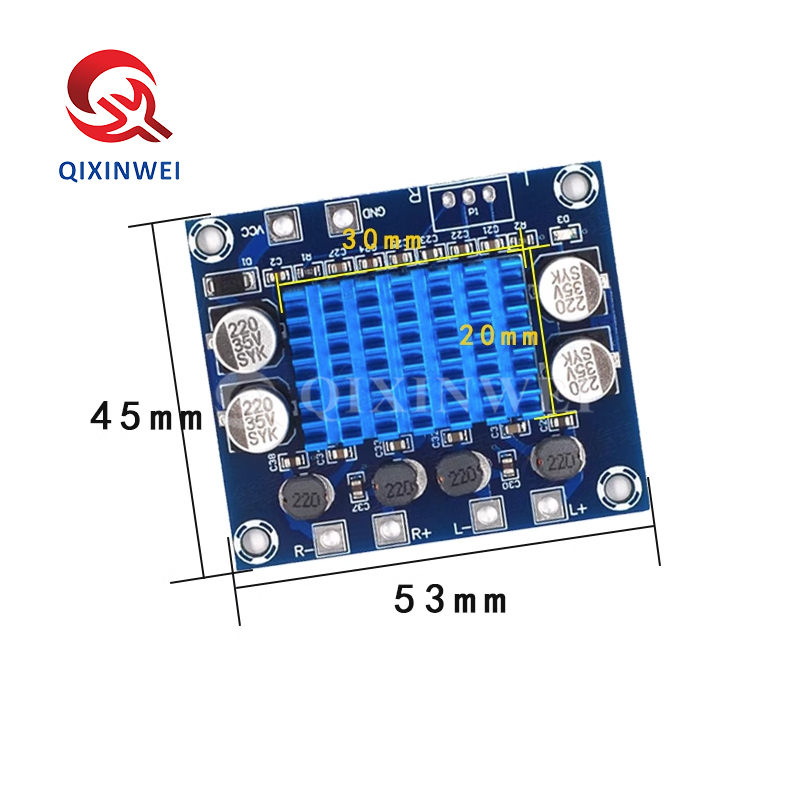
53×45×14mm fits easily into any chassis
◆ Plug-and-Play
Simple wiring, no complex setup required
◆ Reliable Design
No back-side solder joints to prevent short circuits
Why Choose QIXINWEI
Years of experience in the electronics industry. Trusted by global customers.
Massive In-Stock Inventory – Ready to ship promptly
BOM Matching Service – One-stop solution, save time
PCBA Customization – Professional engineering team creates tailor-made solutions based on your needs
Cost-Effective & Efficient – Better channel, better cost
A dedicated team makes your procurement smoother.
Contact us for BOM quotes or PCBA inquiries







FAQ:
What is the XH‑A232 TPA3110 stereo amplifier board and its key specifications?
This board is a 2.0 stereo Class‑D audio amplifier module built around the Texas Instruments TPA3110D2 chip. It delivers efficient, low‑distortion sound in a very compact form factor. Key specifications: operating voltage 8 V – 26 V DC (24 V recommended for full power), rated output power up to 2 × 30 W into 4 Ω (at 24 V, 1% THD+N) or 2 × 15 W into 8 Ω, efficiency > 90 %, switching frequency 250 kHz, and built‑in over‑current, over‑temperature, and DC protection. The board includes an on‑board volume potentiometer, screw terminals for power and speakers, and a 3.5 mm stereo input jack. It is a popular choice for DIY portable speakers, USB‑powered audio projects, and small sound systems.How do I connect the XH‑A232 to speakers, a power supply, and an audio source?
Wiring is very simple. Power input: connect a DC supply (8 V – 26 V, at least 2 A for full power) to the screw terminals labelled VCC (+) and GND (-). Speaker outputs: connect the left speaker to L+ and L‑, and the right speaker to R+ and R‑. The board supports 4 Ω – 8 Ω speakers; 4 Ω yields maximum power, while 8 Ω runs cooler. Audio input: a 3.5 mm stereo jack accepts standard line‑level signals (phone, MP3 player, Bluetooth receiver). The on‑board volume potentiometer adjusts the output level; no external preamp is needed.What power supply do I need for the XH‑A232 TPA3110 amplifier?
The board accepts a wide DC voltage of 8 V to 26 V. To achieve the full 2 × 30 W output into 4 Ω, a 24 V power supply capable of at least 2 A – 3 A is recommended. For lower volume or higher‑impedance speakers, a 12 V / 1.5 A supply provides about 2 × 10 W into 4 Ω. Do not exceed 26 V — sustained over‑voltage will damage the chip. A well‑filtered switching power supply or a battery pack (e.g., 5S Li‑Ion) works well. The board has no reverse‑polarity protection, so always double‑check the wiring.What is the actual output power? Is it really 2 × 30 W?
The 2 × 30 W rating is achievable at 24 V into 4 Ω with 1% THD+N. With an 8 Ω speaker, the power drops to about 2 × 15 W. At 12 V, expect roughly 2 × 10 W (4 Ω) / 2 × 5 W (8 Ω). These figures assume a stable power supply and adequate ventilation. The TPA3110 is very efficient, so most of the input power is delivered to the speakers, not wasted as heat.How does the TPA3110 compare to other popular amplifier chips like the TPA3116 or PAM8403?
The TPA3110 sits between the lower‑power PAM8403 (2 × 3 W at 5 V) and the higher‑power TPA3116 (2 × 50 W at 24 V). The TPA3110 offers significantly more power than the PAM8403 and works from a wider voltage range (8 V – 26 V vs 2.5 V – 5.5 V). Compared to the TPA3116, the TPA3110 has a lower maximum output power, a slightly lower switching frequency (250 kHz vs 400 kHz), and typically comes on smaller, more cost‑effective boards. It is ideal for portable speakers, desktop audio, and moderate‑power applications where a TPA3116 would be overkill.Does the TPA3110 board need a heatsink? How hot does it get?
The TPA3110D2 uses the PCB copper area as a heat spreader (the chip has an exposed thermal pad soldered to the board). For most applications (up to 15 W – 20 W per channel), the board runs warm but does not require an additional heatsink. For sustained high‑power operation near the maximum 30 W per channel into 4 Ω, you can attach a small aluminium heatsink to the chip for extra thermal margin. The built‑in thermal protection will shut down the amplifier if it overheats.What protection features does the TPA3110D2 chip include?
The TPA3110D2 provides a solid set of protections: cycle‑by‑cycle over‑current protection (OCP), over‑temperature protection (OTP) with automatic recovery, under‑voltage lockout (UVLO) to prevent malfunction at low voltage, and DC detection on the speaker outputs to protect speakers from damaging DC offset. It also features a pop‑free start‑up/shutdown that eliminates annoying clicks. These protections make the module reliable for long‑term use in both hobbyist and commercial audio products.Can I use the XH‑A232 with a battery? What is the typical power consumption?
Yes, the wide voltage range (8 V – 26 V) makes it battery‑friendly. A 12 V lead‑acid battery or a 3S to 5S Li‑Ion/Li‑Po pack works perfectly. At 12 V, the current draw at moderate volume is around 0.5 A – 1 A. The high efficiency (> 90 %) ensures long battery life. The board itself does not have a low‑voltage cutoff, so if using unprotected batteries, add an external battery protection module to prevent over‑discharge.Why is there no sound or distorted sound from my XH‑A232 module?
Common causes: 1) Power supply issue – verify the voltage is within 8 V – 26 V and the supply can deliver enough current. 2) Speaker wiring – check for short circuits or loose connections; ensure speakers are 4 Ω or higher. 3) Volume knob – ensure it is turned up. 4) Input signal – confirm the audio cable is fully inserted and the source is playing. 5) Distortion – the input signal may be too strong; reduce the source volume. 6) Over‑current protection – a shorted speaker wire can cause the chip to shut down; check with a multimeter.How do I add Bluetooth to the XH‑A232 amplifier?
It is very easy. Connect a low‑cost Bluetooth audio receiver module (such as the CSR8635, MH‑M18, or similar) to the 3.5 mm input jack. Power the Bluetooth module and the XH‑A232 from the same DC supply. If your supply is higher than 5 V, use a small step‑down regulator (e.g., an LM7805 or mini buck module) to provide 5 V to the Bluetooth module. The result is a compact, wireless stereo speaker system.What are the most typical applications for the XH‑A232 TPA3110 amplifier board?
It is a staple in DIY portable Bluetooth speakers, computer speaker upgrades, small bookshelf speakers, arcade cabinet audio, toy audio projects, and embedded voice‑prompt systems. Its small size, wide voltage range, and built‑in volume control make it a versatile building block for any project that needs clean, efficient stereo amplification without the complexity of larger amplifier boards.
- 原产地:
- Original
- 品牌:
- Original
- 型号:
- XH-A232
- 系列:
- XH-A232
- 特征:
- 标准
- 安装方式:
- 标准
- 尺寸/尺寸:
- 标准
- 描述:
- 数字音频放大器板
- 应用程序:
- 通用