qixinwei-pcba


TPA3116D2 Digital Amplifier Board XH-M543 2x120W Dual Channel Class D Audio Amp
XH-M543 high power digital amplifier board with TPA3116D2 Class D chip. Dual channel stereo output, 120W per channel max. Wide DC 12-26V supply, 90%+ efficiency. Onboard bass/treble adjustment, overvoltage/thermal/short circuit protection. Ideal for DIY speakers, home theater, car audio, PA system
TPA3116D2 Digital Amplifier Board Application features:
◆ Product Model
XH-M543
◆ Main Chip
TPA3116D2 (Texas Instruments Class D audio amplifier)
◆ Channel Configuration
2.0 dual channel stereo
◆ Output Power
2×120W max (DC 24V into 4Ω load)
2×50W typical (DC 21V into 4Ω load)
◆ Amplification Type
Class D (digital amplifier)
◆ Efficiency
90% (low idle loss)
◆ Supply Voltage
DC 12V ~ 26V (24V recommended)
◆ Supply Current
3A recommended (depends on output power)
◆ Load Impedance
4Ω ~ 8Ω
◆ Signal-to-Noise Ratio (SNR)
100dB
◆ THD+N
<0.1% @ 25W (4Ω, 21V)
◆ Audio Input
3.5mm jack / RCA connectors / solder pads (varies by version)
◆ Adjustment Features
Volume control
Bass/Treble adjustment
◆ Protection Features
Over Voltage Protection (OVP)
Under Voltage Protection (UVP)
Over Temperature Protection (OTP)
Short Circuit Protection (SCP)
DC detection
◆ PCB Dimensions
Approx. 92mm × 68mm
◆ Typical Applications
DIY desktop speakers
Home theater amplifier
Car audio upgrade
PA sound system
Multimedia speakers
Public address system
Smart speakers
TPA3116D2 Digital Amplifier Board Key Advantages
High power output (120W×2)
High efficiency Class D (no large heatsink needed)
Wide voltage input (12-26V)
Independent bass/treble adjustment
Multiple protection circuits
Cost-effective
Perfect for DIY modification
Why Choose QIXINWEI
Years of experience in the electronics industry. Trusted by global customers.
Massive In-Stock Inventory – Ready to ship promptly
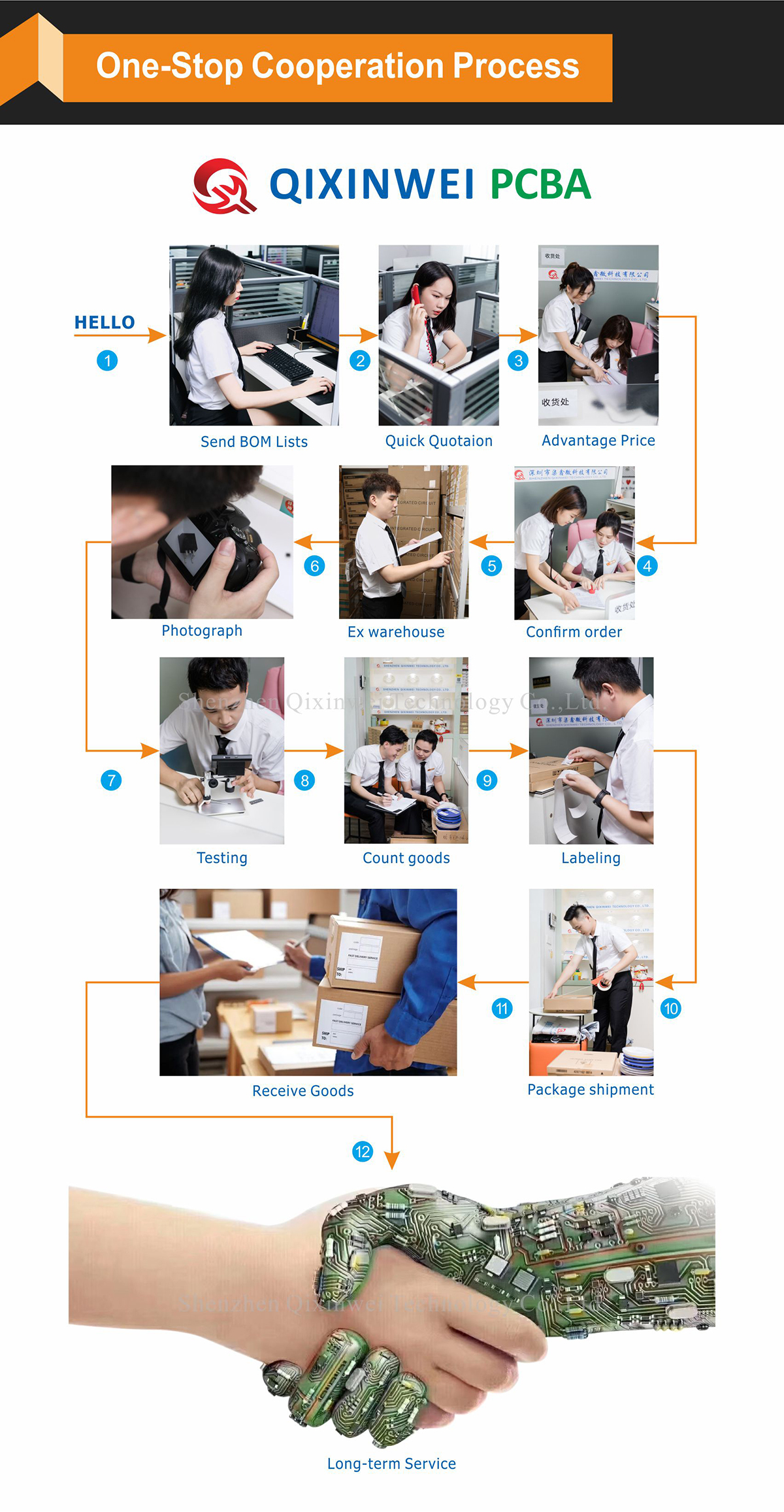
BOM Matching Service – One-stop solution, save time
PCBA Customization – Professional engineering team creates tailor-made solutions based on your needs
Cost-Effective & Efficient – Better channel, better cost
A dedicated team makes your procurement smoother.
Contact us for BOM quotes or PCBA inquiries

FAQ
1.What is the TPA3116D2 XH-M543 amplifier board and its key specifications?
This is a 2.0 dual‑channel Class‑D audio amplifier board built around the Texas Instruments TPA3116D2 chip, commonly labelled as XH‑M543. It delivers high‑efficiency, low‑distortion audio amplification. Key specifications: operating voltage 5 V – 26 V DC, typical output power 2 × 50 W into 4 Ω (at 24 V, 1% THD+N) or 2 × 30 W into 8 Ω. The chip can achieve peak output power up to 2 × 120 W under specific test conditions (higher voltage and low impedance), but the sustained clean power depends on the power supply and cooling. It features a 400 kHz switching frequency, selectable gain (26 dB / 32 dB / 36 dB), built‑in pop‑suppression, and comprehensive protection (over‑current, thermal, DC). The board typically includes a volume potentiometer, screw terminals for power and speakers, and a 3.5 mm stereo input jack. It is widely used in DIY speakers, soundbars, and portable sound systems.
2.What power supply do I need for the XH‑M543 TPA3116D2 amplifier?
The board accepts a wide DC voltage range of 5 V to 26 V. To achieve the full clean output power (2 × 50 W at 4 Ω), a 24 V power supply rated for at least 5 A – 6 A is recommended. For lower volume applications, 12 V / 3 A provides approximately 15 W – 20 W per channel. Do not exceed 26 V; sustained over‑voltage will damage the chip. A regulated switching power supply or a high‑current battery (e.g., 5S Li‑Ion pack) works well. The board has no reverse‑polarity protection, so always double‑check the wiring before powering.
3.How do I connect speakers and an audio source to the XH‑M543 board?
Wiring is straightforward. Power input: connect your DC supply to the screw terminals labelled VCC (+) and GND (-). Speaker outputs: connect the left speaker to L+ and L‑, and the right speaker to R+ and R‑. The board supports speaker impedances from 2 Ω to 8 Ω; 4 Ω – 8 Ω is recommended for reliable continuous operation. Audio input: a 3.5 mm stereo jack accepts standard line‑level signals (phone, MP3 player, Bluetooth receiver). Most XH‑M543 boards include an on‑board volume potentiometer that adjusts the input signal level. If your board lacks a pot, volume must be controlled at the source.
4.What is the actual maximum output power? Is it really 2 × 120 W?
The 2 × 120 W claim is a peak marketing specification under ideal, often unrepeatable conditions (e.g., very short bursts, low impedance, high supply voltage). The TPA3116D2 chip itself is rated for 2 × 50 W into 4 Ω at 24 V with 1% THD+N, which represents clean, continuous power. At 8 Ω, this drops to about 2 × 30 W. The power also depends on the supply voltage; at 12 V, expect roughly 2 × 15 W (4 Ω). For most practical DIY and home audio uses, the board can easily deliver loud, clear sound at 30 W – 50 W per channel with a proper 24 V supply.
5.How do I adjust the volume and gain on the TPA3116D2 board?
Most XH‑M543 boards have a physical potentiometer (volume knob) that attenuates the input signal. Turn it clockwise to increase volume. The chip itself has three fixed gain settings, selected by the state of the GAIN/SLV pin: 26 dB, 32 dB, or 36 dB. On pre‑built modules, the gain is usually fixed at 32 dB via a resistor or jumper. If you need higher gain for a weak audio source (like a dynamic microphone), you can change the resistor configuration per the datasheet. Do not set gain too high, as it may introduce noise and distortion.
6.Does the XH‑M543 board need a heatsink? How hot does it get?
The TPA3116D2 chip has an exposed thermal pad that is soldered to the PCB copper for heat dissipation. For moderate power levels (up to 25 W – 30 W per channel), the board typically runs cool without an extra heatsink. If you continuously drive 4 Ω speakers near 50 W per channel, the chip temperature can rise. In such cases, it is wise to attach a small aluminium heatsink to the top of the chip and ensure some airflow. The built‑in over‑temperature protection will shut down the amplifier if it overheats, preventing permanent damage.
7.What protection features does the TPA3116D2 chip include?
The chip provides a robust set of protections: cycle‑by‑cycle over‑current protection (OCP) on both channels, over‑temperature protection (OTP) with automatic recovery, under‑voltage lockout (UVLO) to prevent malfunction at low voltage, and DC detection on the speaker outputs to protect speakers from damaging DC offset. It also includes a pop‑free start‑up/shutdown circuit that eliminates annoying clicks. These features make the module reliable for long‑term use in both hobby and commercial audio projects.
8.Can I bridge the XH‑M543 board to make a mono amplifier (PBTL mode)?
The TPA3116D2 supports mono parallel bridge‑tied load (PBTL) operation, but it is not simply a matter of wiring the two speaker outputs together. PBTL mode requires specific external component changes (input coupling, resistor configuration) as detailed in the datasheet. Most off‑the‑shelf XH‑M543 boards are factory‑configured for stereo output and do not include a simple jumper for mono. If you need a higher‑power mono amplifier, consider buying a dedicated TPA3116 mono PBTL board (often rated at 1 × 100 W or 1 × 120 W) instead of modifying the stereo board.
9.How does the TPA3116D2 compare to the TPA3118D2?
Both are excellent Class‑D audio amplifiers from TI with very similar audio quality and efficiency. The key differences: the TPA3116D2 has a higher maximum supply voltage (30 V vs. 26 V for the TPA3118), allowing slightly higher peak output power. The TPA3116 uses a slightly larger package (TSSOP‑32 vs HTSSOP‑32) and is often used in boards with better thermal performance. The TPA3118 is typically found in more compact modules. In practice, for most 2 × 50 W applications, both are interchangeable. The TPA3116 may have a slight edge in sustained high‑power scenarios due to its higher voltage tolerance.
10.What are the most typical applications for the TPA3116D2 XH‑M543 board?
It is extremely popular in DIY Bluetooth speakers, compact soundbars, portable party speakers (boomboxes), PC speaker upgrades, home audio amplifiers, and embedded industrial audio systems. Its combination of small size, high power, excellent efficiency, and adjustable volume makes it a favourite for hobbyists and engineers who need a ready‑to‑use, powerful stereo amplifier from a single DC supply.
- 原产地:
- origin
- 品牌:
- origin
- 型号:
- XH-M543
- 安装方式:
- 表面贴装
- 描述:
- 功率放大器板