qixinwei-pcba


V851SE Allwinner Low-Cost AI Vision Processor 0.5T NPU 64MB DDR2 Ethernet QFN-88
V851SE Product Overview
The V851SE is a highly integrated AI vision processor from Allwinner Technology targeting the smart IP camera market, housed in a compact QFN-88 (9×9mm) package. The chip features an innovative dual-core heterogeneous architecture, integrating a single-core ARM Cortex-A7 main core (up to 900MHz), a XuanTie E907 RISC‑V coprocessor (600MHz), and a 0.5 TOPS AI NPU. The chip integrates 64MB DDR2 memory via SiP, along with a 10/100M Ethernet PHY (SIP‑embedded). The V851SE is specifically designed for traditional headless IP cameras, complementing the display‑capable V851S. It is widely used in cost‑sensitive end‑side AI vision devices such as AI IP cameras, face recognition access control, and smart security surveillance systems.
V851SE Core Features
The V851SE features a single-core ARM Cortex-A7 processor running up to 900MHz, with 32KB L1 I-cache + 32KB L1 D-cache and 128KB L2 shared cache. The built‑in RISC-V E907 core runs up to 600MHz with 16KB I-cache + 16KB D‑cache, capable of running RTOS for sensor data acquisition and real‑time control.
The V851SE integrates a 0.5 TOPS NPU supporting INT8/INT16 mixed precision with a 128KB internal buffer, compatible with mainstream deep learning frameworks including TensorFlow, Caffe, Tflite, PyTorch, and ONNX. It delivers efficient local AI inference for applications such as human detection, face recognition, and intrusion alarms.
For video encoding, the V851SE supports H.264/H.265 hardware encoding with multi-stream real‑time capability up to 5M@25fps + 720p@25fps, and 4K encoding up to 3840×2160@20fps. H.264/H.265 decoding supports up to 4096×4096 resolution (16 megapixels). JPEG encoder supports 1080p@60fps.
The next‑gen ISP delivers up to 2560×1440@30fps with adjustable 3A (AE, AWB, AF), multi‑level 3D noise reduction, WDR, and low‑light enhancement, providing clear images even in starlight or backlit conditions.
Camera input includes a 4‑lane MIPI CSI interface (configurable as 2×2‑lane) and a 10‑bit parallel DVP interface, supporting up to 4×720p30 or 2×1080p30 video capture at resolutions up to 2560×1440@30fps.
Communication interfaces include an integrated 10/100M Ethernet PHY (SIP, no external PHY required), USB 2.0 DRD, 5×TWI/I²C, 4×UART, 3×SPI, up to 11×PWM, 1×GPADC, CIR, and SDIO/eMMC controllers. The V851SE is pin‑compatible with the V851S, but lacks display output (no LCD or MIPI DSI), has 5 GPIO ports (PA, PC, PE, PF, PH), and 3 SPI ports.
The V851SE integrates 64MB DDR2 memory via SiP, eliminating the need for external DDR chips – 2‑layer PCBs can run Linux, significantly reducing hardware design complexity and BOM cost. The QFN-88 package (9×9mm, 0.35mm pitch) has exposed pins, requiring no BGA precision soldering – standard reflow works, and rework is easy.
The V851SE is supported by Allwinner‘s Tina Linux (OpenWrt‑based) BSP/SDK and mainline Linux kernels, with community builds including Buildroot and Linux 6.x, plus RT-Thread RTOS support. This mature software ecosystem helps customers accelerate product development and mass production.
V851SE Applications
The V851SE is widely used in AI IP cameras, smart security surveillance, face recognition access control and time attendance, smart dashcams, body‑worn cameras, video doorbells, AIoT edge computing nodes, smart appliance vision modules (robot vacuums, smart refrigerators), and industrial vision inspection.
V851SE Key Advantages
The V851SE brings AI vision capabilities to the entry‑level IP camera market at an ultra‑competitive cost. With integrated 64MB DDR2 and a 10/100M Ethernet PHY, external circuitry is greatly simplified – 2‑layer PCBs can run a full Linux system, significantly reducing total BOM cost.
The integrated 0.5 TOPS NPU supports mainstream AI frameworks (TensorFlow, Caffe, PyTorch, ONNX), efficiently running AI algorithms on‑device – delivering up to 20× higher detection frame rates than CPU‑only solutions and reducing cloud dependency and latency.
The QFN-88 (9×9mm) package with exposed pins requires no BGA precision soldering – standard reflow works, and rework is easy. This significantly lowers production and maintenance costs, especially suitable for cost‑sensitive, high‑volume production.
The dedicated RISC-V coprocessor can independently run RTOS for sensor sampling and system wake‑up, ensuring fast response while reducing main core workload. TrustZone, secure boot, and hardware encryption engines provide robust device and data security.
The V851SE is pin‑compatible with the V851S, allowing the same hardware platform to flexibly choose between display‑capable and headless versions, reducing hardware design risk. Allwinner provides a mature Tina Linux SDK, ISP tuning tools, reference designs, and the TinyVision development board, with rich open‑source community resources to accelerate product development and mass production.
Why Choose QIXINWEI
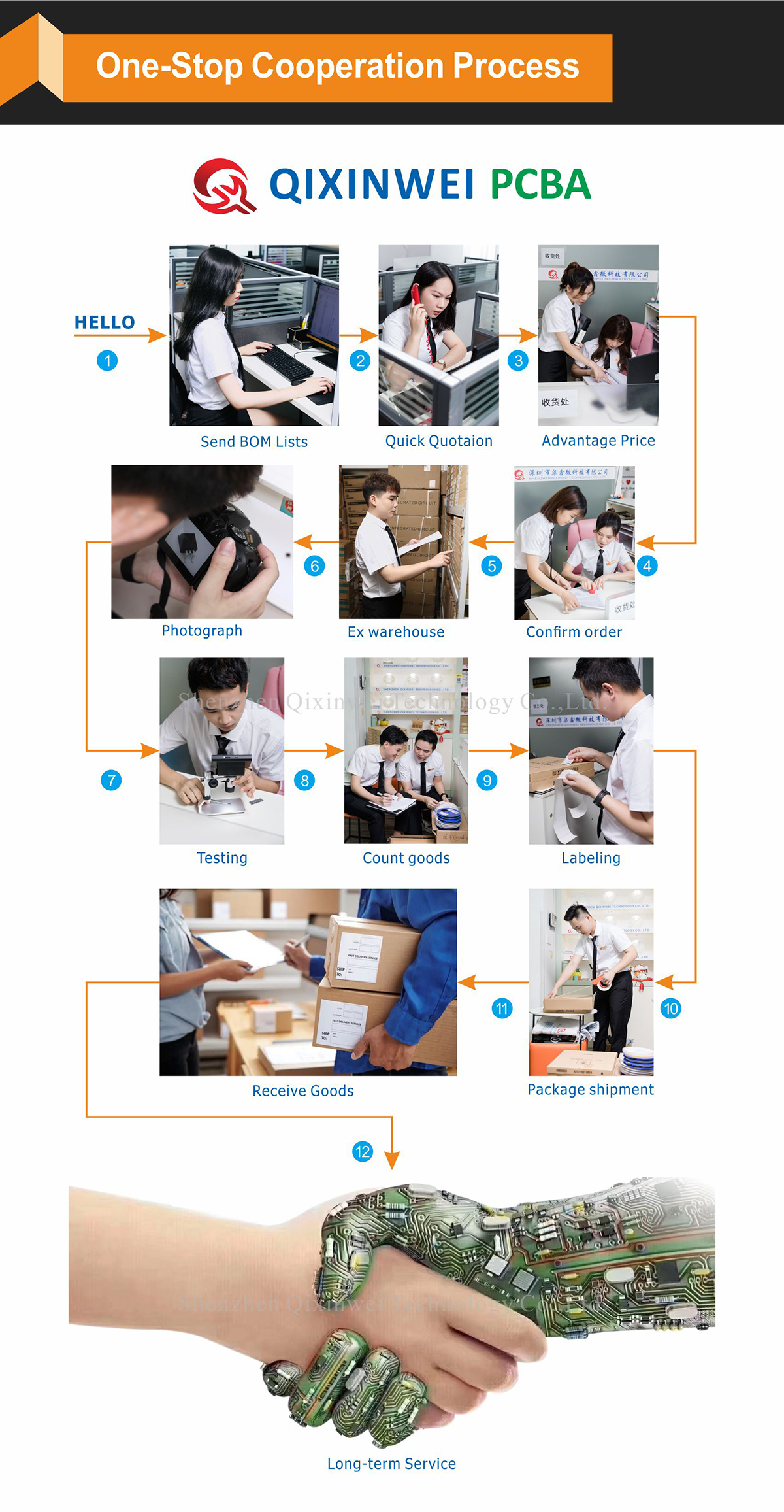
Years of experience in the electronics industry. Trusted by global customers. Massive In-Stock Inventory – Ready to ship promptly. BOM Matching Service – One-stop solution, save time. PCBA Customization – Professional engineering team creates tailor-made solutions based on your needs. Cost-Effective & Efficient – Better channel, better cost. A dedicated team makes your procurement smoother. Contact us for BOM quotes or PCBA inquiries.






FAQ:
What is the Allwinner V851SE and what makes it unique in the AI vision processor market?
The V851SE is a low‑cost AI vision processor built on a Cortex‑A7 core, featuring a 0.5 TOPS NPU, integrated 64 MB DDR2 memory, and a QFN‑88 package. Its standout feature is the combination of a hardware neural‑network accelerator, on‑chip DRAM, and a fast Ethernet interface in a hand‑solderable, mass‑production‑friendly QFN package. This all‑in‑one design drastically reduces BOM cost and PCB area for entry‑level smart camera and IoT vision products.How powerful is the built‑in 0.5 TOPS NPU? What kind of neural network models can it run?
The 0.5 TOPS NPU supports INT8/INT16 quantization and can efficiently run lightweight models such as MobileNet‑v1/v2, YOLO‑tiny for object detection, face detection, and basic classification networks. It is ideally suited for real‑time inference on 1‑2 megapixel video streams at 10‑30 fps. The NPU handles the heavy computations, leaving the Cortex‑A7 core free for communication and control tasks.Why does the V851SE integrate 64 MB of DDR2 memory on‑chip? Is it sufficient for vision AI applications?
The on‑chip 64 MB DDR2 eliminates the need for an external DRAM chip, significantly simplifying PCB layout and reducing overall system cost. This amount of memory is sufficient to run a stripped‑down Linux system, the neural‑network runtime, and a compact camera application. It is targeted at single‑purpose vision products—such as a smart doorbell or a basic IP camera—where the firmware footprint is well‑defined and a lean Linux build fits comfortably in 64 MB.How does the V851SE differ from the V831 or V833? When should I choose the SE?
The V831 and V833 are more powerful vision SoCs with larger packages (typically BGA), external memory interfaces, and higher NPU performance. The V851SE is optimized for cost‑down applications: it uses a smaller QFN‑88 package, integrates the DRAM to reduce board complexity, and still delivers a 0.5 TOPS NPU. Choose the V851SE when your product needs AI vision at the lowest possible system cost and you can work within the 64 MB memory constraint. If you need more RAM, dual‑camera support, or higher NPU throughput, the V831/V833 are better fits.What is the advantage of the QFN‑88 package for this AI vision processor?
The QFN‑88 package has exposed perimeter pads that can be drag‑soldered with a standard soldering iron and visually inspected. This makes it far more prototyping‑ and small‑batch‑production‑friendly than BGA packages. Combined with the integrated memory, the V851SE enables a true single‑chip solution that can be assembled by low‑cost contract manufacturers without X‑ray inspection, accelerating time‑to‑market for startups and mid‑volume products.Does the V851SE support Ethernet and what is the benefit for vision systems?
Yes, the V851SE includes a 10/100 Mbps Ethernet MAC with an RMII interface. This allows the chip to stream video and AI metadata over a wired network with very low latency, making it ideal for IP cameras, industrial inspection nodes, and networked sensor hubs. The combination of on‑chip Ethernet and AI processing enables a single‑chip smart camera that connects directly to a LAN without external converters.What video encoding capabilities does the V851SE have? Can it stream H.265?
The V851SE integrates a hardware H.265 encoder, enabling efficient compression of video streams for storage or network transmission. It can encode up to 1080p@30fps H.265 video, which is essential for bandwidth‑limited applications such as Wi‑Fi cameras, battery‑powered devices, and cloud‑connected AI sensors. The encoder works alongside the NPU, so the chip can simultaneously run an AI inference and stream compressed video.What development tools and SDK does Allwinner provide for the V851SE?
Allwinner offers a Linux SDK based on Buildroot, including the U‑Boot bootloader, Linux kernel with drivers for the NPU, camera, and Ethernet, and a cross‑compilation toolchain. The NPU is supported by the Allwinner NPU‑Toolkit, which converts models from TensorFlow, PyTorch, or Caffe to the chip’s proprietary format. Sample applications for video capture, AI inference, and RTSP streaming are provided to accelerate prototyping.How does the V851SE balance cost and performance for entry‑level AI products?
The V851SE achieves a breakthrough price point for AI‑enabled vision processors by integrating the DRAM, using a mature 28 nm process, and packaging the chip in a low‑cost QFN‑88 housing. Despite the aggressive cost optimization, it still delivers a 0.5 TOPS NPU, an H.265 encoder, and an Ethernet interface—features that were previously available only on much more expensive SoCs. This makes it possible to embed AI into price‑sensitive consumer and industrial devices.What are the most typical applications for the V851SE AI vision processor?
It is used in smart doorbells, low‑cost IP cameras, baby monitors, retail shelf‑monitoring sensors, license‑plate recognition cameras, and industrial defect‑detection modules. Any application that needs basic AI inferencing (object detection, classification, or motion detection) with reliable Ethernet or Wi‑Fi connectivity, at a cost where traditional AI chips are too expensive, benefits from the V851SE.
- Model:
- V851SE
- Brand:
- Allwinner
- Package:
- QFN-88
- CPU:
- Single-core ARM Cortex-A7 @ 900MHz
- RISC-V:
- XuanTie E907 @ 600MHz
- Embedded Memory:
- 64MB DDR2
- Ethernet:
- 10/100M Ethernet PHY
- GPIO Ports:
- 5 ports
- Operating Temperature:
- -20℃ to +85℃
- Applications:
- AI IP cameras, Security surveillance, Face recognition access, Smart dashcams, Body‑worn cameras, AIoT edge nodes