qixinwei-pcba


TMS320VC5416PGE160 TI TMS320C54x 16-Bit Fixed-Point DSP 160MHz 32KB ROM 256KB SRAM 3xMcBSP HPI LQFP-144
TMS320VC5416PGE160 Product Overview
The TMS320VC5416PGE160 is a high-performance 16-bit fixed-point digital signal processor (DSP) from Texas Instruments' C54x family, running at 160MHz (160 MIPS) in a 144-lead LQFP (PGE) package. As a top-tier performance and memory member of the C54x series, the TMS320VC5416PGE160 integrates 16K×16 of mask ROM (32KB) and a generous 256KB of zero-wait-state SRAM (128KB DARAM + 128KB SARAM), providing ample on-chip storage for complex algorithms and large data buffers. The TMS320VC5416PGE160's rich peripherals include three high-speed multi-channel buffered serial ports (McBSP), an 8/16-bit enhanced host port interface (HPI), and a general-purpose timer. An efficient 6-channel DMA controller and programmable PLL offload data movement and simplify clocking. With 160MHz processing power and massive on-chip SRAM, the TMS320VC5416PGE160 excels in voice codecs, VoIP gateways, professional audio effects, wireless communication basebands, and industrial precision sensing. The TMS320VC5416PGE160 is fully compatible with TI's free Code Composer Studio IDE and the optimized DSPLIB library, significantly reducing development time for algorithm-intensive products.
TMS320VC5416PGE160 Core Features
Processor Core: The TMS320VC5416PGE160 features a 16-bit C54x fixed-point DSP, 160MHz (160 MIPS), single-cycle 16×16 MAC
On-Chip Memory: The TMS320VC5416PGE160 provides 16K×16 mask ROM (32KB), 64K×16 DARAM (128KB), 64K×16 SARAM (128KB) – total 256KB zero-wait-state SRAM
DMA Controller: The TMS320VC5416PGE160 includes a 6-channel DMA for automatic data transfer between McBSPs, HPI, and memory
McBSP: The TMS320VC5416PGE160 offers 3 high-speed multi-channel buffered serial ports, I2S/TDM/PCM compatible
HPI: The TMS320VC5416PGE160 integrates an 8/16-bit enhanced host port interface for direct memory access by an external host
Timer & PLL: The TMS320VC5416PGE160 contains 1 GP timer and an on-chip programmable PLL for flexible clock multiplication
System: The TMS320VC5416PGE160 supports a software-programmable wait-state generator and IDLE1/2/3 low-power modes
Temperature Range: The TMS320VC5416PGE160 is rated for commercial temperature range, 0°C to 70°C
Package: The TMS320VC5416PGE160 comes in a 144-lead LQFP (PGE), 20mm×20mm, 0.5mm pitch
TMS320VC5416PGE160 Applications
Voice & Audio: The TMS320VC5416PGE160 is ideal for VoIP gateways/terminals, digital conferencing, speech codecs (G.711/G.729), professional audio mixers & effects
Digital Communication: The TMS320VC5416PGE160 suits wireless baseband processing, software-defined radio front-ends, wireline modems, power line communication (PLC)
Industrial Signal Processing: The TMS320VC5416PGE160 is deployed in vibration spectrum analysis, ultrasonic signal processing, active noise cancellation, precision sensor conditioning
Heterogeneous Computing: The TMS320VC5416PGE160 can act as a co-processor board with ARM/MCU via HPI for high-density algorithm offload
TMS320VC5416PGE160 Key Advantages
Massive Zero-Wait-State SRAM: The TMS320VC5416PGE160's 256KB on-chip SRAM eliminates the need for external memory in many applications, avoiding latency and power penalties of off-chip access while boosting real-time performance.
160MHz High-Speed Engine: The TMS320VC5416PGE160's single-cycle MAC at 160 MIPS efficiently executes high-order FIR/IIR filters, FFTs, and adaptive algorithms, far outperforming typical microcontrollers.
Triple McBSP Interfaces: The TMS320VC5416PGE160 can simultaneously connect multiple audio codecs or communication front-ends for multi-channel voice/audio systems, simplifying interface design.
Flexible HPI Communication: The TMS320VC5416PGE160 allows an external host to transparently access DSP internal RAM, enabling clean separation of control and signal processing in dual-chip architectures.
6-Channel DMA Offloading: The TMS320VC5416PGE160 automates data streaming between McBSPs and memory, freeing the CPU to focus entirely on algorithmic execution.
Mature C54x Ecosystem: The TMS320VC5416PGE160 is fully supported by Code Composer Studio IDE and DSPLIB, with a wealth of proven reference designs for voice/audio, minimizing development risk.
Why Choose QIXINWEI
Years of experience in the electronics industry. Trusted by global customers.
Massive In-Stock Inventory – Ready to ship promptly.
BOM Matching Service – One-stop solution, save time.
PCBA Customization – Professional engineering team creates tailor-made solutions based on your needs.
Cost-Effective & Efficient – Better channel, better cost.
A dedicated team makes your procurement smoother.
Contact us for BOM quotes or PCBA inquiries.






FAQ
- What does the "160" mean? What is the temperature range?
- "160" indicates a 160MHz (160 MIPS) core. The TMS320VC5416PGE160 is rated for commercial temperature 0°C to 70°C. Industrial-grade versions are available with appropriate suffix.
- How does the TMS320VC5416PGE160 differ from the TMS320VC5402?
- The TMS320VC5416PGE160 operates at a higher frequency (160MHz vs. 100MHz) and features 256KB of on-chip SRAM (versus 80KB). It uses a 144-lead package with more I/O, making it suitable for more complex algorithms.
- What are the practical benefits of the TMS320VC5416PGE160's 256KB on-chip SRAM?
- The TMS320VC5416PGE160's large zero-wait-state SRAM can hold entire programs, data tables, and intermediate results, eliminating external memory bottlenecks and reducing power consumption, ideal for FIR/IIR, FFT, and codec applications.
- What can the three McBSPs of the TMS320VC5416PGE160 connect to?
- Each McBSP on the TMS320VC5416PGE160 supports I2S, TDM, and PCM protocols, allowing simultaneous connection to multiple audio codecs, communication front-ends, or serial memory devices.
- What is the purpose of the HPI interface on the TMS320VC5416PGE160?
- The 8/16-bit HPI on the TMS320VC5416PGE160 enables an external host (ARM, MCU, or another DSP) to directly read/write DSP internal RAM, facilitating hardware separation of control and computation.
- How does DMA reduce CPU load in the TMS320VC5416PGE160?
- Six DMA channels of the TMS320VC5416PGE160 automatically transfer samples between McBSPs and memory, allowing the CPU to focus entirely on algorithm execution for a significant real-time boost.
- What development tools are required for the TMS320VC5416PGE160?
- TI's free Code Composer Studio (CCS) with DSPLIB is recommended for the TMS320VC5416PGE160. Use XDS100 or XDS200 JTAG emulators for debugging.
- What is the mask ROM used for in the TMS320VC5416PGE160?
- The 32KB mask ROM of the TMS320VC5416PGE160 can store a bootloader or production firmware, enabling instant-on execution without external boot chips and enhancing security.
- What soldering considerations apply to the LQFP-144 package of the TMS320VC5416PGE160?
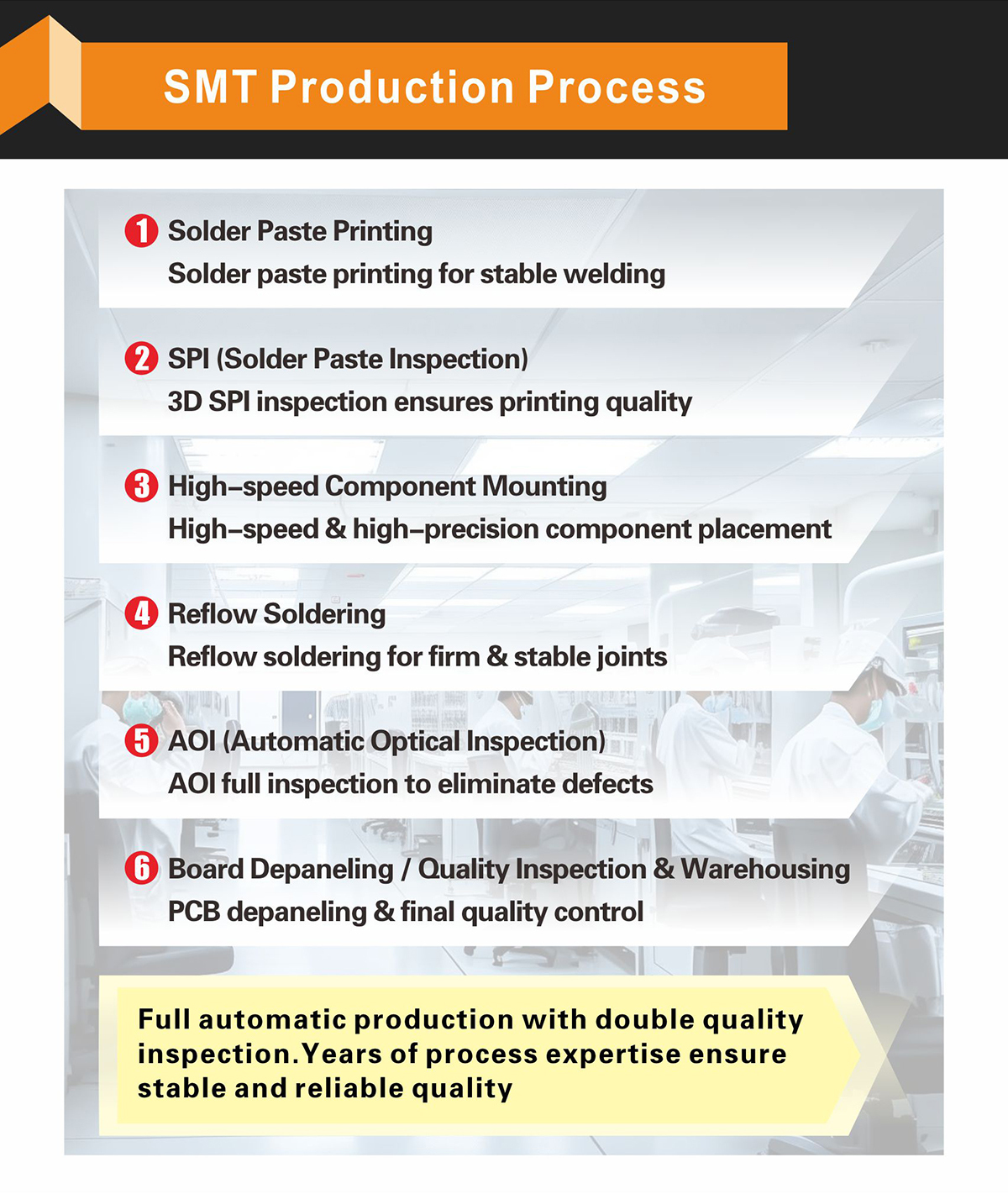
- The 0.5mm pitch LQFP of the TMS320VC5416PGE160 is a standard fine-pitch QFP; standard reflow yields high quality. Hand soldering is feasible with flux and drag technique, and exposed leads aid visual inspection.
- What are the upgrade options for a newer DSP platform than the TMS320VC5416PGE160?
- Smooth migration from the TMS320VC5416PGE160 to TI's TMS320C55x family (e.g., C5517 or C5535) offers higher MIPS, larger memory, richer interfaces, and C54x programming model compatibility with low power.
- Property:
- Specification
- Product Type:
- 16-bit Fixed-Point Digital Signal Processor (DSP)
- Brand:
- Texas Instruments (TI)
- Core Architecture:
- TMS320C54x 16-bit fixed-point DSP, 160MHz (160 MIPS)
- On-Chip ROM:
- 16K×16 mask ROM (32KB)
- On-Chip SRAM:
- 64K×16 DARAM (128KB) + 64K×16 SARAM (128KB) = 256KB zero-wait-state SRAM
- DMA:
- 6-channel
- Serial Ports:
- 3× McBSP (I2S/TDM/PCM capable)
- Host Interface:
- 8/16-bit enhanced HPI
- Timer:
- 1 GP timer
- PLL:
- On-chip programmable PLL
- Temperature Range:
- Commercial, 0°C to 70°C
- Package:
- 144-lead LQFP (PGE)