qixinwei-pcba


TMS320C6713BGDP225 TI TMS320C67x Floating-Point DSP 225MHz EMIF McASP HPI BGA-272
TMS320C6713BGDP225 Product Overview
The TMS320C6713BGDP225 is a high-performance 32-bit floating-point digital signal processor (DSP) from Texas Instruments (TI), based on the TMS320C67x core in a BGA-272 package, running at 225MHz. The TMS320C6713BGDP225 is designed for embedded applications requiring intensive floating-point computation, integrating 264KB of on-chip SRAM (including L1 program cache, L1 data cache, and L2 unified mapped RAM/cache), along with a high-performance External Memory Interface (EMIF) that seamlessly connects to SDRAM, SRAM, and Flash memories. The TMS320C6713BGDP225 offers strong audio and communication processing capabilities: two multi-channel audio serial ports (McASP) and two multi-channel buffered serial ports (McBSP) connect directly to audio codecs and serial data streams; I2C, SPI, and a Host-Port Interface (HPI) provide flexible pathways for external control and data exchange. A 16-bit general-purpose HPI facilitates high-speed data interaction with external processors or microcontrollers. Leveraging the C67x core's Very Long Instruction Word (VLIW) architecture, the TMS320C6713BGDP225 delivers up to 1800 MIPS and 1350 MFLOPS of exceptional floating-point performance at 225MHz, making the TMS320C6713BGDP225 ideal for compute-intensive applications such as real-time audio processing, vibration analysis, acoustic modeling, speech recognition, and industrial control.
TMS320C6713BGDP225 Core Features
Processor Core: The TMS320C6713BGDP225 features a 32-bit floating-point TMS320C67x VLIW DSP core, up to 225MHz, 1800 MIPS/1350 MFLOPS.
On-Chip Memory: The TMS320C6713BGDP225 integrates 264KB SRAM (4KB L1P cache + 4KB L1D cache + 256KB L2 unified mapped RAM/cache).
External Memory Interface (EMIF): The TMS320C6713BGDP225 supports seamless connection to 32-bit SDRAM, SRAM, Flash, and ROM.
Audio & Serial Interfaces: The TMS320C6713BGDP225 provides 2× McASP, 2× McBSP, 1× SPI, and 2× I2C interfaces.
Host Interface: The TMS320C6713BGDP225 includes a 16-bit general-purpose Host-Port Interface (HPI) for high-speed parallel data exchange with external processors/microcontrollers.
Timers & GPIO: The TMS320C6713BGDP225 has 2× 32-bit general-purpose timers and up to 16 general-purpose I/O pins.
System Management: The TMS320C6713BGDP225 features an on-chip PLL clock generator, watchdog timer, and power management module.
Power & Package: The TMS320C6713BGDP225 operates with a core voltage of 1.2V, I/O voltage of 3.3V; BGA-272 package, combining high performance with low power consumption.
TMS320C6713BGDP225 Applications
Professional Audio Processing: The TMS320C6713BGDP225 is used in digital mixing consoles, effects processors, high-end audio interfaces, and broadcast-grade audio equipment.
Vibration & Acoustic Analysis: The TMS320C6713BGDP225 enables industrial vibration spectrum analysis, mechanical fault diagnosis, acoustic modeling, and noise suppression.
Medical & Bio-electronics: The TMS320C6713BGDP225 supports medical imaging post-processing, floating-point biosignal analysis, and portable ultrasound devices.
Industrial Control & Automation: The TMS320C6713BGDP225 is suitable for high-performance servo control, complex algorithm controllers, and real-time simulation in power electronics.
Communications & Signal Processing: The TMS320C6713BGDP225 is deployed in software-defined radio, radar and sonar signal processing, and high-speed modems.
TMS320C6713BGDP225 Key Advantages
Outstanding Floating-Point Performance: The TMS320C6713BGDP225's 225MHz clock combined with the VLIW architecture delivers up to 1350 MFLOPS of floating-point performance, efficiently executing complex FFTs, matrix operations, and control algorithms—an ideal core for high-end signal processing.
Rich Audio & Serial Interfaces: The TMS320C6713BGDP225 features two McASPs and two McBSPs, which can simultaneously connect multiple digital audio devices and serial peripherals, providing powerful data throughput for multi-channel audio systems.
Flexible External Memory Expansion: The TMS320C6713BGDP225's EMIF interface supports SDRAM, Flash, and other external memories, enabling easy expansion of program and data space to accommodate large-scale applications.
HPI Facilitates Multi-Processor Collaboration: The TMS320C6713BGDP225's 16-bit HPI allows an external host processor to directly access the DSP's internal memory, enabling efficient data exchange between the DSP and a host controller—ideal for heterogeneous computing architectures.
Mature, Stable, and Well-Supported: The TMS320C6713BGDP225 belongs to the classic C6713 family of floating-point DSPs, with extensive application examples, reference designs, and a mature software development toolchain, significantly reducing development risk and time-to-market.
Why Choose QIXINWEI
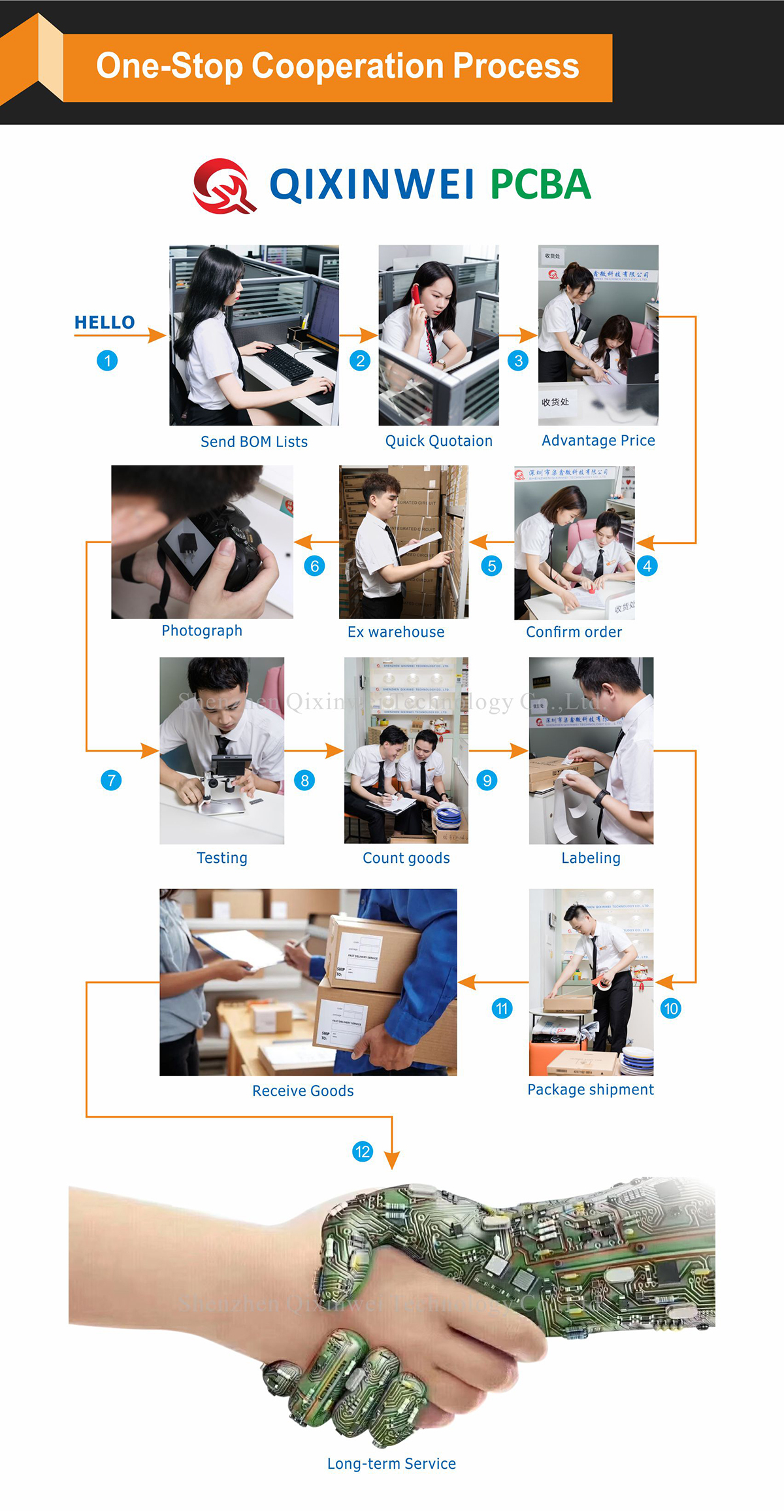
Years of experience in the electronics industry. Trusted by global customers.
Massive In-Stock Inventory – Ready to ship promptly.
BOM Matching Service – One-stop solution, save time.
PCBA Customization – Professional engineering team creates tailor-made solutions based on your needs.
Cost-Effective & Efficient – Better channel, better cost.
A dedicated team makes your procurement smoother.
Contact us for BOM quotes or PCBA inquiries.






FAQ
- How does the TMS320C6713BGDP225 differ from the 200MHz version of the C6713?
- The TMS320C6713BGDP225 runs at 225MHz, delivering 1800 MIPS and 1350 MFLOPS, compared to 1600 MIPS/1200 MFLOPS for the 200MHz version.
- All on-chip resources (memory, peripherals) remain identical, allowing a direct drop-in upgrade to the TMS320C6713BGDP225 for higher performance.
- How does this DSP compare to fixed-point DSPs like the TMS320C5505?
- The TMS320C6713BGDP225 is a 32-bit floating-point DSP, excelling at high-precision, wide-dynamic-range floating-point computations, ideal for audio processing and vibration analysis where numerical accuracy is critical.
- Fixed-point DSPs typically offer lower power consumption but require more complex programming for floating-point algorithms and have limited dynamic range. The TMS320C6713BGDP225 simplifies development with its floating-point hardware.
- What floating-point performance can be expected at 225MHz?
- At 225MHz, the TMS320C6713BGDP225 delivers up to 1350 MFLOPS of single-precision floating-point performance and 1800 MIPS of instruction throughput.
- With the VLIW architecture, the TMS320C6713BGDP225 can execute up to 8 instructions per cycle, greatly enhancing parallel processing efficiency.
- Is the on-chip memory sufficient? How can external memory be added?
- The TMS320C6713BGDP225 integrates 264KB of SRAM (L1P/L1D cache + L2 RAM), suitable for storing critical code and real-time data.
- Through the TMS320C6713BGDP225's EMIF interface, external SDRAM (up to 512MB) and Flash can be flexibly added to meet large program and non-volatile storage needs.
- How many audio interfaces does it have? How many audio devices can be connected?
- The TMS320C6713BGDP225 provides 2 McASPs and 2 McBSPs, all capable of audio data transmission and reception.
- A single McASP on the TMS320C6713BGDP225 can support up to 16 serial data channels, giving the system strong multi-channel audio processing capability for connecting multiple ADCs/DACs/Codecs.
- What is the purpose of the HPI host interface? How is it used?
- The 16-bit HPI allows an external processor (such as an MCU or another DSP) to directly access the internal memory of the TMS320C6713BGDP225.
- This architecture enables efficient data sharing between a host processor and the TMS320C6713BGDP225, suitable for heterogeneous systems requiring separated "control + algorithm".
- What tools and software are needed for development?
- Use TI's free Code Composer Studio (CCS) IDE for development and debugging. The TMS320C6713BGDP225 is fully supported by CCS and TI's C67x DSP libraries.
- Hardware debuggers such as the XDS510 or XDS560 series are recommended, supporting JTAG in-circuit programming and real-time debugging.
- What boot modes does the chip support?
- The TMS320C6713BGDP225 supports booting from external ROM/Flash (via EMIF) or from the HPI interface.
- The boot mode is determined by the logic levels of configuration pins at reset, allowing flexible selection based on system design.
- Is the BGA-272 package difficult to solder?
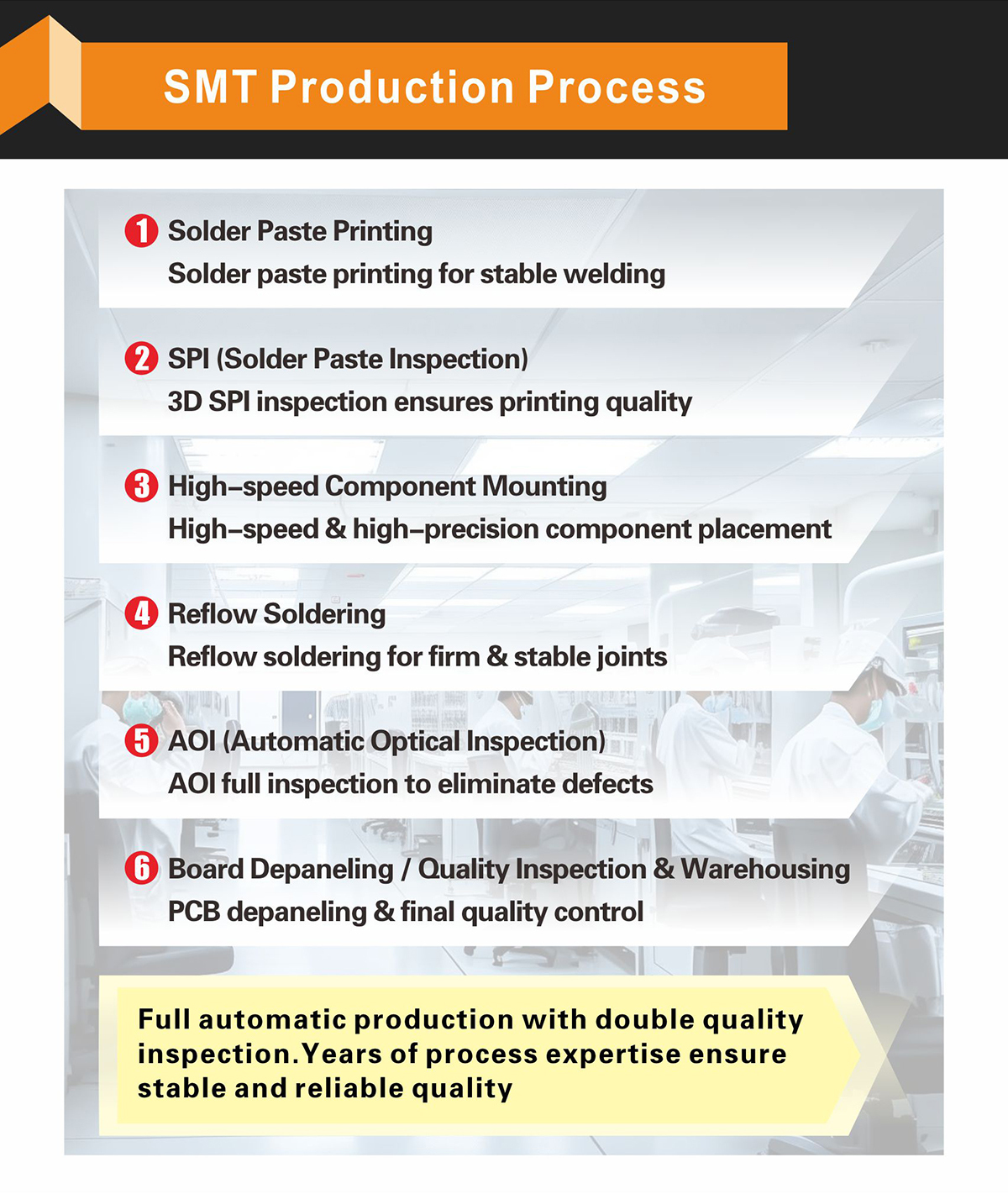
- The TMS320C6713BGDP225 comes in a BGA-272 package; professional reflow soldering processes and X-ray inspection equipment are recommended to ensure soldering reliability.
- Yield can be effectively guaranteed by following standard SMT procedures and land pattern design guidelines.
- What are the upgrade options if I need higher floating-point DSP performance?
- If you need higher performance than the TMS320C6713BGDP225, within the same family, the TMS320C672x series offers higher clock speeds and richer peripherals while maintaining code compatibility.
- For higher parallel processing and lower power consumption, consider TI's TMS320C66x multi-core DSPs or 66AK2x heterogeneous processors.
- Property:
- Specification
- Product Type:
- 32-bit Floating-Point Digital Signal Processor (DSP)
- Brand:
- Texas Instruments (TI)
- Core Architecture:
- TMS320C67x VLIW, 225MHz (1800 MIPS / 1350 MFLOPS)
- On-Chip SRAM:
- 264KB (4KB L1P + 4KB L1D + 256KB L2)
- External Memory Interface:
- EMIF (supports SDRAM, SRAM, Flash)
- Audio/Serial Interfaces:
- 2× McASP, 2× McBSP, 1× SPI, 2× I2C
- Host Interface:
- 16-bit HPI
- Timers:
- 2× 32-bit general-purpose timers
- GPIO:
- Up to 16
- Core / I/O Voltage:
- 1.2V / 3.3V
- Package:
- BGA-272