qixinwei-pcba


STM8S207RBT6C ST Mainstream Performance Line 8-bit MCU 128KB Flash 24MHz CPU EEPROM CAN LQFP-64
STM8S207RBT6C Product Overview
The STM8S207RBT6C is a mainstream performance line 8-bit MCU from STMicroelectronics, classified as a high-density device in the STM8S20x family. Featuring a 24 MHz advanced STM8 core with Harvard architecture and 3-stage pipeline, it delivers up to 20 MIPS (0 wait states at fCPU ≤ 16 MHz). It integrates 128 KB Flash, 6 KB RAM, and 2 KB true data EEPROM (endurance: 300k write/erase cycles — 3x the typical industry standard). On-chip peripherals include a 10-bit ADC (16 channels with analog watchdog), high-speed 1 Mbit/s beCAN 2.0B interface, 16-bit advanced control timer (4 CAPCOM channels, 3 complementary outputs with dead-time insertion), two 16-bit general-purpose timers (total 5 CAPCOM channels), 8-bit basic timer, auto wakeup timer, dual watchdogs, and two UARTs (one with LIN 2.1 master/slave and automatic resynchronization), SPI (up to 10 Mbit/s), and I2C (up to 400 Kbit/s) interfaces. Packaged in LQFP-64 (12×12×1.6 mm) with 52 I/Os and highly robust I/O design immune against current injection, it operates from 2.95 V to 5.5 V over -40 °C to 85 °C. Ideal for industrial automation, automotive control, motor drive, CAN bus communication, and applications demanding high performance and reliability.
STM8S207RBT6C Core Features
Advanced Core: 24 MHz STM8 core, Harvard architecture, 3-stage pipeline, extended instruction set, up to 20 MIPS @ 24 MHz, up to 37 external interrupts, 32 nested interrupts Memory: 128 KB Flash (20-year data retention at 55 °C after 10k cycles), 6 KB RAM, 2 KB true data EEPROM (300k write/erase cycles) 10-bit ADC: 16 multiplexed channels, ±1 LSB accuracy, scan mode and analog watchdog CAN 2.0B Bus: High-speed 1 Mbit/s beCAN 2.0B interface for industrial fieldbus communication Advanced Control Timer: 16-bit, 4 CAPCOM channels, 3 complementary outputs, dead-time insertion and flexible synchronization General-Purpose Timers: 2x 16-bit, total 5 CAPCOM channels (IC/OC/PWM); 8-bit basic timer with 8-bit prescaler Auto Wakeup Timer: Wakeup from Active-halt mode Dual Watchdogs: Window watchdog + Independent watchdog with separate clock source Communication Interfaces: 2x UART (LIN 2.1 master/slave/auto resync + clock output), SPI up to 10 Mbit/s, I2C up to 400 Kbit/s Clock System: 4 master clock sources (external clock, low-power crystal oscillator, user-trimmable 16 MHz RC, low-power 128 kHz RC), clock security system with monitor Low-Power Modes: Wait, Active-halt, Halt; individually switchable peripheral clocks High Reliability: Low-consumption POR/PDR, highly robust I/O design immune against current injection, 96-bit unique ID per device LQFP-64 Package: 12×12×1.6 mm, 52 I/Os Wide Operating Range: 2.95 V to 5.5 V, -40 °C to 85 °C Development Support: Embedded SWIM single-wire interface for fast on-chip programming and non-intrusive debugging
STM8S207RBT6C Applications
Industrial Automation: PLCs, frequency inverters, sensor transmitters, RS-485/CAN communication nodes Automotive Electronics: Body control modules, window/light control, automotive sensor nodes (non-safety-critical), CAN bus modules Motor Control: BLDC motors, servo motors, fans, pumps; advanced timer with complementary PWM and dead-time LED Lighting: Dimming control, RGB strips, switching power supplies; direct PWM drive Battery Management: Protection boards, fuel gauges, charge management; low-power modes reduce standby consumption Smart Metering: Electricity, water, gas meters; integrated EEPROM for calibration parameters Home Appliances: Induction/microwave oven panels, small appliance main controllers Consumer Electronics: High-performance remote controls, electric toothbrushes, electronic toys; 64-pin solution
STM8S207RBT6C Key Advantages
Integrated CAN Bus: Built-in high-speed 1 Mbit/s beCAN 2.0B interface eliminates external CAN controller/transceiver ICs, reducing system BOM cost 300k High-Endurance EEPROM: 2 KB true data EEPROM with 300k write/erase cycles (3x standard endurance), reliably storing calibration parameters and operation logs 24 MHz High Performance: 24 MHz STM8 core delivering up to 20 MIPS (0 wait states at fCPU ≤ 16 MHz) for complex control algorithms and real-time communication Dual UART + LIN 2.1: Two UARTs including LIN 2.1 master/slave with automatic resynchronization, ideal for industrial communication and automotive bus systems High-Speed SPI: SPI interface up to 10 Mbit/s (2.5x faster than Value Line), meeting high-speed peripheral communication needs Advanced Timer for Motor Control: 4 CAPCOM channels, 3 complementary outputs with dead-time insertion, driving half-bridge/full-bridge circuits and motor control 128 KB Large Memory: 128 KB Flash + 6 KB RAM + 2 KB EEPROM for complex protocol stacks (e.g., CANopen) and algorithms, one of the largest Flash capacities in the S207 family Robust & Reliable: 4 clock sources + clock security system, low-consumption POR/PDR, independent watchdog with separate clock source Mature Ecosystem: STM8 classic architecture, rich documentation, low-cost SWIM debug, shortening development cycles
Why Choose QIXINWEI
Years of experience in the electronics industry. Trusted by global customers.
Massive In-Stock Inventory – Ready to ship promptly
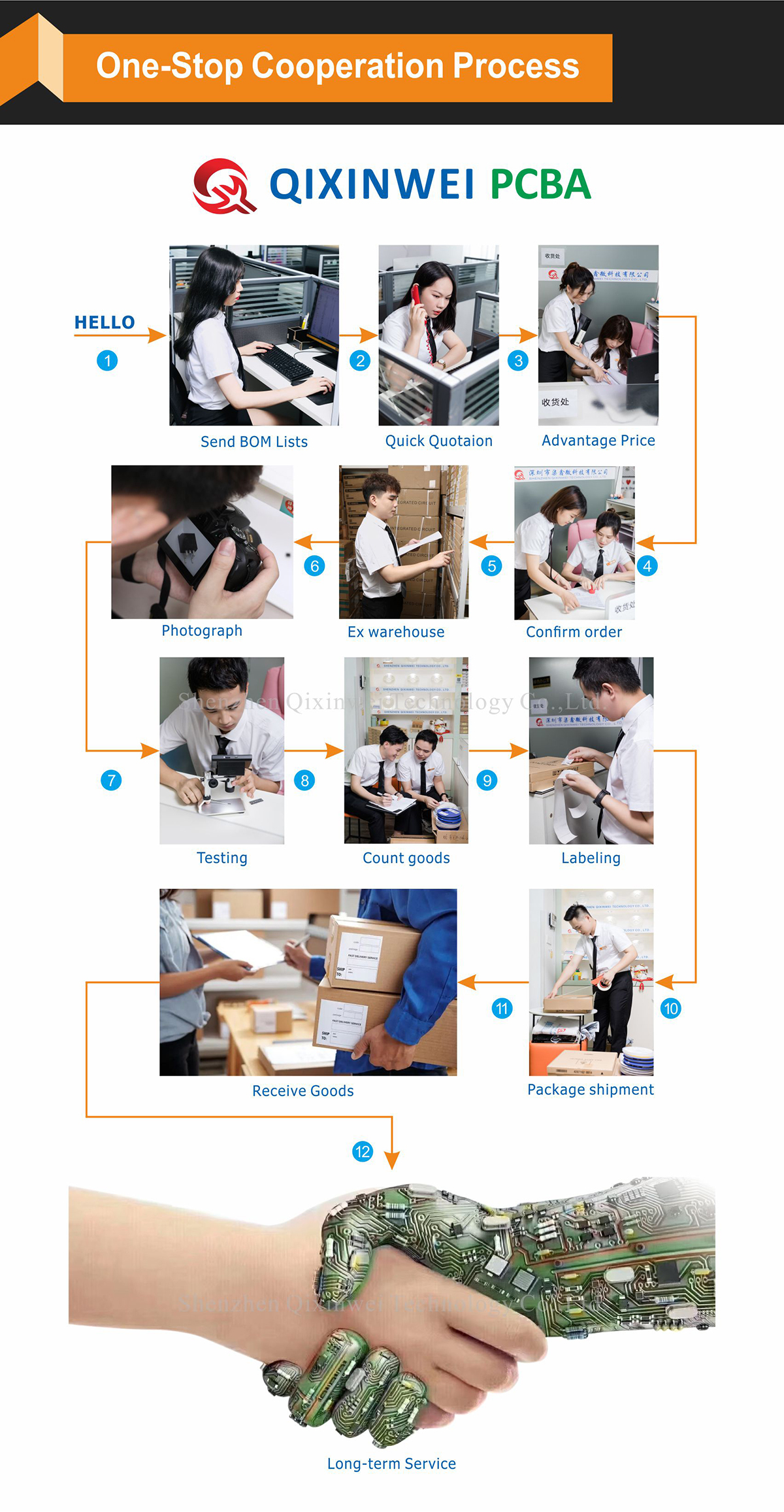
BOM Matching Service – One-stop solution, save time
PCBA Customization – Professional engineering team creates tailor-made solutions based on your needs
Cost-Effective & Efficient – Better channel, better cost
A dedicated team makes your procurement smoother.
Contact us for BOM quotes or PCBA inquiries





FAQ:
What is the STM8S207RBT6C and what are its key features?
The STM8S207RBT6C is a high‑performance 8‑bit microcontroller from STMicroelectronics based on the STM8 core at up to 24 MHz. It provides 128 KB of Flash, 6 KB of SRAM, and 2 KB of true EEPROM. Key peripherals include a 10‑bit ADC, a motor‑control timer (TIM1) with 3 complementary PWM pairs, a full CAN 2.0B controller, USART/SPI/I2C interfaces, and a single‑wire debug module (SWIM). It comes in an LQFP‑64 package with 52 I/O pins and works from ‑40 °C to +85 °C.What is the difference between STM8S207RBT6C and STM8S207R8T6?
Both share the same core, package, and peripherals. The only difference is Flash memory: the RBT6C has 128 KB Flash, while the R8T6 has 64 KB Flash. SRAM (6 KB), EEPROM (2 KB), CAN, TIM1, and I/O count are identical. Choose the RBT6C if you need more code space; the R8T6 is a cost‑optimized option when 64 KB is sufficient.Does the STM8S207RBT6C have CAN bus?
Yes, it integrates a full beCAN 2.0B active controller. It supports standard 11‑bit and extended 29‑bit identifiers, up to 1 Mbit/s data rate, 3 transmit mailboxes, and 2 receive FIFOs. This makes the chip ideal for industrial and automotive CAN networks.Can the STM8S207RBT6C drive a brushless DC motor?
Absolutely. The advanced timer TIM1 provides 3 complementary PWM pairs with programmable dead‑time and a break input. It can directly control a three‑phase inverter or BLDC motor half‑bridge without external dead‑time logic. It is commonly used in fans, pumps, power tools, and home appliances.What is the ADC resolution and how many analog channels does the STM8S207RBT6C have?
It has a 10‑bit successive‑approximation ADC. Up to 16 analog input channels are available in the LQFP‑64 package. The ADC can also measure an internal voltage reference and can be triggered by the motor‑control timer for synchronized current sampling.What is the supply voltage of STM8S207RBT6C? Can it run on 5 V?
Yes, it is a true 5 V‑capable MCU. The operating voltage range is 2.95 V to 5.5 V, so it can be powered directly from a 5 V rail without an external regulator. All I/O pins are 5 V tolerant.How much Flash and RAM does the STM8S207RBT6C have?
It provides 128 KB of Flash program memory, 6 KB of SRAM, and 2 KB of true data EEPROM. This memory configuration is very generous for an 8‑bit MCU and supports complex applications, CAN stacks, and motor control firmware.What package does the STM8S207RBT6C use and how many I/O pins are there?
It uses an LQFP‑64 package (10 mm × 10 mm, 0.5 mm pitch) and provides 52 general‑purpose I/O pins. This large I/O count makes it suitable for sensor‑rich and connectivity‑heavy designs.How do I program and debug the STM8S207RBT6C?
Programming and debugging use the single‑wire SWIM interface. A low‑cost ST‑LINK/V2 is the standard tool. Firmware can be developed with STVD + Cosmic C or the open‑source SDCC compiler. ST provides peripheral libraries to speed up development.What are typical applications of the STM8S207RBT6C?
It is widely used in industrial automation (CAN sensor/actuator nodes, motor drives), automotive body control, home appliances, power tools, and building automation. Its CAN connectivity, motor‑control timer, and large Flash make it a popular choice for distributed control systems.
- Product Type:
- Mainstream Performance Line 8-bit MCU (High-Density)
- Brand:
- STMicroelectronics
- Core:
- STM8 24MHz (Harvard architecture, 3-stage pipeline, up to 20 MIPS)
- Package:
- LQFP-64 (12×12×1.6mm)
- Memory:
- 128KB Flash, 6KB RAM, 2KB true EEPROM (300k cycles)
- Peripherals:
- 10-bit ADC (16ch), CAN 2.0B, 16-bit advanced timer (comp/dead-time), 2×16-bit GP timers, basic timer, wakeup timer, dual WDG
- Interfaces:
- 2x UART (with LIN 2.1), SPI (10 Mbit/s), I2C (400 Kbit/s)
- I/Os:
- 52
- Voltage:
- 2.95V~5.5V
- Temperature:
- -40°C~85°C