qixinwei-pcba


STM32F407IGH6 ST Mainstream Arm Cortex-M4 High-Performance 32-bit MCU 1MB Flash 168MHz FPU Ethernet USB OTG DCMI BGA-176
STM32F407IGH6 Product Overview
The STM32F407IGH6 is a Cortex-M4 high-performance MCU from STMicroelectronics in a UFBGA-176 package, one of the most I/O-rich and feature-complete models in the STM32F407 series. It runs at 168 MHz with FPU and ART Accelerator. It integrates 1 MB Flash, 192 KB SRAM, Ethernet 10/100 MAC (IEEE 1588 PTP, MII/RMII), USB 2.0 OTG (FS/HS, FS on-chip PHY), camera interface (DCMI), hardware crypto/HASH processor, two 12-bit DACs, three 12-bit ADCs (24ch, up to 7.2 MSPS in triple-interleaved mode), up to 17 timers (incl. 2 advanced motor control PWM/deadtime). 140 I/Os, all 5 V-tolerant. Supply 1.8–3.6 V, -40–85 °C. Compared to the STM32F405ZGT6 (LQFP-144, 114 I/Os), it upgrades to a BGA-176 package with even more I/O resources and adds an Ethernet MAC interface for network communication. Compared to the STM32F401RET6 (84 MHz Cortex-M4), it doubles the core frequency, significantly upgrades memory and peripherals, and adds advanced features including Ethernet, DCMI, crypto engine, and dual DACs.
STM32F407IGH6 Core Features
Core: Arm Cortex-M4 168 MHz + FPU + ART Accelerator Memory: 1 MB Flash, 192 KB SRAM Ethernet MAC: 10/100 Mbit/s, IEEE 1588 PTP hardware support, MII/RMII USB 2.0 OTG: FS + HS, FS on-chip PHY, HS requires external ULPI SDIO + HW Crypto: SD/MMC interface; AES 128/192/256, 3DES, HASH (MD5, SHA-1), RNG Camera Interface: 8–14-bit parallel DCMI 3×12-bit ADCs: 24 channels, 2.4 MSPS (up to 7.2 MSPS in triple-interleaved mode) 2×12-bit DACs: Buffered output Timers: Up to 17 (2× motor control PWM/deadtime/emergency stop, 12× 16-bit GP/quadrature encoder, 2× basic, 2× watchdogs, SysTick) Communication Interfaces: 4×USART + 2×UART (ISO7816/LIN/IrDA), 3×SPI (30 Mbit/s), 2×I2S, 3×I2C (SMBus), USB OTG, SDIO, Ethernet I/Os: 140, all 5 V-tolerant Low Power: Sleep/Stop/Standby, VBAT backup RTC Package: UFBGA-176 (10×10×0.6 mm)
STM32F407IGH6 Applications
Industrial: PLCs, inverters, precision motor drives, industrial Ethernet gateways Motor Control: Dual-motor FOC, servo drives, pumps Image Capture: Simple camera monitoring, barcode scanning, industrial vision Network Communication: Ethernet control nodes, IoT gateways Consumer: Drone flight controllers, game controllers, high-end remote controls Security Applications: IoT security, payment terminals Portable Medical Devices Complex Embedded Systems: Applications requiring numerous I/Os, multi-peripheral connectivity, and Ethernet
STM32F407IGH6 Key Advantages
168 MHz Cortex-M4 + FPU: Strongest performance in this series for complex DSP and floating-point operations 192 KB SRAM + 1 MB Flash: Ample memory for large firmware and complex algorithms BGA-176 Package + Ethernet: 140 I/Os with extremely rich resources, integrated Ethernet MAC for high-performance network communication DCMI Camera Interface: Supports CMOS sensors for image capture and vision applications Hardware Crypto Engine: AES/3DES/HASH/RNG for data security Dual DACs + 3 ADCs: Comprehensive analog functions with multi-channel synchronous acquisition 17 Timers (incl. 2 Motor Control): Supports dual-motor FOC Mature STM32 Ecosystem: CubeIDE/CubeMX/HAL/LL
Why Choose QIXINWEI
Years of experience in the electronics industry. Trusted by global customers.
Massive In-Stock Inventory – Ready to ship promptly.
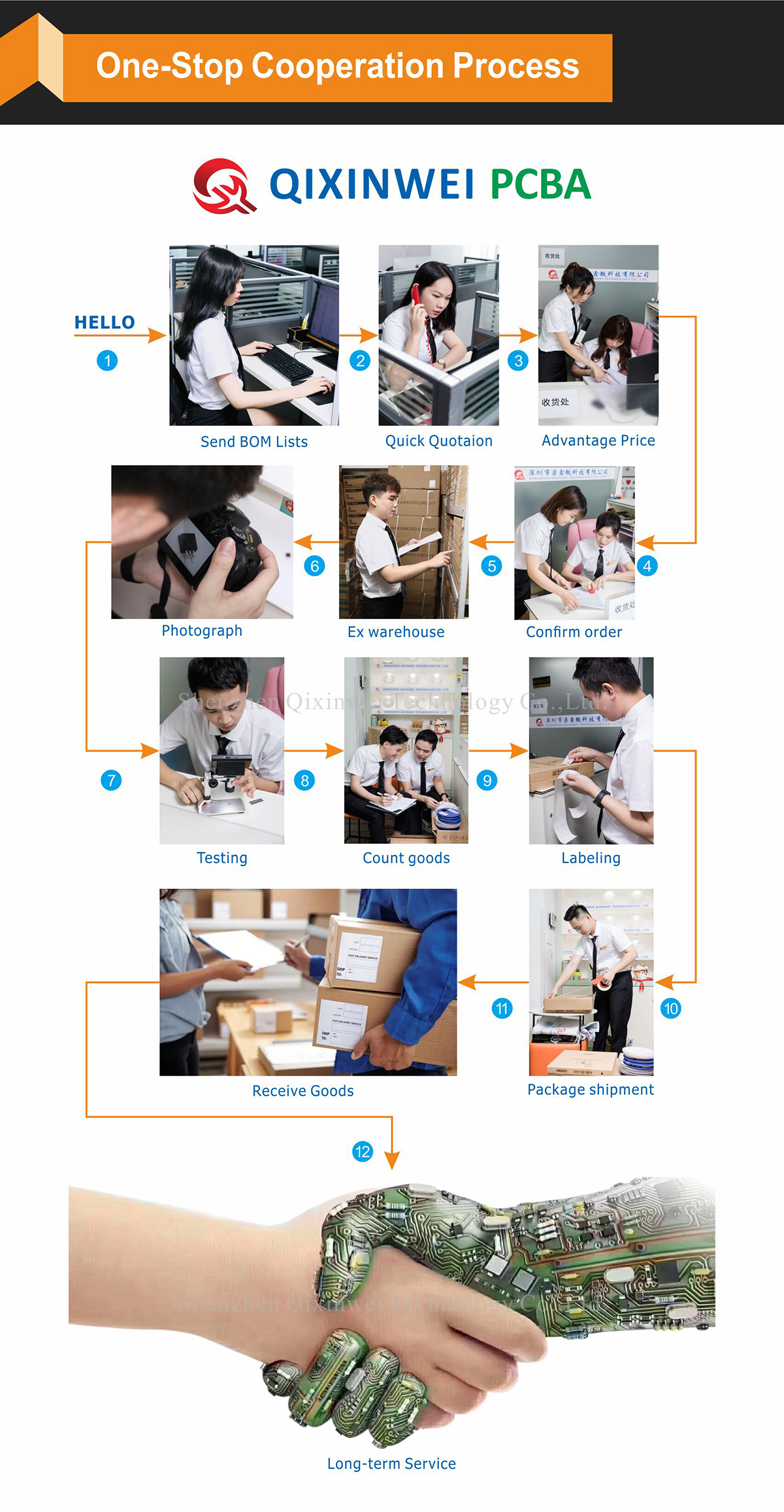
BOM Matching Service – One-stop solution, save time.
PCBA Customization – Professional engineering team creates tailor-made solutions based on your needs.
Cost-Effective & Efficient – Better channel, better cost.
A dedicated team makes your procurement smoother.
Contact us for BOM quotes or PCBA inquiries.


FAQ:
What is the STM32F407IGH6 and how does it differ from the STM32F407IGT6?
The STM32F407IGH6 is a 168 MHz Arm Cortex‑M4F microcontroller with 1 MB Flash, 192 KB SRAM, DCMI camera interface, 10/100 Ethernet MAC, USB OTG HS/FS, dual CAN, and an FMC supporting SDRAM. It is functionally identical to the IGT6, but uses a UFBGA‑176 package instead of LQFP‑176. The BGA package measures only 10×10 mm while providing the same 140 I/Os, making it ideal for space‑constrained designs that still require a large number of peripherals and a full 32‑bit external memory bus.Why choose the UFBGA‑176 package over the LQFP‑176? What are the trade‑offs?
The UFBGA‑176 offers the same I/O count as the LQFP‑176 but in a much smaller footprint (10×10 mm vs 24×24 mm), saving significant PCB area. It also provides shorter internal signal paths, which can improve EMI performance. The trade‑off is that BGA soldering requires reflow equipment and cannot be done with a standard soldering iron. For prototyping, many developers start with an LQFP‑based discovery board and migrate to the BGA for final production.Can the STM32F407IGH6 run a camera, Ethernet, USB high‑speed, and a 32‑bit SDRAM at the same time?
Yes. With 140 I/Os, the IGH6 can simultaneously connect a 32‑bit SDRAM, an 8‑ or 14‑bit DCMI camera, Ethernet (MII or RMII), USB OTG HS (with ULPI), dual CAN, and still leave room for multiple UART, SPI, and I2C interfaces. The separate DMA streams allow all these peripherals to operate concurrently without CPU intervention, making it a powerful single‑chip solution for compact IP cameras and industrial vision systems.How does the STM32F407IGH6 compare with the STM32F407ZGT6? When should I move to the BGA?
The ZGT6 is an LQFP‑144 package with 114 I/Os, while the IGH6 is a UFBGA‑176 with 140 I/Os and a much smaller footprint. Choose the IGH6 when you need the extra I/Os for a full 32‑bit SDRAM interface, several concurrent serial interfaces, and a compact PCB. The ZGT6 is better for designs that can work with 114 I/Os and require easier hand‑soldering or inspection.Is the STM32F407IGH6 still relevant for new designs? Should I use a newer series?
Absolutely. The Cortex‑M4F core with DSP and FPU, combined with a rich set of connectivity peripherals, still covers a wide range of industrial and IoT applications. If you need a graphical display, consider the STM32F429 or F7 series, but for headless designs that require a compact BGA with high I/O density, the F407IGH6 remains a solid, proven choice with a mature ecosystem and long‑term availability.How can I prototype with the STM32F407IGH6? Is hand‑soldering possible?
The 0.5 mm pitch BGA is not suitable for hand‑soldering with a regular iron. The typical development workflow is to write and debug firmware on an STM32F407 Discovery or Nucleo board (LQFP package), then design the final PCB with the IGH6 and assemble it using a reflow oven or professional hot‑air station. X‑ray inspection is recommended to verify solder joints in production.Does the STM32F407IGH6 support over‑the‑air (OTA) firmware updates?
Yes. The 1 MB Flash can be logically partitioned into a bootloader and an application area, or split into two 512 KB slots for an A/B update scheme. The 192 KB SRAM can temporarily hold the new firmware during reception via Ethernet or a wireless module, and a signature check can be performed before committing the update, ensuring a safe OTA process even without dual‑bank Flash.What is the maximum external SDRAM size for the STM32F407IGH6?
The flexible memory controller (FMC) supports up to 256 MB of external SDRAM with a full 32‑bit data bus. This is critical for storing high‑resolution camera frame buffers, large data logs, or running a complex RTOS with heavy networking stacks. The internal 192 KB SRAM is reserved for time‑critical code and data.Can I use the STM32F407IGH6 in battery‑powered devices? What low‑power modes does it have?
It supports Sleep, Stop, and Standby modes. In Stop mode with full SRAM retention, typical current is about 110 µA. The chip can wake up quickly on Ethernet, USB, or external interrupts. Combined with its FPU and DSP capabilities, it is suitable for battery‑powered industrial sensors and portable instruments that sleep most of the time and wake to process and transmit data.What are the most typical applications for the STM32F407IGH6, given its BGA package and high I/O count?
It excels in space‑constrained IP cameras, compact industrial vision systems, miniaturized IoT gateways, and high‑density data loggers where the small BGA footprint is a must, yet the design still requires a 32‑bit SDRAM, Ethernet, and a camera interface. Its proven ecosystem and long‑term availability also make it a safe choice for professional products with long life cycles.
- Product Type:
- Mainstream Arm Cortex-M4 High-Performance 32-bit MCU
- Brand:
- STMicroelectronics
- Core:
- Arm Cortex-M4 168MHz (FPU + ART Accelerator)
- Package:
- UFBGA-176 (10×10×0.6mm)
- Memory:
- 1MB Flash, 192KB SRAM
- Peripherals:
- Ethernet 10/100 MAC (IEEE 1588 PTP), USB 2.0 OTG FS/HS, SDIO, DCMI, HW Crypto (AES/3DES/HASH/RNG), 3×12-bit ADCs (24ch/2.4MSPS), 2×12-bit DACs, 2× Motor control PWM (deadtime), 12×16-bit GP timers (quadrature encoder), Calendar RTC
- Interfaces:
- 4×USART, 2×UART, 3×SPI (30Mbit/s), 2×I2S, 3×I2C (SMBus), Ethernet
- I/Os:
- 140
- Voltage:
- 1.8V~3.6V
- Temperature:
- -40°C~85°C