qixinwei-pcba


STM32F030RCT6 ST Mainstream Arm Cortex-M0 Value Line 32-bit MCU 256KB Flash 48MHz CPU 12-bit ADC LQFP-64
STM32F030RCT6 Product Overview
The STM32F030RCT6 is a mainstream Arm Cortex-M0 value line 32-bit MCU from STMicroelectronics, housed in an LQFP-64 package (10×10×1.4 mm). It incorporates a 48 MHz high-performance Arm Cortex-M0 32-bit RISC core, with 256 KB Flash, 32 KB SRAM with hardware parity, and a CRC calculation unit. On-chip peripherals include a 12-bit ADC (up to 18 channels, 1.0 µs conversion time), 5-channel DMA controller, calendar RTC with alarm and periodic wakeup, 11 timers (including one 16-bit advanced-control timer for six-channel PWM output, up to seven 16-bit general-purpose timers, independent and system window watchdog timers, and SysTick timer), and up to two I2C (Fast Mode Plus 1 Mbit/s), up to two SPIs (18 Mbit/s), and up to six USARTs (supporting master synchronous SPI and modem control). The device provides 55 fast I/Os, all 5 V-tolerant and mappable on external interrupt vectors. It operates from 2.4 V to 3.6 V over -40 °C to 85 °C. All packages are ECOPACK®2 compliant.[reference:13]
STM32F030RCT6 Core Features
Arm Cortex-M0 Core: 32-bit Arm Cortex-M0 RISC core, up to 48 MHz, with built-in Nested Vectored Interrupt Controller Memory: 256 KB Flash with read/write protection, 32 KB SRAM with hardware parity, CRC calculation unit 12-bit ADC: 1.0 µs conversion time, up to 18 channels, conversion range 0 to 3.6 V, separate analog supply 2.4 V to 3.6 V 5-Channel DMA Controller: Flexible mapping for memory-to-memory, peripheral-to-memory, and memory-to-peripheral transfers 11 Timers: One 16-bit advanced-control timer for six-channel PWM output, up to seven 16-bit general-purpose timers (up to four IC/OC, usable for IR control decoding), independent and system window watchdog timers, SysTick timer Calendar RTC: With alarm and periodic wakeup from Stop/Standby Communication Interfaces: Up to two I2C (Fast Mode Plus 1 Mbit/s support, SMBus/PMBus, 20 mA current sink), up to six USARTs (supporting master synchronous SPI and modem control, one with auto baud rate detection), up to two SPIs (18 Mbit/s, 4 to 16 programmable bit frames) Low-Power Modes: Sleep, Stop, Standby Clock Management: 4–32 MHz crystal oscillator, 32 kHz RTC crystal oscillator with calibration, internal 8 MHz RC with x6 PLL option, internal 40 kHz RC oscillator I/O Resources: 55 fast I/Os, all 5 V-tolerant, all mappable on external interrupt vectors High Reliability: Power-on/power-down reset (POR/PDR), serial wire debug (SWD) Wide Operating Range: 2.4 V to 3.6 V, -40 °C to 85 °C Green Packaging: ECOPACK®2 compliant, LQFP-64 package (10×10×1.4 mm)
STM32F030RCT6 Applications
Industrial Control: PLCs, sensor transmitters, RS-485 communication nodes, small actuators, inverters, industrial sewing machine drives Motor Control: BLDC and PMSM motor drives — advanced-control timer supports 6-channel PWM output Consumer Electronics: Remote controls, electric toothbrushes, electronic toys, handheld devices, PC peripherals (printers, scanners, gaming and GPS platforms) Home Appliances: Induction/microwave oven panels, HVAC systems, alarm systems, smart lighting IoT Nodes: Wireless sensor terminals, environmental monitoring modules, smart home control LED Lighting: Dimming control, RGB strip drivers, switching power supply management Automotive Electronics: Vehicle light control, window anti-pinch, automotive sensor nodes (non-safety-critical) A/V Equipment: A/V receivers, digital TV, video intercom Communications & Networking: Communication equipment control nodes, small gateway controllers Security Systems: Access control, alarm systems, surveillance equipment
STM32F030RCT6 Key Advantages
Arm Cortex-M0 32-bit Performance: 48 MHz high-performance 32-bit ARM core, far exceeding 8/16-bit MCU processing capability for complex algorithms and industrial control strategies 256 KB Ultra-Large Flash: Ample program storage (8x the 32 KB variant), accommodating complex control algorithms, communication protocol stacks, and graphical interface programs 32 KB Large SRAM: Enhanced data processing capability (8x the 4 KB variant) — ideal for heavy sensor data acquisition, Ethernet buffering, and other high-data-throughput scenarios 55 5V-Tolerant I/Os: Rich I/O resources, all 5 V-tolerant — connecting 5 V peripherals without level shifters, reducing BOM cost 12-bit High-Speed ADC: 1.0 µs conversion time, 18 channels, separate analog supply, analog watchdog for precise monitoring Rich Communication Interfaces: Up to 6 USARTs, 2 SPIs (18 Mbit/s), 2 I2Cs (Fast Mode Plus 1 Mbit/s) — abundant communication peripherals for multi-bus connectivity 11 Timers: Including 1x 16-bit advanced-control timer (6-channel PWM) and up to 7x 16-bit general-purpose timers (supporting IR control decoding) — ideal for motor control and infrared remote control applications 5-Channel DMA Offloads CPU: Enables direct data transfer between peripherals and memory, significantly reducing CPU load Calendar RTC: Built-in hardware RTC with alarm and periodic wakeup — ideal for scheduled sensing applications Mature STM32 Ecosystem: Compatible with STM32CubeIDE, STM32CubeMX, HAL libraries, abundant development boards and reference designs (official NUCLEO-F030R8 evaluation board features the same series MCU) Cost-Effective Value Line: 32-bit ARM performance at a competitive price — the ideal upgrade path from 8/16-bit MCUs
Why Choose QIXINWEI
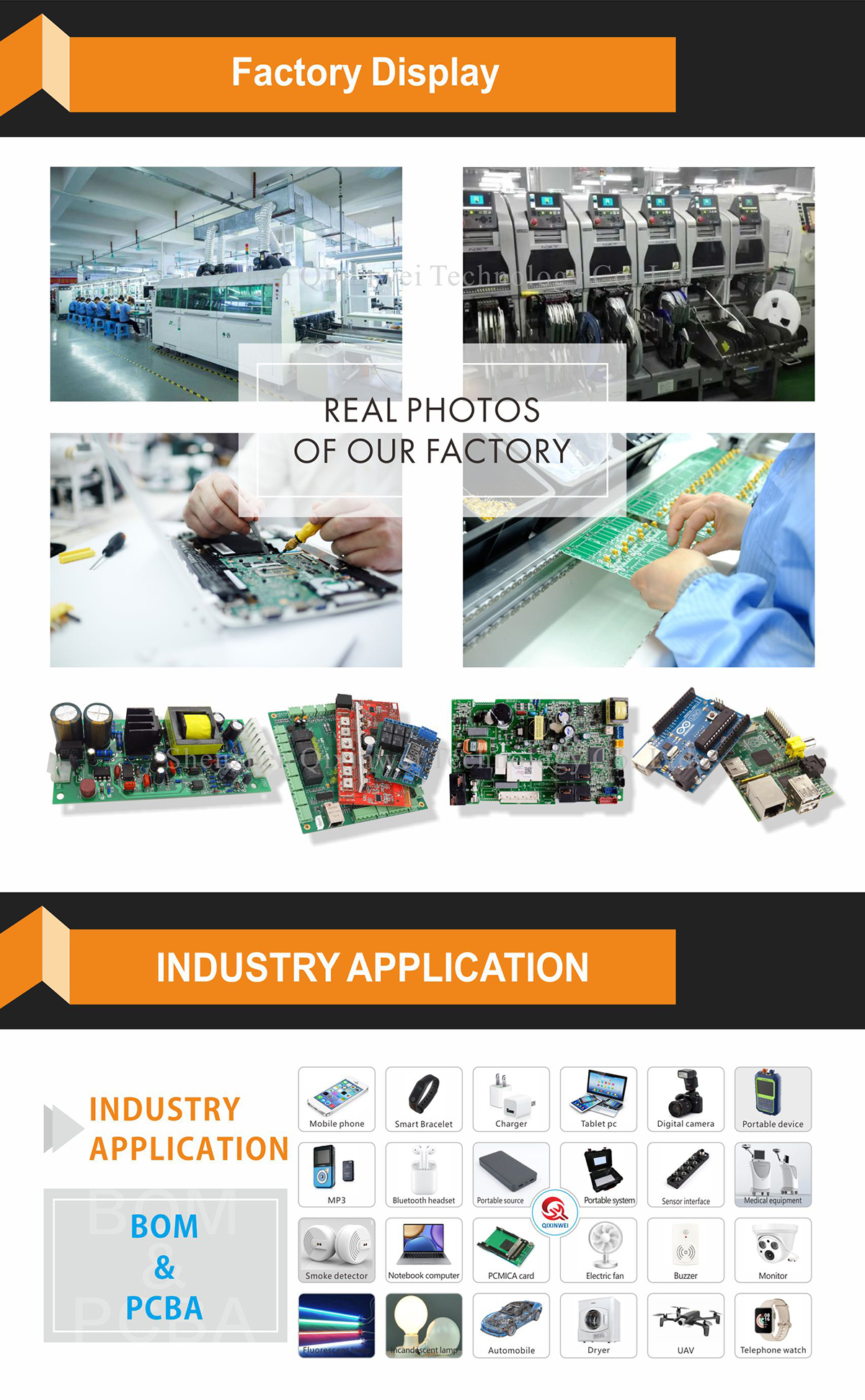
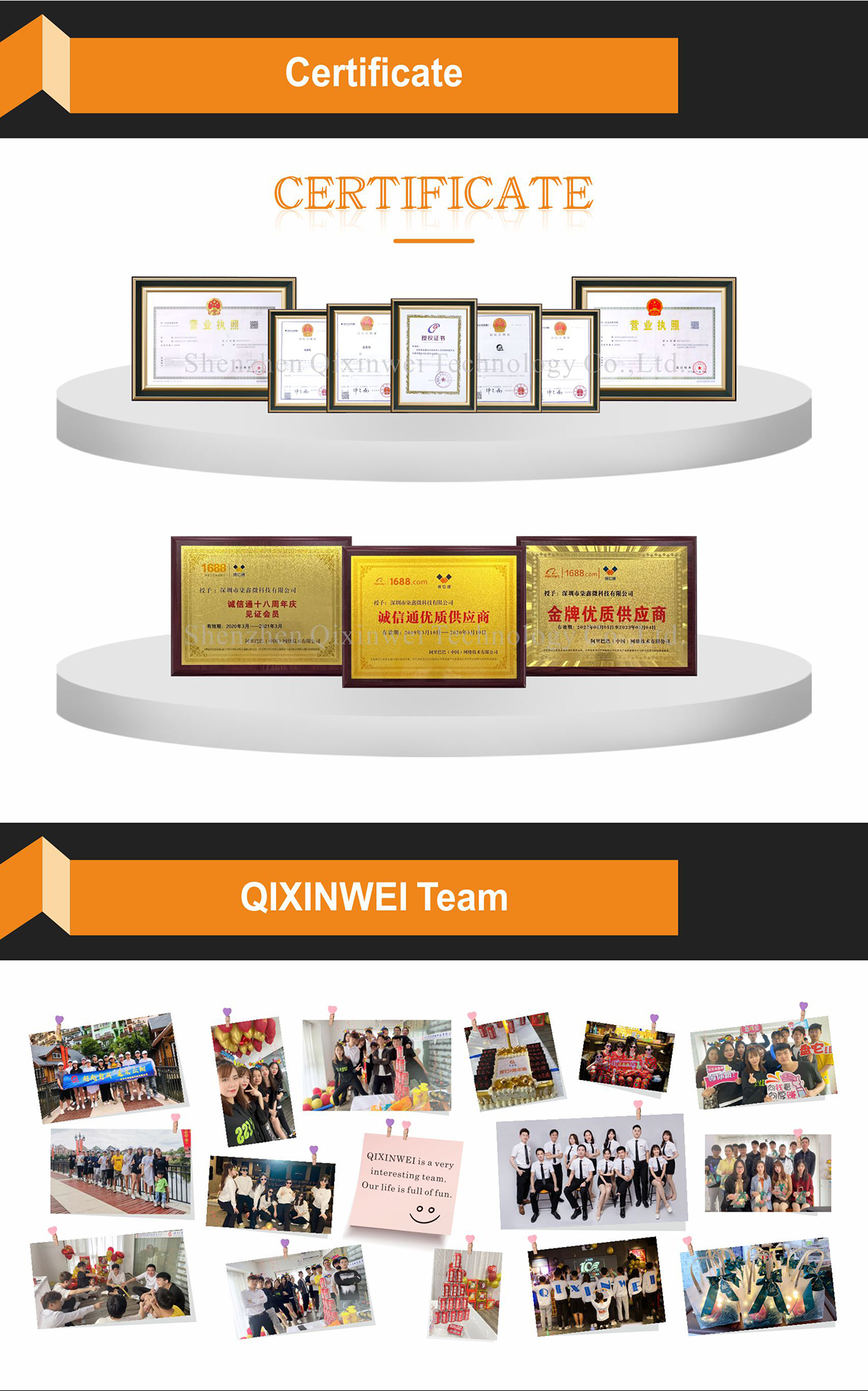
Years of experience in the electronics industry. Trusted by global customers.
Massive In-Stock Inventory – Ready to ship promptly
BOM Matching Service – One-stop solution, save time
PCBA Customization – Professional engineering team creates tailor-made solutions based on your needs
Cost-Effective & Efficient – Better channel, better cost
A dedicated team makes your procurement smoother.
Contact us for BOM quotes or PCBA inquiries






FAQ:
What is the STM32F030RCT6 and what are its key specifications?
The STM32F030RCT6 is a 32‑bit ARM Cortex‑M0 microcontroller from STMicroelectronics, running at up to 48 MHz with a generous 256 KB of Flash memory and 32 KB of SRAM. It integrates a 12‑bit 1 Msps ADC, up to 6 USARTs, 2 SPIs, 2 I2Cs, and several general‑purpose timers including TIM3, TIM14, TIM15, TIM16, and TIM17. Housed in an LQFP‑64 package, it provides 55 I/O pins and operates over the ‑40 °C to +85 °C temperature range. With its large memory and rich communication interfaces, it is an excellent choice for complex embedded applications that need ample code space and flexible connectivity, such as advanced sensor hubs, industrial controllers, and communication gateways.How does the STM32F030RCT6 differ from the STM32F030C8T6? What are the key upgrades?
Both are Cortex‑M0 devices at 48 MHz, but the RCT6 offers a substantial increase in resources. The C8T6 provides 64 KB Flash and 8 KB SRAM in an LQFP‑48 package. The RCT6 quadruples the Flash to 256 KB and the SRAM to 32 KB, and moves to a larger LQFP‑64 package, giving you 55 I/O pins instead of 39. This extra memory and pin count allows you to run much larger firmware, implement more complex communication stacks, and connect to more sensors and peripherals without running out of I/O. Choose the RCT6 when your application outgrows the C8T6 limits but you want to stay within the cost‑effective STM32F0 family.Does the STM32F030RCT6 have an advanced‑control timer like TIM1? Can it drive a brushless motor directly?
No — the STM32F030RCT6 does not include an advanced‑control timer such as TIM1. It provides several general‑purpose timers (TIM3, TIM14, TIM15, TIM16, TIM17) and a basic timer TIM6, which are excellent for standard PWM generation, input capture, and timing tasks. However, without complementary PWM outputs and hardware dead‑time insertion, it cannot directly drive half‑bridge or three‑phase motor stages. If motor control is a requirement, you should move to the STM32F031 series (which adds TIM1) or the STM32F051 series (TIM1 plus a DAC and HDMI CEC) while keeping a similar Flash and SRAM footprint.How does the STM32F030RCT6 compare with the STM32F051RCT6? Which one should I pick?
Both devices share the same 48 MHz Cortex‑M0 core, 256 KB Flash, 32 KB SRAM, and LQFP‑64 package. The key difference is in the peripheral set: the STM32F051RCT6 adds a 12‑bit DAC, an HDMI CEC controller, and — crucially — the advanced‑control timer TIM1 with complementary PWM outputs. The F030RCT6 omits these features to deliver the same large memory at a slightly lower system cost. Choose the F030RCT6 when your design needs maximum Flash and SRAM for a complex application but does not require analog output, HDMI connectivity, or advanced motor‑control waveforms. If any of those functions is essential, the F051RCT6 is the natural step up.Is 256 KB Flash and 32 KB SRAM really necessary? What kind of applications can make full use of it?
For many embedded projects, 256 KB Flash and 32 KB SRAM provide a very comfortable margin. You can fit multiple communication stacks (e.g., Modbus, CAN‑like protocols over USART, or custom command parsers), a small RTOS, a graphical display driver, and still have room for future feature additions. The large SRAM allows generous communication buffers, larger task stacks, and even a small framebuffer for a monochrome display. Typical use cases include multi‑protocol industrial gateways, complex sensor data loggers, advanced home‑automation controllers, and any device that runs a substantial codebase without needing the higher processing power of a Cortex‑M3 or M4 core.What are the ADC specifications of the STM32F030RCT6? How many analog channels does the LQFP‑64 package provide?
It incorporates a 12‑bit successive‑approximation ADC with a maximum sampling rate of 1 Msps. The LQFP‑64 package can access up to 16 external analog input channels, giving you plenty of options for multi‑sensor acquisition. The ADC can also measure the internal temperature sensor and the internal voltage reference without using any external pins. Importantly, the STM32F030RCT6 does not include a DAC, so analog voltage output must be achieved through an external DAC chip or by filtering a PWM signal if that meets your precision requirements.Can the STM32F030RCT6 be powered by 5 V? Are its GPIOs 5‑volt tolerant?
The supply voltage must stay within 2.0 V to 3.6 V; 5 V should never be applied to the VDD pin. Most I/O pins (including ports A, B, C, D, and F) are designated as FT (5‑volt tolerant) and can safely handle input voltages up to 5 V. This means you can directly interface with 5 V logic devices — reading their outputs or using an open‑drain configuration with an external pull‑up — without needing external level shifters, greatly simplifying mixed‑voltage system design.How low is the power consumption of the STM32F030RCT6? Is it suitable for battery‑powered devices?
The chip delivers respectable low‑power figures for a Cortex‑M0 with this memory size. In Run mode at 48 MHz with all peripherals active, the typical current is around 15–20 mA. Sleep mode drops this to approximately 3–4 mA. In Stop mode, with the full 32 KB SRAM and registers retained, consumption falls to about 6 µA; Standby mode reduces it further to roughly 1.5 µA. These numbers are well suited for many battery‑powered applications, especially those that spend a large portion of time in a low‑power mode and wake up periodically to perform data acquisition and communication tasks.How do I program and debug the STM32F030RCT6? What development tools are needed?
Programming and debugging are carried out via the SWD (Serial Wire Debug) interface, needing only SWDIO, SWCLK, VCC, and GND. A low‑cost ST‑LINK/V2 or STLINK‑V3 debugger is all the hardware you need. The free STM32CubeIDE is fully supported, as are Keil MDK and IAR EWARM. Use STM32CubeMX for graphical pinout and peripheral configuration to quickly set up your project. ST also offers comprehensive HAL and LL libraries along with plenty of example projects, helping you move from concept to a working prototype in very little time.What are the most typical applications for the STM32F030RCT6?
With its large 256 KB Flash, generous 32 KB SRAM, rich set of USART/SPI/I2C interfaces, and 55 I/O pins in an LQFP‑64 package, the F030RCT6 is an excellent fit for complex yet cost‑sensitive embedded systems. Common uses include industrial sensor concentrators, multi‑protocol communication bridges (Modbus, DMX, proprietary serial), advanced home‑automation controllers, data loggers, and smart metering devices. It is particularly popular when a large codebase must be managed on a budget, without moving to the more expensive Cortex‑M3 or M4 lines.
- Product Type:
- Mainstream Arm Cortex-M0 Value Line 32-bit MCU
- Brand:
- STMicroelectronics
- Core:
- Arm Cortex-M0 48MHz
- Package:
- LQFP-64 (10×10×1.4mm)
- Memory:
- 256KB Flash, 32KB SRAM (with hardware parity)
- Peripherals:
- 12-bit ADC (18ch/1.0µs), 16-bit advanced-control timer (6-ch PWM), 7 GP timers, Calendar RTC, CRC
- Interfaces:
- 2x I2C (Fast Mode Plus), 2x SPI (18 Mbit/s), 6x USART
- I/Os:
- 55 (all 5V-tolerant)
- Voltage:
- 2.4V~3.6V
- Temperature:
- -40°C~85°C