qixinwei-pcba


Raspberry Pi Pico Series RP2040 Development Board - Pico, Pico H, Pico W and Pico WH
Raspberry Pi Pico Product Overview
When selecting a microcontroller development board for embedded learning, teaching labs, or IoT prototyping, designers typically focus on three things: whether the chip architecture is flexible enough, whether onboard resources directly support project needs, and whether different models transition smoothly. The Raspberry Pi Pico series is the RP2040-based family designed for exactly that requirement.
The series is built around Raspberry Pi's in-house RP2040 microcontroller, featuring a dual-core Arm Cortex-M0+ processor with a flexible clock up to 133MHz, 264KB SRAM, and 2MB onboard QSPI Flash. The RP2040's standout Programmable I/O (PIO) subsystem provides 8 state machines capable of emulating custom peripheral protocols at the hardware level, significantly offloading the CPU. Four versions are available: Pico (base, no wireless, no headers), Pico H (base + pre-soldered headers and 3-pin JTAG), Pico W (adds Infineon CYW43439 for 2.4GHz IEEE 802.11 b/g/n Wi-Fi, no headers), and Pico WH (Pico W + pre-soldered headers). All versions share the same 21mm × 51mm compact footprint and 40-pin GPIO layout, with fully interchangeable software and hardware ecosystems.
The Pico series supports three mainstream development approaches: MicroPython, the C/C++ SDK, and the Arduino IDE, with drag-and-drop programming via USB mass storage requiring no dedicated programmer. It exposes 26 multifunction GPIOs (including 3 × 12-bit ADC, 2 × SPI, 2 × I2C, 2 × UART, and 16 × PWM), operates from 1.8V to 5.5V, and is suitable for the full journey from beginner learning to product prototyping.
Key Specifications
| Item | Pico / Pico H | Pico W / Pico WH |
|---|---|---|
| Core Chip | RP2040 (Dual-Core Arm Cortex-M0+ @133MHz) | RP2040 (Dual-Core Arm Cortex-M0+ @133MHz) |
| SRAM | 264 KB | 264 KB |
| Flash | 2 MB QSPI | 2 MB QSPI |
| Wireless | None | Infineon CYW43439, IEEE 802.11 b/g/n (2.4GHz Wi-Fi) |
| USB Interface | Micro-USB | Micro-USB |
| GPIO | 26 multifunction GPIOs (incl. 3 × ADC) | 26 multifunction GPIOs (incl. 3 × ADC) |
| Peripheral Interfaces | 2 × SPI, 2 × I2C, 2 × UART, 16 × PWM | 2 × SPI, 2 × I2C, 2 × UART, 16 × PWM |
| Special Features | 8 × PIO State Machines, 1 × Temperature Sensor | 8 × PIO State Machines, 1 × Temperature Sensor |
| Headers | None (Pico H: pre-soldered 40-pin + 3-pin JTAG) | None (Pico WH: pre-soldered 40-pin + 3-pin JTAG) |
| Supply Voltage | 1.8V ~ 5.5V (VSYS) / 5V (VBUS) | 1.8V ~ 5.5V (VSYS) / 5V (VBUS) |
| GPIO Level | 3.3V | 3.3V |
| Operating Current | ≤ 300 mA | ≤ 300 mA |
| Operating Temperature | -20℃ ~ +80℃ | -20℃ ~ +80℃ |
| ADC Resolution | 12-bit, 500 KSPS | 12-bit, 500 KSPS |
| Development | MicroPython, C/C++ SDK, Arduino IDE | MicroPython, C/C++ SDK, Arduino IDE |
| Programming | USB Mass Storage Drag-and-Drop | USB Mass Storage Drag-and-Drop |
| Dimensions | 21 × 51.3 × 3.9 mm (H version: 12.9 mm height) | 21 × 51.3 × 3.9 mm (WH version: 12.9 mm height) |
| Weight | Pico 3g / Pico H 6g | Pico W 4g / Pico WH 6g |
Typical Applications
Embedded systems and C/C++/MicroPython programming education
IoT sensor nodes and wireless data acquisition (Pico W/WH)
Custom peripheral and protocol emulation (via PIO state machines)
Small robotics, motor control, and LED lighting installations
Wearables and compact portable projects
Core control board for product prototype validation
FAQ
Q: What wireless capabilities do Pico W and Pico WH support?
A: Both carry the Infineon CYW43439 chip supporting IEEE 802.11 b/g/n 2.4GHz Wi-Fi. The chip is hardware-compatible with Bluetooth 5.2, but Raspberry Pi's official firmware currently focuses on Wi-Fi; Bluetooth availability depends on future software updates. Pico W and Pico WH differ only in whether headers are pre-soldered.
Q: What are the practical benefits of pre-soldered headers on Pico H and Pico WH?
A: Pico H and Pico WH ship with 40-pin headers (2.54mm pitch) and a 3-pin JTAG debug interface already soldered, allowing immediate use on breadboards or expansion boards without DIY soldering and avoiding cold-joint risks—ideal for teaching, rapid prototyping, and frequent plugging.
Q: What programming methods are supported?
A: Three mainstream approaches: MicroPython (via Thonny or similar IDE), the C/C++ SDK (official SDK with VS Code or Eclipse), and the Arduino IDE (via the Arduino-Pico core). To program, hold BOOTSEL while connecting USB; the board appears as a mass storage device, and dragging a firmware file onto it completes the flash—no dedicated programmer needed.
Q: What is PIO (Programmable I/O) and how does it help development?
A: PIO provides 8 programmable state machines inside RP2040 that handle custom digital protocols (e.g., WS2812 timing, DVI output, extra UARTs) independently of the CPU. For projects needing precise timing or non-standard interfaces, PIO offers hardware-level flexibility and determinism without external logic chips.
Q: What are the power and GPIO voltage characteristics?
A: VSYS accepts 1.8V to 5.5V, powered via Micro-USB 5V (VBUS) or an external battery. GPIO levels are fixed at 3.3V; interfacing with 5V devices requires level matching or shifting. The onboard 3.3V LDO can supply small external sensors.
Why Choose QIXINWEI
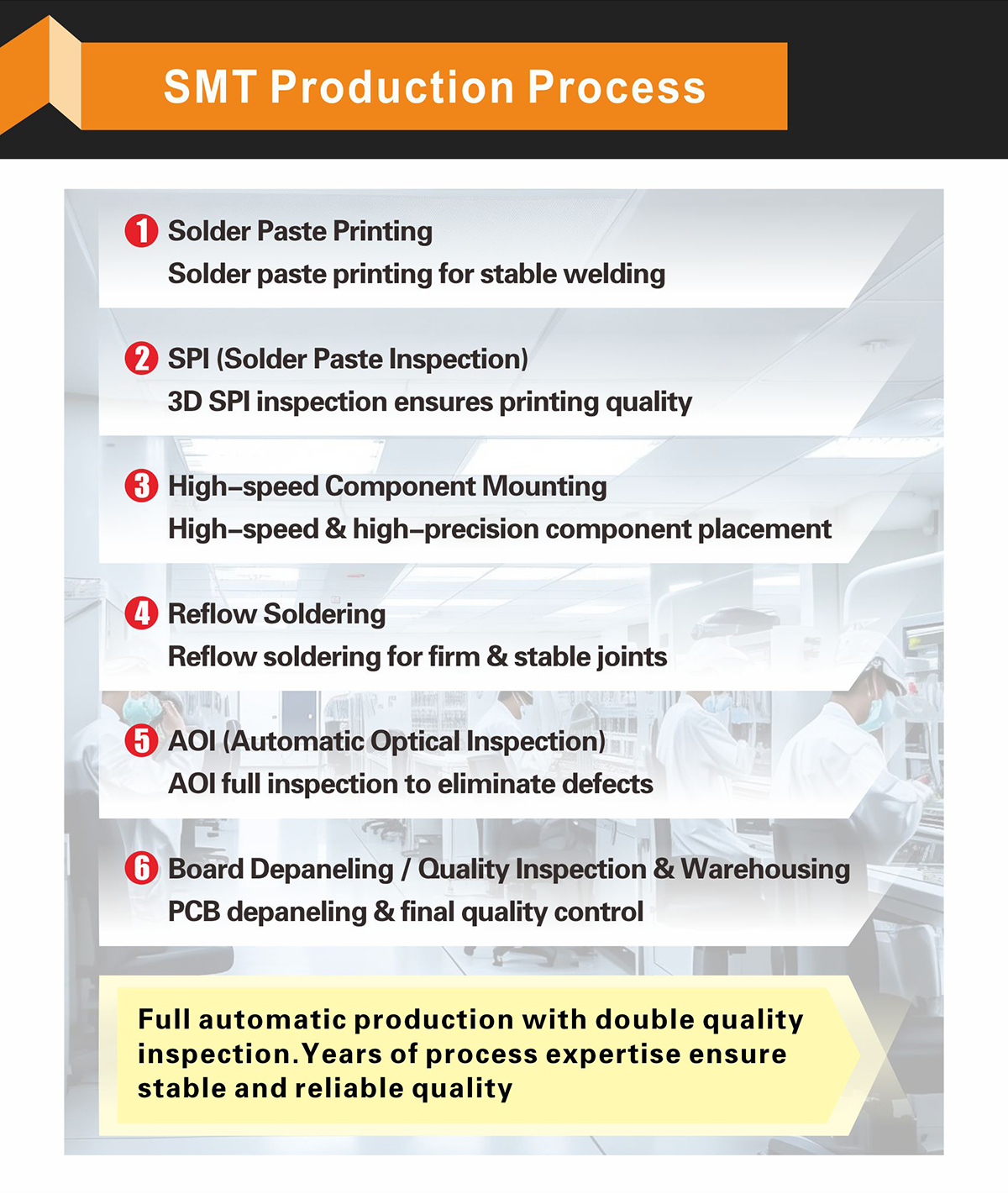
Years of experience in the electronics industry. Trusted by global customers.
Massive In-Stock Inventory – Ready to ship promptly
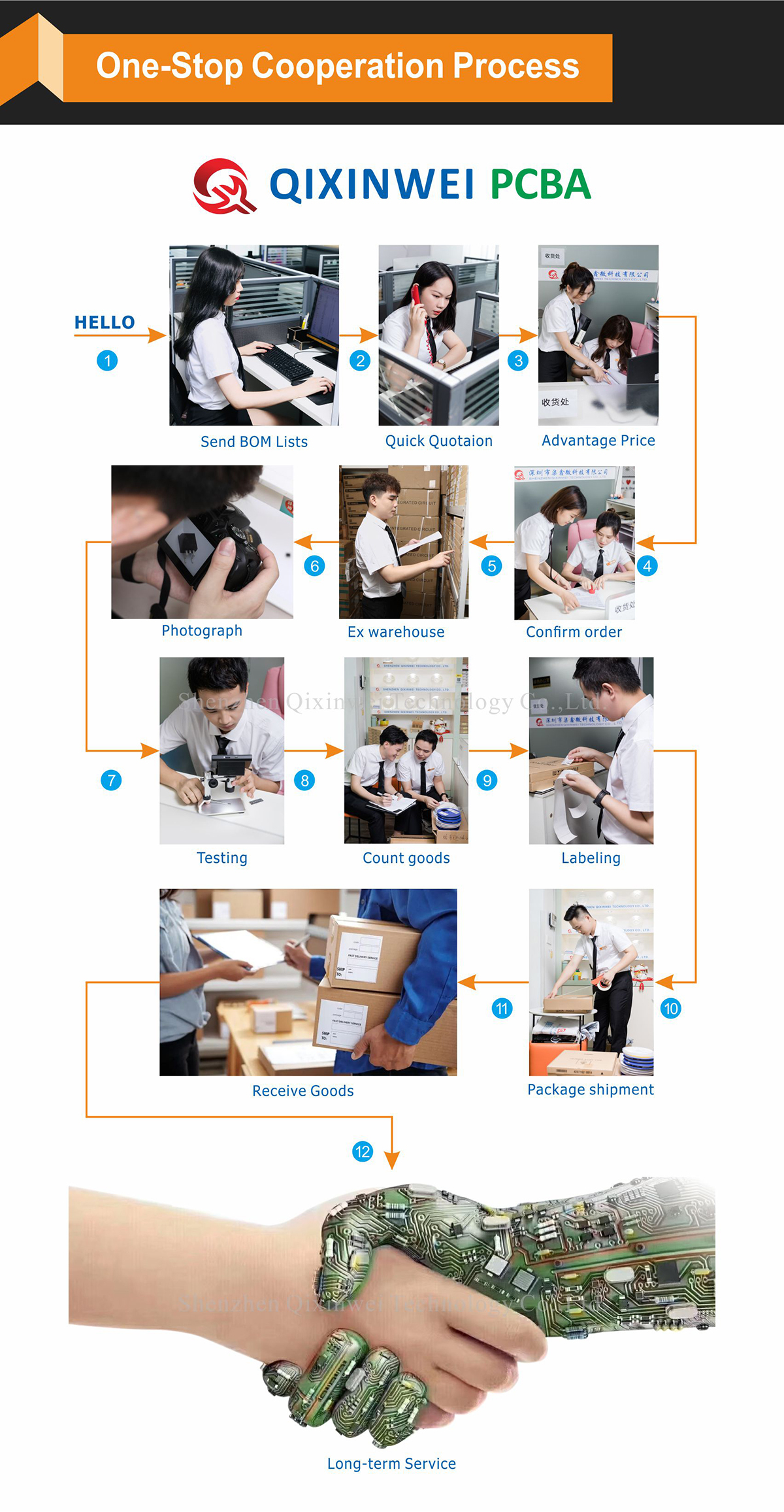
BOM Matching Service – One-stop solution, save time
PCBA Customization – Professional engineering team creates tailor-made solutions based on your needs
Cost-Effective & Efficient – Better channel, better cost
A dedicated team makes your procurement smoother.
Contact us for BOM quotes or PCBA inquiries


- Series:
- Raspberry Pi Pico
- Models number:
- Pico / Pico H / Pico W / Pico WH
- Core Chip:
- RP2040
- SRAM:
- 264 KB
- Flash:
- 2 MB QSPI
- Wireless (W/WH):
- CYW43439,IEEE 802.11 b/g/n (2.4GHz)
- USB Interface:
- Micro-USB
- Peripheral Interfaces:
- 2 × SPI、2 × I2C、2 × UART、16 × PWM
- Supply Voltage:
- 1.8V ~ 5.5V (VSYS) / 5V (VBUS)
- Development:
- MicroPython、C/C++ SDK、Arduino IDE