qixinwei-pcba


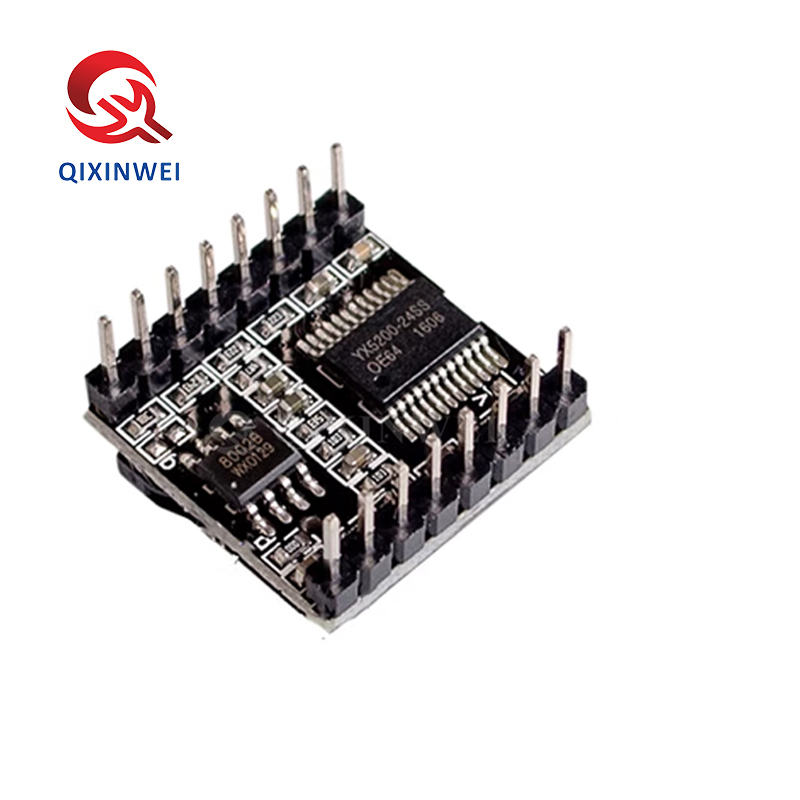
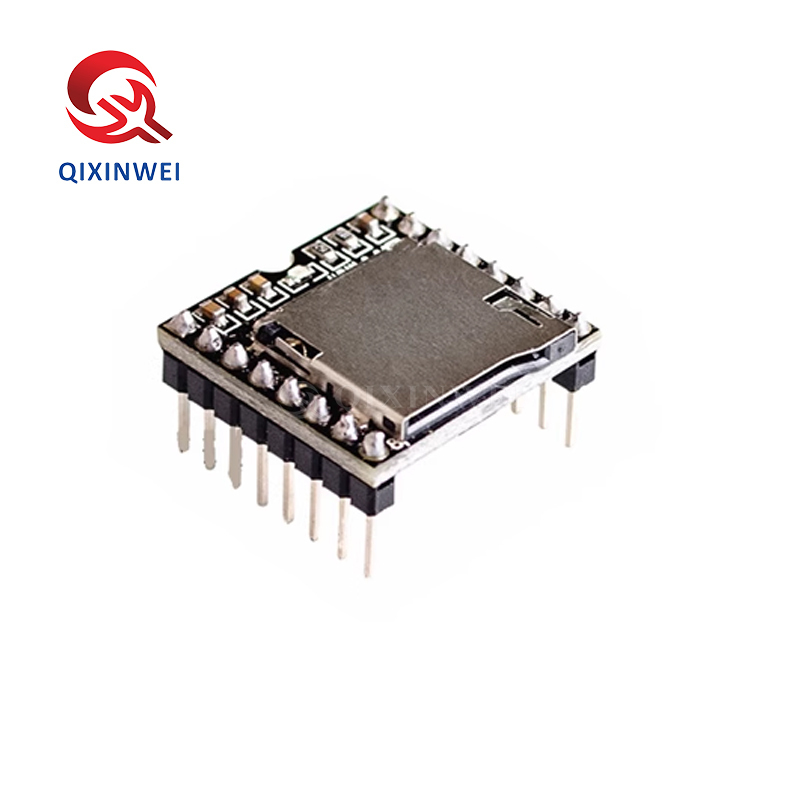
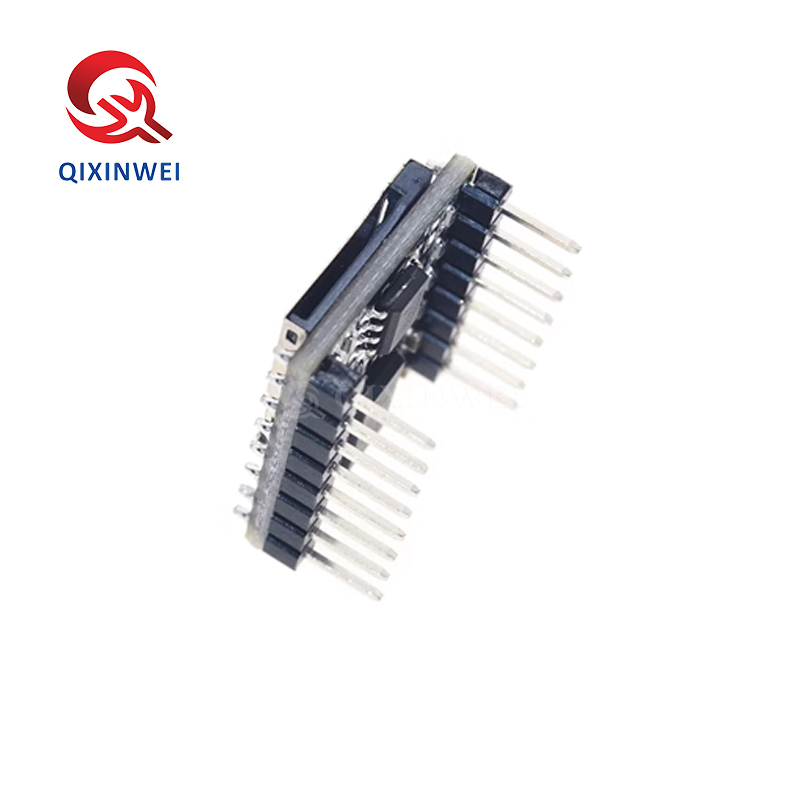
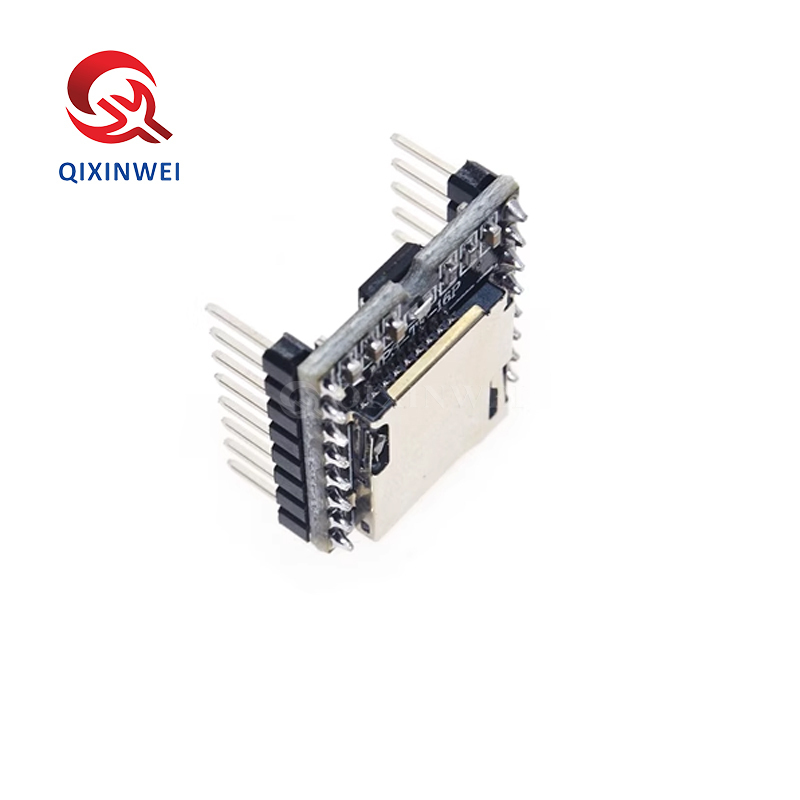
MP3-TF-16P Mini MP3 Player Module TF Card Serial Control Audio Voice Development Board
MP3-TF-16P Mini MP3 Player Module Core Functions
◆ Audio Decoding
Hardware decoding for MP3, WAV, WMA formats
◆ Sampling Rates
8/11.025/12/16/22.05/24/32/44.1/48 KHz
◆ Output Quality
24-bit DAC output, 90dB dynamic range, 85dB SNR
Storage Support
◆ TF Card
Up to 32GB, FAT16/FAT32 file system
◆ USB Drive
Up to 32GB
◆ NORFLASH
Up to 64MB
Control Methods
◆ Serial Mode
UART command control (recommended)
◆ IO Trigger Mode
Direct button control
◆ AD Key Mode
ADC button reading
MP3-TF-16P Mini MP3 Player Module Audio Output
◆ Speaker Output
SPK1/SPK2, drives up to 3W speaker directly
◆ Line Output
DAC_L/DAC_R, connect to external amplifier
Playback Features
◆ Folder Management
Up to 100 folders, 255 tracks per folder
◆ Playback Control
30-level volume, 6-level EQ adjustable
◆ Interrupt Function
Background music pause and advertisement insertion
MP3-TF-16P Mini MP3 Player Module Notes
◆ Dual GND Required
Both pin 7 and pin 10 must be grounded
◆ Serial Voltage
3.3V/5V compatible, 1kΩ resistor recommended on RX
◆ Command Format
HEX hexadecimal format required
◆ Power Supply
5V recommended, 3.3V may not drive speaker
MP3-TF-16P Mini MP3 Player Module Applications
◆ Voice Broadcast
Car navigation voice
Toll station voice prompts
Equipment fault alarms
◆ Arduino Audio Projects
Music player DIY
Voice interaction systems
Creative music boxes
◆ Embedded Development
MCU audio expansion
Access control voice prompts
Industrial equipment voice guide
◆ IoT Applications
Smart home voice
- Remote broadcast systems
Why Choose QIXINWEI
Years of experience in the electronics industry. Trusted by global customers.
Massive In-Stock Inventory – Ready to ship promptly
BOM Matching Service – One-stop solution, save time
PCBA Customization – Professional engineering team creates tailor-made solutions based on your needs
Cost-Effective & Efficient – Better channel, better cost
A dedicated team makes your procurement smoother.
Contact us for BOM quotes or PCBA inquiries



Quantity(Pieces) | 1 ~ 30000 | 30001 ~ 300000 | > 300000 |
Est. Time(days) | 5 | 7 | To be negotiated |

FAQ:
What is the MP3‑TF‑16P mini MP3 player module and its key specifications?
This is a compact audio playback module designed for embedded sound applications. It reads audio files directly from a microSD (TF) card and outputs sound through a built‑in 3 W mono Class‑D amplifier. Key specifications: operating voltage 3.7 V – 5 V DC (typically 5 V), supports FAT16/FAT32 file systems on microSD cards up to 32 GB, plays MP3 and WAV files, is controlled via a UART serial interface (9600 bps, 8N1), and includes an AD‑key input for connecting simple button arrays. The module can directly drive a 4 Ω / 3 W speaker and is widely used in voice prompts, alarms, toys, and interactive exhibits.How do I connect the MP3‑TF‑16P module to a microcontroller (Arduino/ESP32)?
Wiring uses the UART interface. Connect VCC → 5 V, GND → GND, TX (module) → RX (MCU), and RX (module) → TX (MCU). If your MCU is 3.3 V logic (ESP32), the module’s UART pins are 5 V tolerant, but it is safer to use a level shifter or a voltage divider on the RX line. Connect a 4 Ω or 8 Ω speaker directly to the SPK+ and SPK‑ terminals. Insert a microSD card formatted as FAT16/FAT32 with MP3 files. Power the module and send serial commands at 9600 bps to control playback. The module’s BUSY pin can be optionally connected to a digital input to detect playback status.How do I send serial commands to control playback (play, pause, next, volume)?
The module uses a hexadecimal command protocol over UART. Commands are 10‑byte frames starting with 0x7E and ending with 0xEF. Common examples:
Play track 001 (folder “01”):7E FF 06 0F 00 01 01 xx EF(xx = checksum of bytes 2–7).
Pause:7E FF 06 0E 00 00 00 xx EF
Next track:7E FF 06 01 00 00 00 xx EF
Volume set (0–30):7E FF 06 06 00 00 vol xx EF
A checksum calculator or pre‑built libraries (DFRobot DFPlayer Mini library works with small modifications) can handle the protocol. Many developers use the “DFPlayer Mini” Arduino library because this module is a clone of the popular DFPlayer Mini, and the command set is identical.What audio file formats and microSD card sizes are supported?
The module supports MP3 (all bitrates) and WAV (PCM, 8‑bit/16‑bit, mono/stereo, up to 48 kHz). It does not support WMA, FLAC, AAC, or OGG. The microSD card must be formatted as FAT16 or FAT32, with a maximum capacity of 32 GB. Files placed in the root directory or inside folders (named “01”, “02”, etc.) are automatically indexed. The module only recognizes 8.3 file name format (e.g., “SONG0001.MP3”); long file names may not be played. The default play order follows the order in which files were copied to the card.How do I use the AD‑key (analog) button input? Can I control it without a microcontroller?
Yes. The module has a dedicated AD‑key input pin that detects different resistor values from a simple button array. By connecting a few push‑buttons with series resistors (values listed in the datasheet), you can trigger functions like Play/Pause, Next, Previous, Volume Up/Down without any serial communication. This makes the module usable as a stand‑alone player with just a battery, a speaker, and a few buttons. The resistor values typically correspond to: Play/Pause (33 kΩ), Next (6.2 kΩ), Previous (9.1 kΩ), Vol+ (15 kΩ), Vol‑ (24 kΩ). Check your specific module’s documentation for exact values.How can I adjust the volume and select play modes (loop, random, etc.)?
Volume can be set via serial command (0–30) or through the AD‑key buttons. The module also supports several play modes, selectable by serial command:
Repeat current track:7E FF 06 19 00 00 01 xx EF
Repeat all:7E FF 06 19 00 00 02 xx EF
Random:7E FF 06 19 00 00 03 xx EF
Normal (play once then stop):7E FF 06 19 00 00 00 xx EF
Some modules also support folder‑specific playback and inserting SD‑card advertisements (interrupting current track with a short message). These modes can be changed on‑the‑fly without rebooting the module.Does the MP3‑TF‑16P have a built‑in amplifier? What speakers can it drive?
Yes, it includes an on‑board 3 W mono Class‑D amplifier (typically an SC8002B or similar chip). It can directly drive a 4 Ω speaker at up to 3 W (with a 5 V supply) or an 8 Ω speaker at about 1.5 W. The speaker output is bridge‑tied load (BTL), so neither terminal is ground — do not connect one side to GND. For higher power or stereo applications, you can connect an external amplifier to the module’s DAC output pins (DAC_R and DAC_L), which provide a line‑level signal. The amplifier also features pop‑suppression to reduce noise during power‑on.Why does my module not respond to serial commands or produce no sound?
Common causes:
1) Baud rate mismatch – the default baud is 9600 bps; check that both MCU and module are set to the same rate.
2) Incorrect command checksum – each command frame must have a correct checksum (low byte of sum of bytes 2–7, inverted). Use a library or a pre‑calculated table.
3) Busy pin logic – some commands require the module to be in idle state; if the module is already playing, you may need to send a stop command first.
4) SD card issues – ensure the card is formatted FAT16/FAT32, files are in the root or “01” folders, and use 8.3 file names. A bad contact in the card holder is common — re‑seat the card.
5) Power supply – the amplifier can draw high peak currents; use a stable 5 V / 1 A supply and add a 100 µF capacitor near the module’s power pins.Can I use this module as a voice prompt player in a larger system? How is it typically integrated?
Yes, it is designed for exactly this purpose. In a larger system, the host MCU (Arduino, ESP32, STM32) sends serial commands to play specific numbered tracks. The module’s BUSY pin signals whether playback is in progress. A typical workflow: host detects an event → sends “play track 005” command → waits for BUSY to go HIGH → optionally sends “stop” after the message. This allows the main controller to focus on its primary task while the MP3 module handles audio playback. The module is commonly integrated into elevator voice annunciators, medical device alarms, vending machines, and access‑control panels.What are the most typical applications for the MP3‑TF‑16P module?
It is a staple in voice‑prompt systems, DIY talking toys, alarm and notification boards, interactive museum exhibits, elevator floor annunciators, smart‑home voice feedback, and embedded jukeboxes. Its low cost, simple serial control, and built‑in amplifier make it a favourite for adding high‑quality audio to microcontroller projects without complex decoding hardware.
- 原产地:
- Original
- 品牌:
- Original
- 型号:
- Mini MP3-TF-16P
- 装运方式:
- DHL \ UPS \ Fedex \ EMS \ HK Post
- 种类:
- 其他
- 芯片组:
- -
- 应用:
- 通用