qixinwei-pcba


Mini360 Model Aircraft Power Supply DC-DC buck Module Ultra-Small Power Module Vehicle Power Supply Super LM2596
Mini360 Product Overview
The Mini360 is an ultra‑compact non‑isolated synchronous rectification step‑down (buck) converter module. It features a molded power inductor and a high‑efficiency synchronous controller. Input voltage ranges from 4.75V to 23V, output is adjustable from 1.0V to 17V, with a peak output current of 3A (1.8A continuous). Efficiency reaches up to 96%, and switching frequency is 340kHz. With dimensions of only 17×11×3.8mm, it is significantly smaller than traditional LM2596 modules, making it ideal for space‑constrained applications such as FPV drones, automotive power supplies, and battery‑powered devices.
Mini360 Core Features
Ultra‑Compact Size: Only 17×11×3.8mm, extremely lightweight – perfect for FPV racing drones, micro UAVs, and other weight‑sensitive applications.
Synchronous Rectification: Uses a synchronous controller, eliminating the need for an external diode, resulting in lower heat generation and higher efficiency across a wide load range.
High Efficiency: Up to 96% conversion efficiency, reducing power loss and extending battery life.
Wide I/O Range: Input 4.75‑23V, output 1.0‑17V continuously adjustable (via onboard potentiometer) – covers single Li‑ion cells up to 6S Li‑Po packs.
Strong Output Capability: Peak 3A output current, 1.8A continuous – sufficient for most low‑voltage devices.
Low Ripple: Output ripple as low as 30mV (no load), friendly to noise‑sensitive loads.
Wide Temperature Range: -40℃ to +85℃ for outdoor and industrial environments.
Integrated Inductor: Molded power inductor reduces size, loss, and improves saturation resistance.
Mini360 Applications
FPV Racing Drone / RC Power Supply: Provides stable 5V/12V for flight controllers, video transmitters, cameras.
Car Power Supply: Steps down 12V‑24V vehicle battery to 5V for dashcams, USB chargers, etc.
Battery‑Powered Devices: Converts 2‑6S Li‑ion/Li‑Po packs to 3.3V, 5V, or adjustable output for sensors and MCUs.
Robotics / Smart Cars: Supplies main control boards, servos, and motor drivers.
DIY Electronics: General‑purpose buck converter for custom circuits.
Mini360 Key Advantages
The Mini360 is a compact alternative to classic step‑down modules like the LM2596. Its 17×11mm size fits easily into racing drone frames or tight enclosures. Synchronous rectification achieves 96% efficiency, significantly reducing heat generation while delivering 1.8A continuous without a heatsink. Wide input voltage covers 1‑6S Li‑ion packs, and the adjustable output via potentiometer offers flexible voltage regulation. The molded power inductor minimises external components, improves reliability, and withstands vibration – crucial for drone applications. Compared to traditional modules, the Mini360 reduces board area by over 70% while maintaining similar output capability, making it the go‑to choice for space‑sensitive buck conversion.
Why Choose QIXINWEI
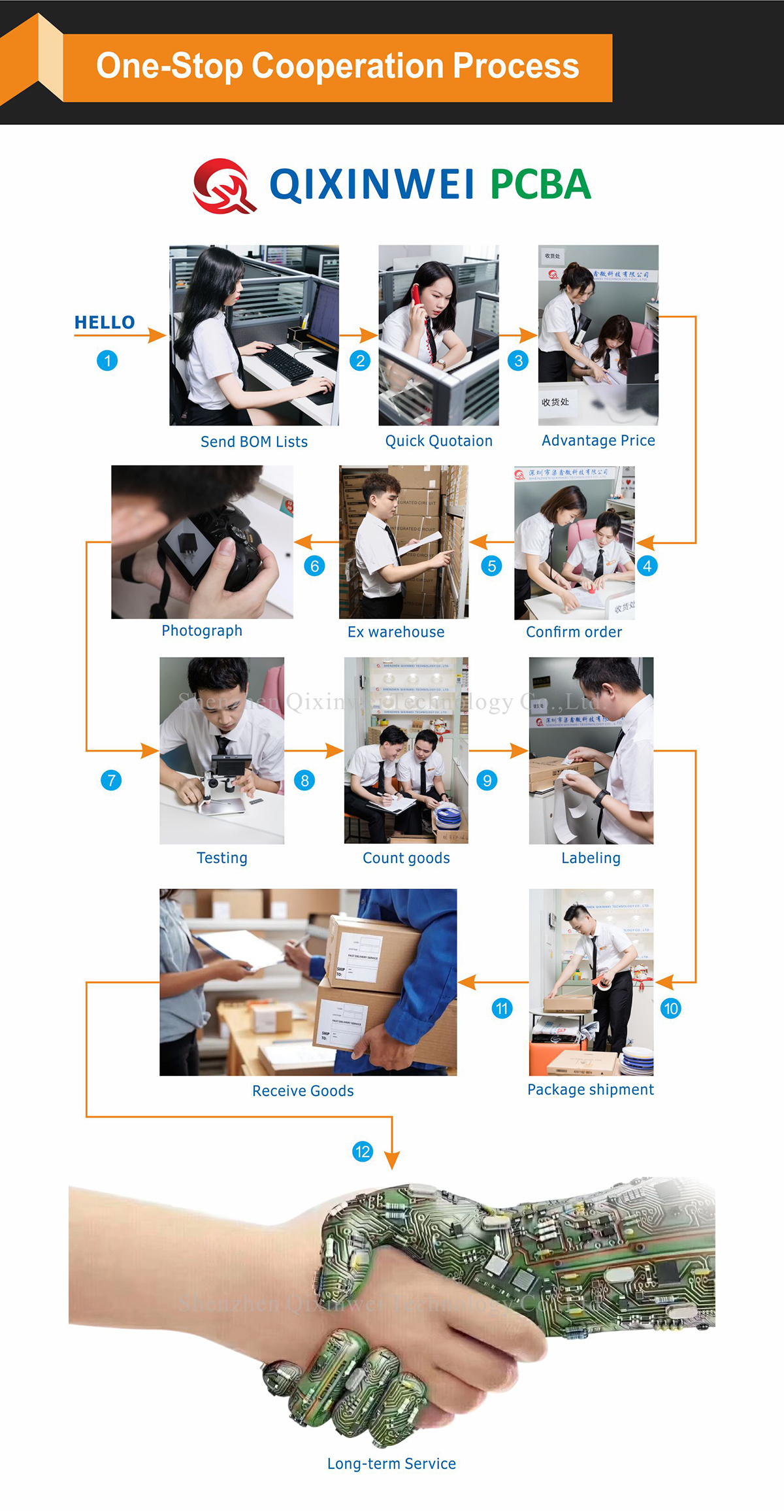
Years of experience in the electronics industry. Trusted by global customers. Massive In-Stock Inventory – Ready to ship promptly. BOM Matching Service – One-stop solution, save time. PCBA Customization – Professional engineering team creates tailor-made solutions based on your needs. Cost-Effective & Efficient – Better channel, better cost. A dedicated team makes your procurement smoother. Contact us for BOM quotes or PCBA inquiries.





FAQ:
What is the Mini360 DC‑DC buck module and why is it called "Super LM2596"?
The Mini360 is an ultra‑small step‑down (buck) voltage regulator module built around a high‑frequency switching IC, commonly the MP1584 or similar. It is nicknamed "Super LM2596" because it performs the same basic function—converting a higher DC voltage to a lower adjustable output—but in a much smaller footprint, with significantly higher efficiency and a higher switching frequency that allows a tiny on‑board inductor. Unlike the LM2596, it uses a synchronous MOSFET design, which reduces heat and voltage drop.What is the input voltage range of the Mini360 module? Can it handle 24V or 28V?
The module typically accepts an input voltage from 4.5 V to 28 V. This makes it suitable for 2‑ to 6‑cell Li‑ion packs, 12 V and 24 V automotive systems, and solar panels. Never exceed 28 V, as the input capacitor and the IC itself may be damaged. For reliable long‑term operation with a 24 V battery system, ensure the input does not surge above 28 V during charging or load dumps.What is the maximum output current, and why does it depend on the input voltage?
The module can deliver up to 3 A peak, but the continuous safe current is typically 1.8 A without additional cooling. The actual maximum depends on the difference between input and output voltage: the larger the voltage drop, the more heat is generated. For example, with a 12 V input and a 5 V output, you can draw about 2 A safely. With a 24 V input and a 5 V output, the current should be limited to around 1 A unless you add a heat sink or airflow.How do I adjust the output voltage? Can I set it to 3.3 V, 5 V, or 12 V?
The output voltage is adjusted by turning a small brass potentiometer on the board. Connect a multimeter to the output, apply power, and turn clockwise to increase the voltage, counter‑clockwise to decrease it. The output range is approximately 0.8 V up to about 2‑3 V below the input voltage. You can easily set it to common values like 3.3 V, 5 V, or 12 V. Always adjust the voltage before connecting your load to avoid over‑voltage damage.How does the Mini360 compare to the classic LM2596 module in terms of efficiency and size?
The Mini360 is about 80‑90% smaller and 5‑10% more efficient than a typical LM2596 module. It uses a synchronous rectification scheme that eliminates the external Schottky diode and its associated forward‑voltage loss. The switching frequency is much higher (up to 1.5 MHz vs. 150 kHz), which allows a tiny chip inductor instead of the large toroidal coil found on LM2596 boards. The result is less heat, a far more compact board, and the ability to fit into tight spaces such as model aircraft, FPV drones, and vehicle‑mounted electronics.Does the Mini360 module need a heat sink? Will it get hot during operation?
At loads below 1 A and moderate input‑output voltage differences, the module stays cool to the touch. If you draw more than 1.5 A continuously or step down from a high voltage (e.g., 24 V to 5 V), the IC and the inductor can become hot. For high‑current applications, ensure adequate airflow or attach a small adhesive heat sink to the IC. If the temperature exceeds 85 °C, the chip may enter thermal protection and shut down temporarily.What is the typical output ripple and noise? Is it suitable for sensitive electronics?
The output ripple is typically 30‑50 mV peak‑to‑peak at moderate loads, which is acceptable for most digital circuits, microcontrollers, and motors. For sensitive analog systems (audio amplifiers, precision ADCs), you can add an extra low‑ESR electrolytic capacitor (100‑470 µF) at the output and, if necessary, a small LC filter to further smooth the voltage. The small size of the module does mean less on‑board filtering capacity, so external capacitors are recommended for critical applications.How should I wire the Mini360 module? Are there any special considerations?
The module has four pads: IN+, IN‑, OUT+, OUT‑. Solder wires directly to the pads or use a screw‑terminal adapter. Use short and thick wires for the power connections to minimize voltage drop. The module has no reverse‑polarity protection, so double‑check the wiring before applying power. If you plan to use it in a vehicle, add a fuse and a transient voltage suppressor (TVS) diode on the input to protect against load‑dump spikes.Can this module be used as a battery charger, or only as a fixed voltage supply?
The Mini360 is a constant‑voltage regulator; it does not have a constant‑current mode. You cannot use it to directly charge a lithium battery without additional circuitry. For LED driving or charging, you need a module that supports CC/CV mode (e.g., a battery charger IC). The Mini360 is designed to power circuits that require a stable, adjustable voltage rail, such as flight controllers, FPV cameras, microcontrollers, and vehicle accessories.What are the most common applications for the Mini360 buck module?
It is widely used in model aircraft, multi‑rotor drones, FPV racing quads, automotive dash‑cams, car USB chargers, and battery‑powered projects where space and weight are critical. Its ability to efficiently step down a 2S‑6S Li‑po battery to 5 V or 12 V makes it a favorite power supply for RC receivers, video transmitters, and servo rails. The ultra‑small size and low weight are particularly valued in flight applications.
- Model:
- Mini360 module
- Type:
- Non‑isolated synchronous step‑down converter
- Input Voltage:
- 4.75V – 23V DC
- Output Voltage:
- 1.0V – 17V DC
- Output Current:
- 3A peak, 1.8A continuous
- Switching Frequency:
- 340kHz
- Output Ripple:
- 30mV
- Load Regulation:
- ±0.5%
- Operating Temperature:
- -40℃ to +85℃
- Applications:
- FPV drone, automotive, battery step‑down, DIY