qixinwei-pcba


Luckfox Pico Mini A/B RV1103 Linux Micro Development Board Onboard 64MB Memory With 128MB FLASH
Luckfox Pico Mini Product Overview
The Luckfox Pico Mini is a cost-effective micro Linux AI development board based on the Rockchip RV1103 vision processor SoC, measuring only 28×21mm and designed for edge intelligence and computer vision applications. The chip features a single‑core ARM Cortex-A7 (1.2GHz, with NEON and FPU) plus a RISC‑V MCU dual‑core architecture. It integrates Rockchip‘s 4th‑generation NPU (0.5 TOPS@INT8, up to 1.0 TOPS with int4) and 3rd‑generation ISP3.2, supporting 4M@30fps video input and H.264/H.265 smart encoding. The chip integrates 64MB DDR2 memory via SiP, eliminating external DDR chips. It provides USB 2.0 (Type‑C), a MIPI CSI 2‑lane camera interface, 17 GPIOs (including UART/SPI/I2C/PWM/ADC), and castellated holes for Ethernet expansion. Two storage versions are available: Mini A boots from a MicroSD card, while Mini B includes 128MB onboard SPI NAND Flash. Pre‑soldered header options (A M / B M) are also offered for direct use and system integration.
Luckfox Pico Mini Core Features
CPU + NPU + ISP + MCU Quad‑Core Processor: Integrates an ARM Cortex-A7 1.2GHz main core, RISC‑V MCU coprocessor, Rockchip’s 4th‑gen NPU, and 3rd‑gen ISP3.2. A single chip handles video capture, image enhancement, AI inference, and system control – significantly reducing system complexity, cost, and power consumption.
0.5 TOPS NPU (1.0 TOPS INT4 Peak): Built‑in 0.5TOPS NPU supporting int4, int8, and int16 mixed precision. Supports model conversion from TensorFlow, PyTorch, and ONNX for efficient on‑device AI inference, achieving face recognition in “under one second”.
Third‑Generation ISP3.2 Image Processor: Supports up to 4M@30fps image capture with HDR, WDR, 2D/3D noise reduction, sharpening, dehazing, and gamma correction – delivering clear images even in low‑light and backlit conditions.
Smart Video Encoding (VEPU): H.264/H.265 hardware encoder up to 4M@30fps. Smart encoding mode reduces bitrate by more than 50% compared to CBR, doubling storage capacity for high‑definition recordings.
RISC‑V Coprocessor & Fast Boot: Built‑in RISC‑V MCU supports low‑power independent operation, enabling 250ms fast image capture while loading AI model libraries, achieving face recognition in under one second.
Integrated 64MB DDR2 Memory: 64MB 16‑bit DDR2 SiP memory eliminates external DDR chips, simplifying PCB design and reducing BOM cost and EMI issues – 2‑layer PCBs can stably run Linux.
Ultra‑Compact 28×21mm Castellated Design: Gold‑plated castellated holes (5 semi‑pads) support 10/100M Ethernet expansion and board‑to‑board soldering for easy integration into compact devices and industrial products.
Rich Peripheral Interfaces: MIPI CSI 2‑lane camera interface, USB 2.0 Host/Device (Type‑C), 17 GPIO pins (including 4×UART, 1×SPI, 1×I²C, 14×PWM, 2×ADC), plus 3.3V/1.8V power outputs.
Flexible Storage Options & Headers: Mini A (MicroSD) and Mini B (128MB SPI NAND Flash) versions; pre‑soldered header options (A M / B M). The series supports both Buildroot and Ubuntu 22.04.
Luckfox Pico Mini Applications
Robotics & Drones: Main controller for motor drivers and sensors, visual navigation and obstacle avoidance with camera input
Smart Surveillance: AI IP cameras, face recognition access control, video doorbells – 4M video capture, H.264 encoding, 0.5TOPS on‑device AI
Smart Home Devices: Smart peepholes, face recognition locks, robot vacuum vision navigation modules
Industrial Automation: Industrial vision inspection, OCR recognition devices, AGV navigation – castellated design for easy embedding
New Retail Terminals: Foot traffic counting, product recognition, unattended checkout terminals
Edge Computing Nodes: Industrial IoT data aggregation gateways, AI edge computing nodes
Luckfox Pico Mini Key Advantages
Extreme Cost‑Effectiveness at $10–$15: Starting at just $10.25–$14.39, the Luckfox Pico Mini packs a full Linux system, MIPI CSI camera interface, and 0.5TOPS NPU into a 28×21mm form factor. It delivers industrial‑grade edge AI vision performance at a consumer‑level price.
Integrated 64MB DDR2 + Castellated Pads Lower Design Barriers: On‑chip 64MB DDR2 eliminates external memory routing and EMI debugging. The 28×21mm castellated design requires minimal external components to run a full Linux system – ideal for embedded products with tight PCB area and cost constraints.
0.5TOPS NPU Enables On‑Device AI with Millisecond Response: Built‑in 0.5TOPS NPU achieves sub‑second face recognition. AI inference efficiency is significantly improved compared to CPU‑only solutions – true on‑device intelligence, reducing cloud dependency and latency.
Third‑Gen ISP3.2 + Smart H.264/H.265 Encoding: 4M@30fps video capture, HDR/WDR wide dynamic range, multi‑level 3D noise reduction, and 50% bitrate‑saving smart encoding – delivering professional‑grade image quality and storage efficiency for security cameras and AI vision products.
Castellated Design + Multiple Versions for Flexible Product Integration: Mini A/B, with or without pre‑soldered headers. Castellated half‑holes support 10/100M Ethernet expansion and board‑to‑board soldering – the same hardware platform adapts from prototyping to mass production integration.
Mature Open‑Source Ecosystem: Official support for Buildroot and Ubuntu 22.04, complete SDK, hardware schematics, and rich documentation – lowering development barriers and accelerating time‑to‑market.
Domestic Supply Chain for Independent Control: Jointly built by Luckfox and Rockchip, a fully domestic solution offering supply chain security for projects with strict localisation requirements in industrial, surveillance, and AIoT sectors.
RISC‑V MCU for Ultra‑Low Power Fast Boot: The RISC‑V coprocessor can wake the system independently, achieving 250ms fast image capture and sub‑second face recognition with NPU acceleration – ideal for battery‑powered video doorbells and outdoor surveillance.
Why Choose QIXINWEI
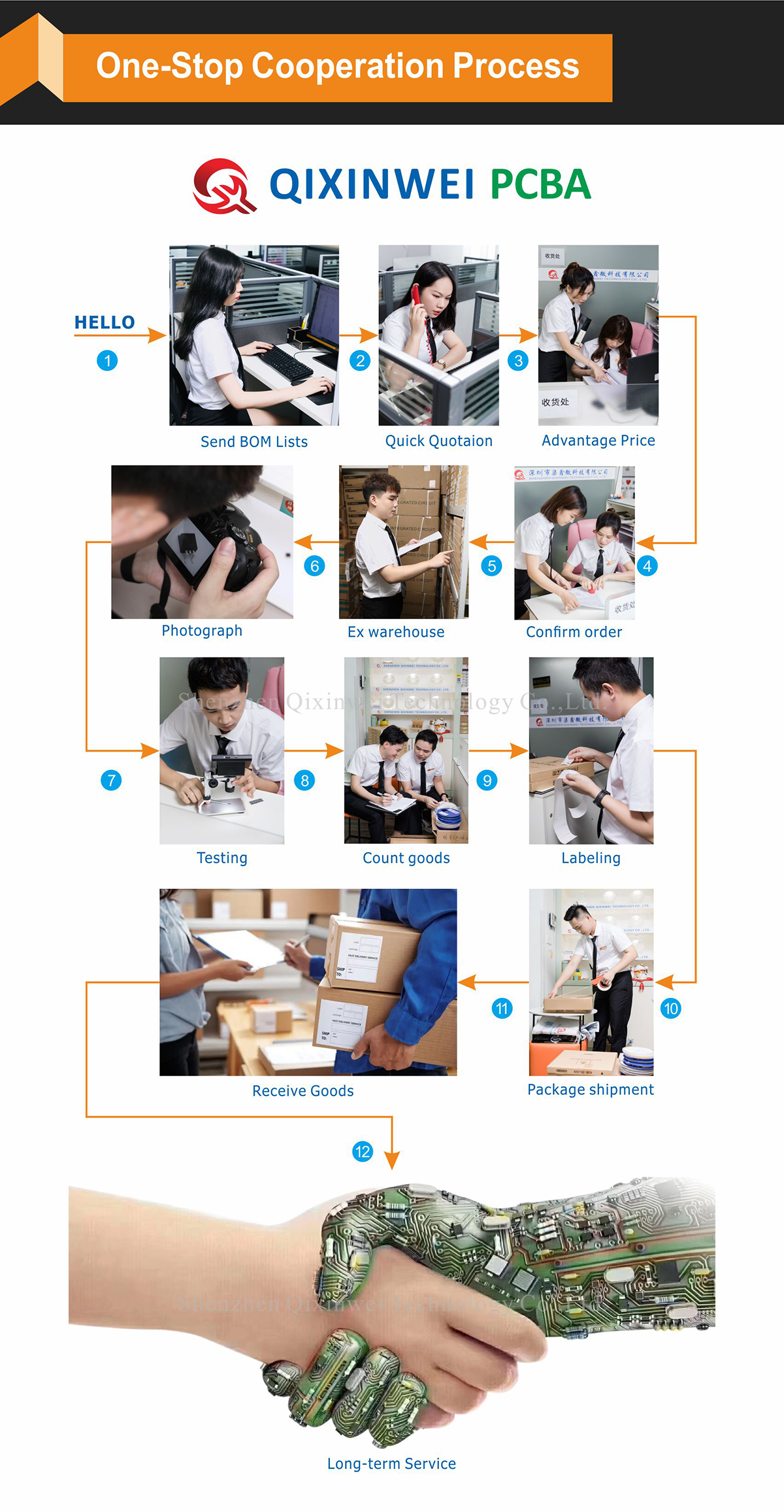
Years of experience in the electronics industry. Trusted by global customers.
Massive In-Stock Inventory – Ready to ship promptly
BOM Matching Service – One-stop solution, save time
PCBA Customization – Professional engineering team creates tailor-made solutions based on your needs
Cost-Effective & Efficient – Better channel, better cost
A dedicated team makes your procurement smoother.
Contact us for BOM quotes or PCBA inquiries






FAQ:
What is the Luckfox Pico Mini and what makes it different from a typical MCU board?
The Luckfox Pico Mini is a tiny Linux development board built around the Rockchip RV1103 SoC. Unlike a microcontroller, it runs a full Linux operating system (Buildroot) on a ARM Cortex‑A7 core, while a built‑in RISC‑V MCU handles real‑time tasks. With 64 MB of RAM and 128 MB of Flash, it offers a complete embedded Linux environment in a form factor similar to a Raspberry Pi Pico.What is the difference between the Luckfox Pico Mini A and the Mini B?
The Mini A and Mini B share the same core specs (RV1103, 64 MB RAM, 128 MB Flash). The Mini A breaks out more GPIOs and typically includes a camera connector, while the Mini B is a minimal variant designed for ultra‑compact applications. Both run the same Linux system image, so software is fully compatible between them.Does the RV1103 have an NPU? Can I run AI vision tasks on the Pico Mini?
Yes. The RV1103 integrates a 0.5 TOPS NPU (Neural Processing Unit) that supports INT8/INT16 inference. Combined with a camera module (connected via the Mini A’s MIPI CSI), you can run lightweight AI vision applications such as object detection, face recognition, or QR code scanning directly on the board using frameworks like RKNN.What can I do with 64 MB of RAM and 128 MB of Flash on a Linux board?
This is enough for a wide range of headless IoT applications: data logging, MQTT gateways, simple web servers, protocol conversion (e.g., UART‑to‑Wi‑Fi), and even basic AI inferencing. The Linux environment allows you to use Python, C, or shell scripts, and the Flash can store a full system image plus your application code, often leaving around 40–60 MB for user data.How is the dual‑core architecture of the RV1103 used? Can the RISC‑V core run bare‑metal code?
The ARM Cortex‑A7 runs the main Linux OS, while the integrated RISC‑V MCU can execute real‑time bare‑metal or RTOS code. This allows you to handle time‑critical tasks (sensor reading, motor control) on the MCU while the Linux side manages networking, data storage, and user interface, all on a single chip.What programming languages and tools can I use with the Luckfox Pico Mini?
You can develop in C/C++ using a cross‑compilation toolchain, or use Python (via the on‑board MicroPython or a full CPython build). The board is supported by the Rockchip SDK and the Luckfox team provides a ready‑to‑use Buildroot system image, complete with drivers for camera, USB, and GPIO.What power supply does the Luckfox Pico Mini require? Is it low‑power?
The board is powered via USB‑C (5V) and typically consumes around 0.5 W during normal operation, making it suitable for battery‑powered applications. The RV1103’s hybrid architecture also allows the Cortex‑A7 to be put into sleep while the RISC‑V MCU remains awake, further reducing power consumption for duty‑cycled tasks.Can I connect sensors and actuators to the GPIO pins? Are standard interfaces available?
Yes. The GPIO header provides standard interfaces including SPI, I2C, UART, PWM, and ADC. You can attach common sensors (temperature, motion, distance) and control relays or LEDs directly. The Linux kernel includes drivers for these interfaces, so you can access them from userspace using simple scripts or compiled programs.How is the Luckfox Pico Mini different from a Raspberry Pi Zero or a microcontroller like ESP32?
Compared to an ESP32, the Pico Mini runs a real Linux OS, supports multiple programming languages, and has a dedicated NPU for AI vision. It is more powerful than a typical MCU for networking and data processing, but smaller and lower‑power than a Raspberry Pi Zero, which has a full HDMI output and more RAM. The Pico Mini targets headless, AI‑enabled IoT nodes rather than general‑purpose computing.What are the most common applications for the Luckfox Pico Mini A/B?
It is used for intelligent cameras, real‑time image recognition, IoT gateways, edge AI nodes, industrial monitoring, data loggers, and any project that requires an embedded Linux system with AI processing in a tiny, low‑power form factor. The Mini A is preferred for vision tasks, while the Mini B is better for space‑constrained, non‑camera applications.
- Model:
- Luckfox Pico Mini A/B RV1103 Board
- CPU:
- Single‑core ARM Cortex-A7 @ 1.2GHz(NEON, FPU)+ RISC‑V MCU
- ISP:
- 3rd‑gen ISP3.2, up to 4M@30fps(2592×1520),HDR/WDR/3DNR support
- Video Codec:
- H.264/H.265 hardware encoding, up to 4M@30fps, smart encoding
- Embedded Memory:
- 64MB DDR2
- Storage Options:
- Mini A:MicroSD slot; Mini B:128MB SPI NAND Flash
- Camera Interface:
- MIPI CSI 2‑lane
- Buttons:
- BOOT button, Reset button
- GPIO:
- 17 pins
- Applications:
- AI cameras, Robotics, Smart home, Industrial vision, Edge computing, New retail