qixinwei-pcba


LGT8F328P MiniEVB Development Board Replace Pro Mini ATMega328P 32MHz
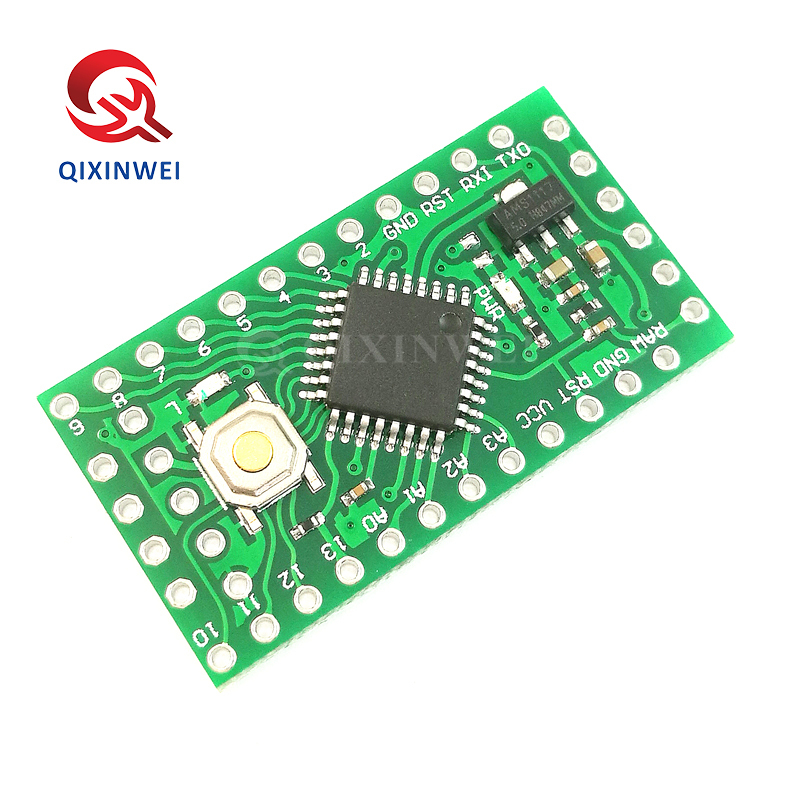
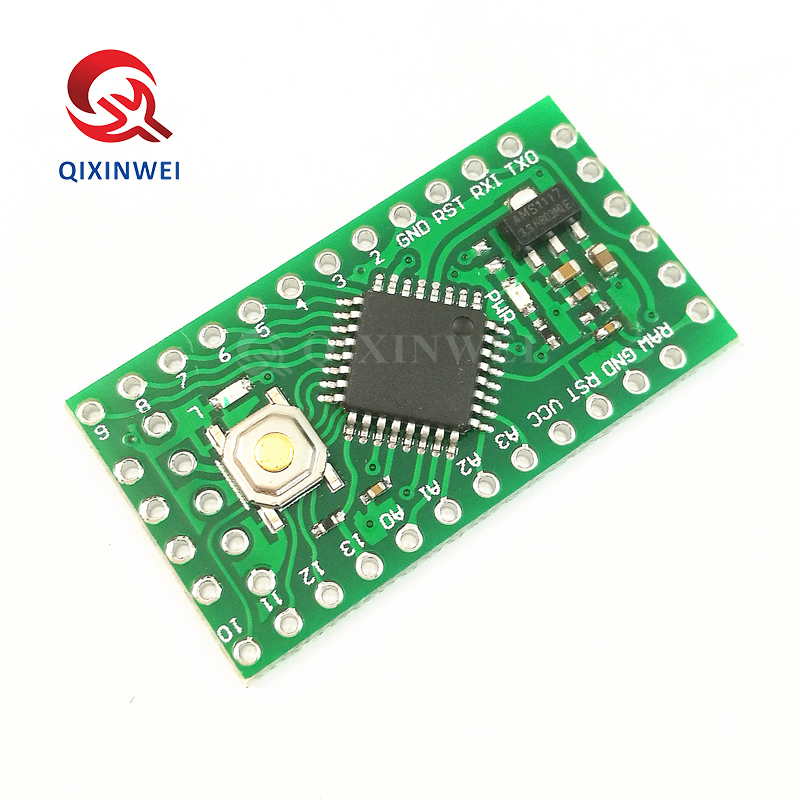
LGT8F328P MiniEVB board, drop-in replacement for Arduino Pro Mini. 32MHz, 32KB Flash, 2KB SRAM, 12-bit ADC+8-bit DAC. 3.3V/5V selectable, Arduino IDE compatible, built-in precision RC oscillator. Perfect for low-power DIY projects



Quantity(Pieces) | 1 ~ 30000 | 30001 ~ 300000 | > 300000 |
Est. Time(days) | 5 | 7 | To be negotiated |

FAQ:
What is the LGT8F328P MiniEVB development board and its key specifications?
The LGT8F328P MiniEVB is an enhanced, drop‑in replacement for the classic Arduino Pro Mini. It is built around the LGT8F328P microcontroller, which is binary‑compatible with the ATmega328P but offers significant hardware improvements. Key specifications: 32 KB Flash, 2 KB SRAM, 1 KB EEPROM, a maximum internal oscillator frequency of 32 MHz (vs. 16 MHz on the Pro Mini), a 12‑bit ADC (vs. 10‑bit), an 8‑bit DAC, an on‑chip 3.3 V LDO regulator, 4× 16‑bit timers, a true random number generator, and hardware multiplication/division. The board shares the same compact form factor, pinout, and voltage options (3.3 V/5 V) as the Pro Mini, making it an ideal high‑performance upgrade for space‑constrained projects.How is the LGT8F328P MiniEVB different from a standard Arduino Pro Mini (ATmega328P)?
The LGT8F328P board is pin‑compatible but significantly more powerful. The main improvements are: double the clock speed (32 MHz vs 16 MHz) using the internal oscillator, a 12‑bit ADC (4 × finer resolution), an on‑chip 8‑bit DAC (absent on the ATmega328P), built‑in 3.3 V regulator (supplies up to 150 mA to external components), hardware math acceleration, and lower power consumption. Unlike the Pro Mini, which requires an external USB‑to‑serial adapter for programming, some MiniEVB versions include an on‑board USB‑C port for direct programming. All existing Arduino libraries and sketches run without modification.Is the LGT8F328P MiniEVB fully compatible with the Arduino IDE and libraries?
Yes, it is fully compatible. You must install the LGT8F328P board package (provided by Logic Green or the community) in the Arduino IDE. After installation, select the board “LGT8F328P” and choose the clock speed (32 MHz internal is recommended). All standard Arduino functions — digitalWrite, analogRead, Serial, PWM, attachInterrupt — work exactly as on an ATmega328P. The vast majority of third‑party libraries are also compatible. The programming method depends on the board variant: if it has a USB‑C port, you can upload directly via USB; otherwise, you use an external USB‑to‑serial adapter (just like the Pro Mini).What are the ADC and DAC specifications? How do they compare to the ATmega328P?
The LGT8F328P features a 12‑bit successive‑approximation ADC with up to 8 multiplexed inputs, providing a resolution of 0–4095 — four times finer than the ATmega328P's 10‑bit ADC (0–1023). It also includes a programmable gain amplifier (PGA) with gains of 1×, 2×, 4×, and 8×, and an internal 1.024 V precision voltage reference. The 8‑bit DAC on pin PD4 (digital pin 4) can output a true analog voltage between 0 V and the reference voltage, which the ATmega328P completely lacks. This makes the MiniEVB far better suited for precision sensor reading and analog signal generation.How do I power the LGT8F328P MiniEVB, and what is the built‑in 3.3 V regulator?
The board can be powered in several ways: through the RAW pin (accepts 4.5 V – 12 V DC, regulated down to 3.3 V or 5 V by the on‑board LDO), through the VCC pin (a regulated 3.3 V or 5 V, depending on the board variant), or via the USB‑C port (if equipped). A standout feature is the on‑chip 3.3 V LDO regulator built into the LGT8F328P chip itself. This regulator can supply up to 150 mA to external 3.3 V sensors and modules directly from the chip's 3.3 V output pin, eliminating the need for an external regulator. This greatly simplifies battery‑powered and mixed‑voltage designs.What is the maximum clock speed, and do I need an external crystal?
The LGT8F328P can run at up to 32 MHz using its internal calibrated RC oscillator. No external crystal is needed — the internal oscillator has sufficient accuracy (typically ±1 % at room temperature) for UART communication and most applications. If higher precision is required, you can still connect an external 16 MHz crystal. The 32 MHz internal clock gives approximately 2× the processing speed of a standard 16 MHz Pro Mini, significantly boosting performance for math‑intensive or real‑time tasks.How do I program the LGT8F328P MiniEVB? Do I need a special programmer?
If your MiniEVB has a USB‑C port, you can program it directly via USB — the on‑board bootloader handles the upload, just like an Arduino Uno. If your board does not have a USB port, you use a standard USB‑to‑serial adapter (FTDI or CH340) connected to the board's TX, RX, VCC, and GND pins, exactly as you would with a Pro Mini. You can also use an ISP programmer (e.g., USBasp) via the ICSP header. The bootloader is Optiboot‑based and works seamlessly with the Arduino IDE. No special programmer is required.Is the power consumption lower than the ATmega328P Pro Mini?
Yes. Thanks to a more modern fabrication process, the LGT8F328P consumes less power. In active mode at 16 MHz and 5 V, it draws about 4 mA – 5 mA, compared to ~10 mA for the ATmega328P. In power‑down sleep mode, the current drops to < 1 µA. The chip also supports several low‑power modes with wake‑up from external interrupts or the watchdog timer. This makes it an excellent choice for battery‑powered sensors, wearables, and remote IoT nodes where long battery life is critical.What are the main differences between the 3.3 V and 5 V versions of the MiniEVB?
The LGT8F328P MiniEVB is available in two voltage variants: 3.3 V / 8 MHz and 5 V / 32 MHz. The 5 V version runs at the full 32 MHz and provides 5 V logic levels, making it directly compatible with most Arduino shields and 5 V sensors. The 3.3 V version runs at a lower clock speed (typically 8 MHz for stability) and uses 3.3 V logic, which is ideal for interfacing with modern low‑voltage sensors, ESP modules, and battery‑powered systems. The chip's built‑in 3.3 V regulator is available on both variants. Choose the voltage that matches your peripherals to avoid the need for level shifters.What is the pinout, and is it the same as the Arduino Pro Mini?
Yes, the MiniEVB follows the exact same pinout as the classic Arduino Pro Mini. It provides 14 digital I/O pins (D0–D13), of which 6 support hardware PWM (D3, D5, D6, D9, D10, D11). There are 8 analog input pins (A0–A7). Communication interfaces: UART (TX/RX on D0/D1), I2C (SDA/SCL on A4/A5), and SPI (D10–D13). The board also breaks out RESET, VCC, GND, and RAW pins. The DAC output is on PD4 (digital pin 4). The small form factor (33 mm × 18 mm) is identical to the Pro Mini, so it fits all existing enclosures and carrier boards.What are the most typical applications for the LGT8F328P MiniEVB?
It is a direct, higher‑performance replacement for the Arduino Pro Mini in virtually all applications: wearable devices, IoT sensor nodes, miniature robotics, battery‑powered data loggers, USB‑HID projects (keyboard/mouse emulation), audio generators (using the DAC), and space‑constrained embedded controllers. Its high speed, better ADC, integrated DAC, and low power consumption make it particularly attractive for new designs that need more capability without increasing size or cost.
- 原产地:
- Original
- 品牌:
- Original
- 制造商零件编号:
- LGT8F328P-LQFP32 MiniEVB
- 产品完成度类型:
- 模块
- 安装方式:
- 表面贴装
- 描述:
- 开发板
- 公差:
- -