qixinwei-pcba


ESP32-C6-WROOM-1 WiFi 6 Dev Board 160MHz USB UART Module
ESP32-C6-WROOM-1-NX series dev board based on ESP32-C6 MCU. Supports WiFi 6 (802.11ax) and BLE 5.3/Zigbee/Thread multi-protocol. 160MHz clock, onboard USB to UART, Matter compatible. Ideal for low-power IoT, smart home, Thread border router
ESP32-C6-WROOM-1 Application features:◆ Module Model
ESP32-C6-WROOM-1-NX series (N4 / N8 / N16)
◆ Cores
High-performance RISC-V 32-bit core @160MHz
Low-power RISC-V 32-bit core @20MHz
◆ Clock Speed
160MHz (main core)
◆ Memory
Flash: 4MB / 8MB / 16MB (optional)
SRAM: 512KB
ROM: 320KB
◆ Wireless Connectivity
WiFi 6 (802.11ax, 1x1, 2.4GHz)
Bluetooth 5.3 (BLE)
Zigbee
Thread
802.15.4 (Matter compatible)
◆ Antenna
Onboard PCB antenna / IPEX connector (varies by model)
◆ USB Interface
USB 2.0 (full speed, CDC/ACM virtual serial port support)
◆ Peripheral Interfaces
SPI / I2C / I2S / UART / ADC / PWM
SDIO 2.0
Infrared remote control
◆ Security Features
Secure boot
Flash encryption
Hardware crypto accelerator (AES-256/SHA/RSA/ECC)
◆ Development Environments
Arduino IDE
ESP-IDF v5.0+
MicroPython
PlatformIO
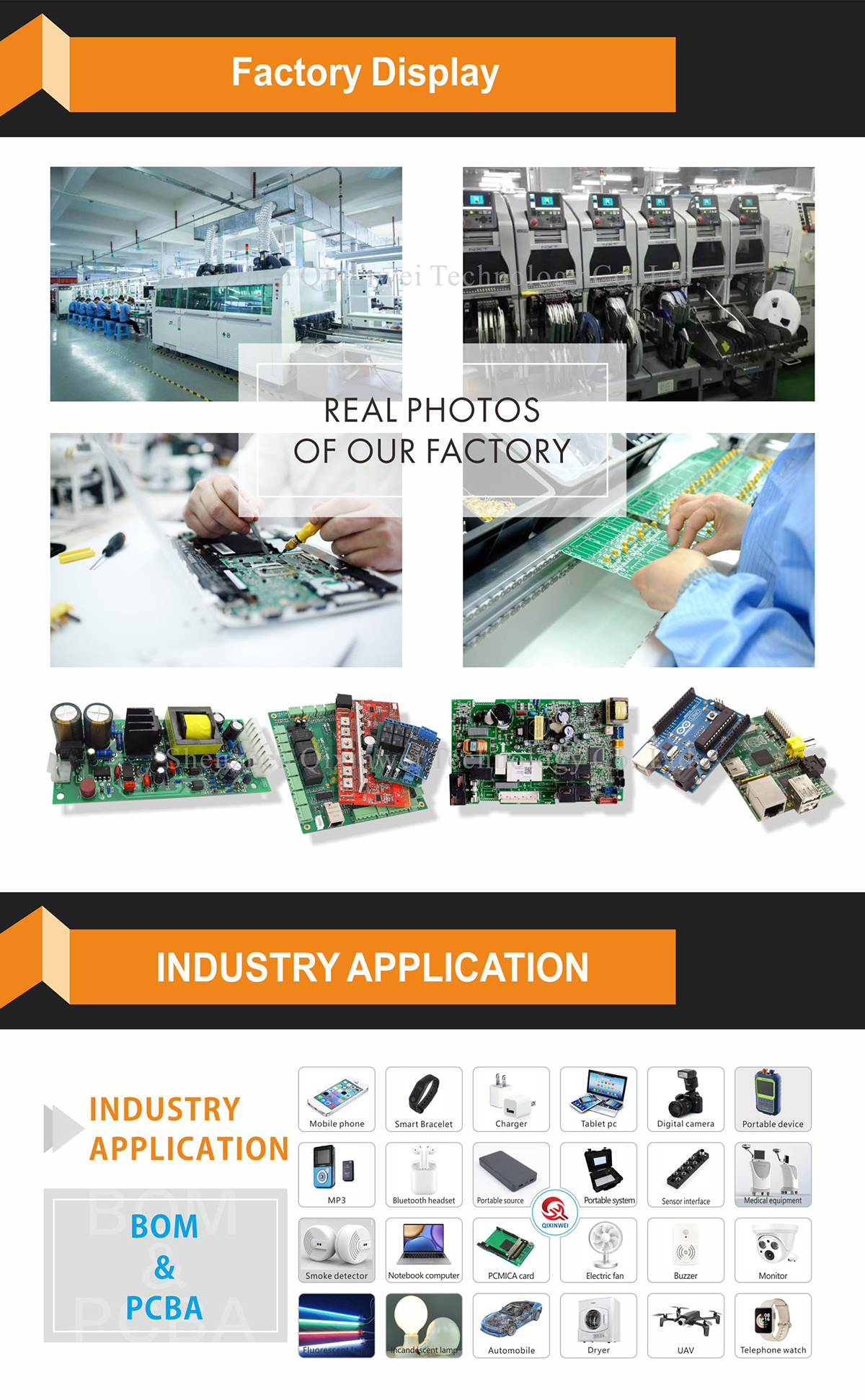
◆ Typical Applications
WiFi 6 low-power IoT
Matter smart home devices
Thread border router
Zigbee gateway
Sensor networks
Industrial automation
Smart lighting
◆ Key Advantages
First RISC-V MCU with WiFi 6 support
Multi-protocol fusion (WiFi+BLE+Zigbee+Thread)
Matter standard support
Low power (deep sleep <5μA)
Direct USB download (no USB to TTL needed)
- Backward compatible with ESP32-C3/C2
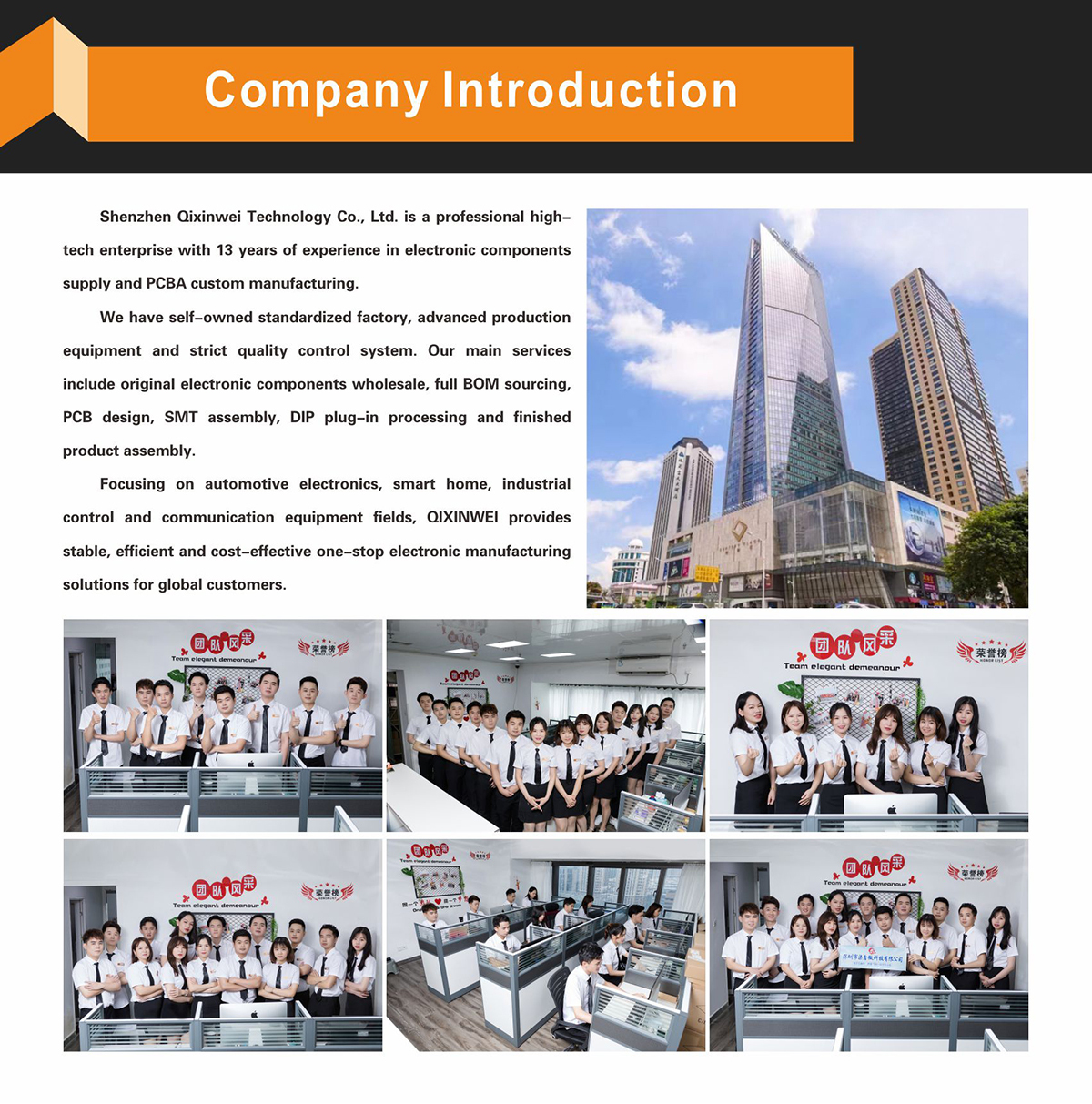
Why Choose QIXINWEI
Years of experience in the electronics industry. Trusted by global customers.
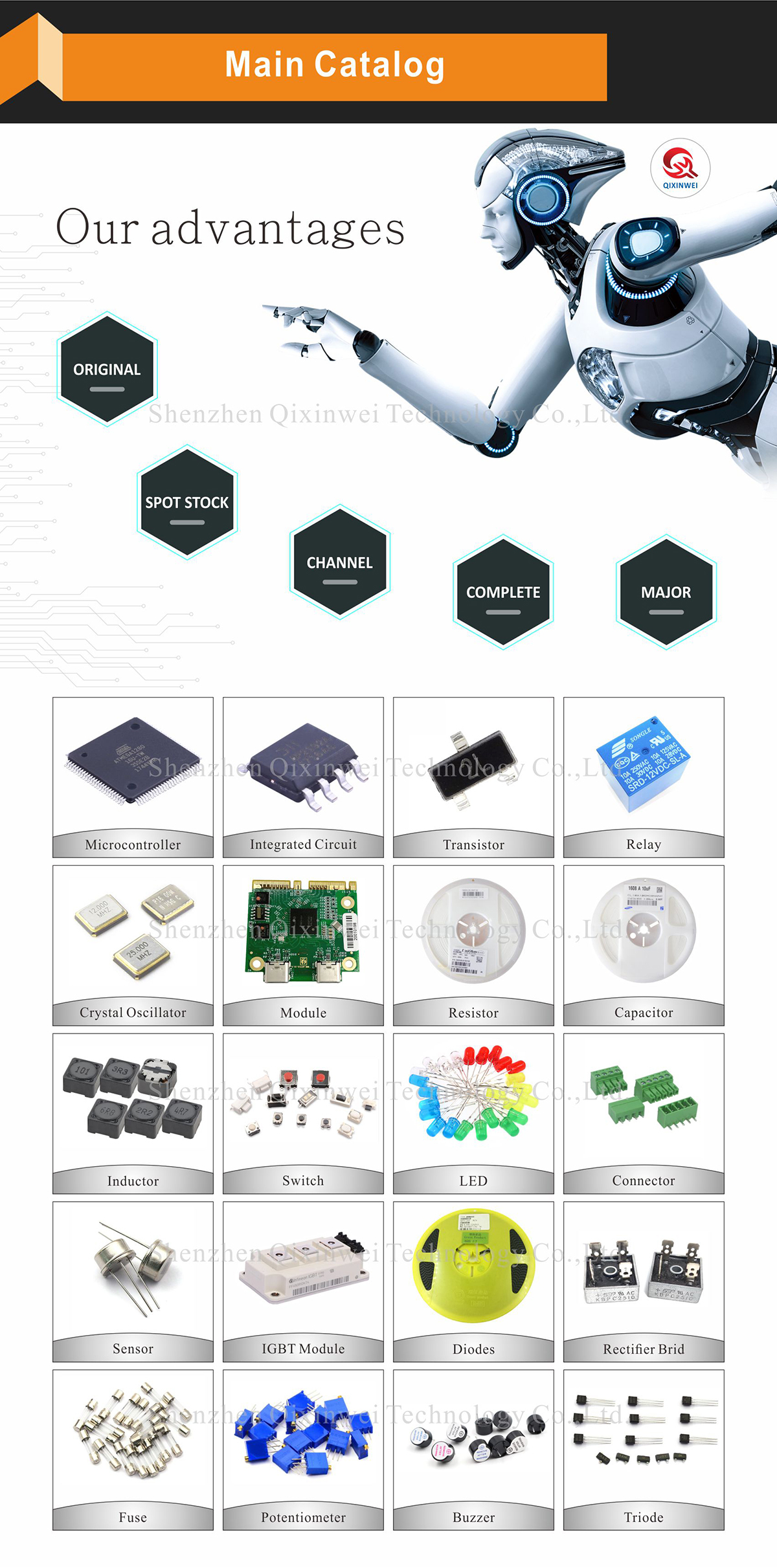
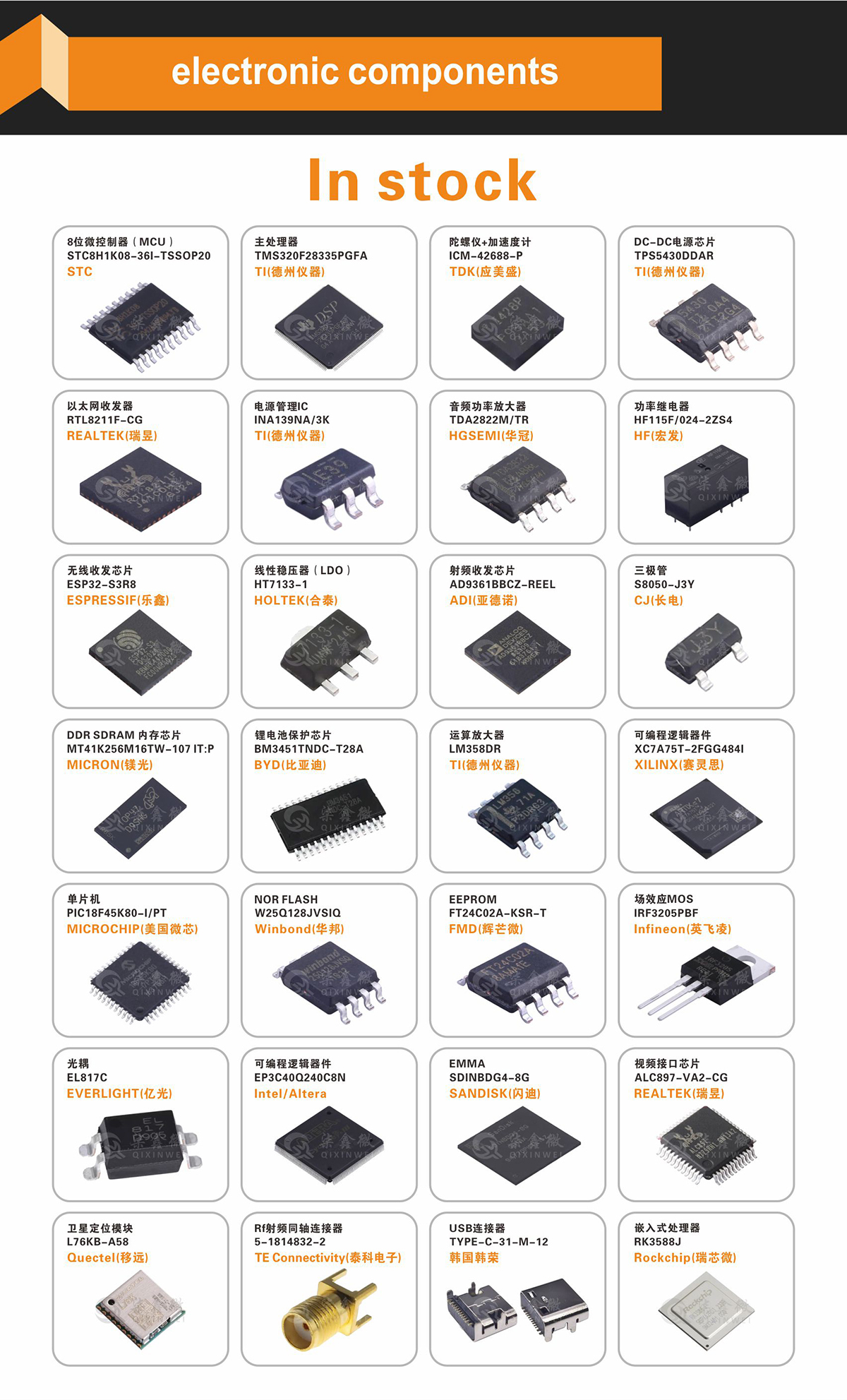
Massive In-Stock Inventory – Ready to ship promptly
BOM Matching Service – One-stop solution, save time
PCBA Customization – Professional engineering team creates tailor-made solutions based on your needs
Cost-Effective & Efficient – Better channel, better cost
A dedicated team makes your procurement smoother.
Contact us for BOM quotes or PCBA inquiries


FAQ:
What is the ESP32-C6-WROOM-1 and its key specifications?
The ESP32-C6-WROOM-1 is a powerful Wi‑Fi 6 + Bluetooth 5.3 LE module built around the ESP32-C6 chip. It features a 32‑bit RISC‑V single‑core processor running at up to 160 MHz, with 512 KB of SRAM and 4 MB of external QSPI Flash. The module supports 2.4 GHz Wi‑Fi 6 (802.11ax), Bluetooth 5.3 Low Energy, IEEE 802.15.4 for Zigbee and Thread, and Matter protocol. It provides a rich set of peripherals: USB CDC/JTAG, UART, SPI, I2C, I2S, ADC, PWM, and up to 23 programmable GPIOs. The module is pin‑compatible with the ESP32-C3-WROOM-1, making it an easy upgrade for existing designs. It is housed in a compact SMD package (18.0 mm × 20.0 mm × 3.2 mm) and operates over ‑40 °C to +85 °C.How does the ESP32-C6 differ from the ESP32-C3? Which one should I choose?
Both modules share the same physical footprint and many peripherals, but the ESP32-C6 offers significant upgrades. The C6 has a 32‑bit RISC‑V processor (vs. a RISC‑V core in C3 but with different performance), supports Wi‑Fi 6 (802.11ax) (C3 only has Wi‑Fi 4), adds Bluetooth 5.3 LE (C3 has 5.0), and includes an IEEE 802.15.4 radio for Thread and Zigbee, enabling Matter connectivity. The C6 also provides a USB CDC/JTAG interface for direct programming and debugging without an extra UART chip. The C6 typically offers slightly higher CPU performance and more SRAM (512 KB vs. 400 KB). Choose the ESP32-C6 for projects that need the latest wireless standards, Matter compatibility, or USB‑direct debugging; the C3 remains a solid, cost‑effective choice for basic Wi‑Fi and BLE applications.What wireless protocols does the ESP32-C6 support?
The ESP32-C6 supports Wi‑Fi 6 (802.11ax) in the 2.4 GHz band, offering improved throughput, lower latency, and better power efficiency compared to Wi‑Fi 4. It also features Bluetooth 5.3 Low Energy (LE) with long‑range mode, advertising extensions, and enhanced coexistence with Wi‑Fi. Crucially, it includes an IEEE 802.15.4 radio, which is the foundation for Thread and Zigbee mesh networks. This enables Matter — the unified smart‑home connectivity protocol — allowing direct communication with other Matter‑certified devices. All three radios can operate concurrently with excellent co‑existence managed by the chip.How do I program the ESP32-C6-WROOM-1, and what development tools are available?
The module can be programmed through the built‑in USB CDC/JTAG interface (using the USB pins directly) or via an external USB‑to‑UART adapter. It is fully supported by Espressif’s ESP‑IDF (the official development framework) and Arduino IDE (via the “esp32” board package by Espressif). For beginners, the Arduino IDE is the quickest way to start, offering familiar functions and many example sketches. The ESP‑IDF provides a more powerful, production‑grade environment with advanced debugging capabilities. You can also use PlatformIO in Visual Studio Code. The module supports over‑the‑air (OTA) firmware updates for field upgrades.How many GPIO pins are available, and what peripherals do they support?
The ESP32-C6-WROOM-1 provides up to 23 general‑purpose I/O pins. These pins can be flexibly assigned to a wide range of peripherals: 3× UART, 2× SPI, 2× I2C, 1× I2S, 6× PWM channels, 12‑bit ADC (up to 11 channels), capacitive touch sensors (up to 14), and a temperature sensor. The pins also support hardware‑accelerated LED control (LEDC) for precise dimming. The GPIOs are 3.3 V‑tolerant; do not apply 5 V directly. The module provides excellent flexibility for connecting sensors, displays, and actuators.Can the ESP32-C6 be used for Matter, Thread, or Zigbee applications?
Yes, this is a major advantage of the ESP32-C6. Its built‑in IEEE 802.15.4 radio and Espressif’s software stack enable Thread and Zigbee mesh networking. Together with Wi‑Fi, the chip supports Matter — the industry‑unifying application protocol for smart homes. Espressif provides a complete Matter SDK with examples, allowing you to build Matter‑compliant light bulbs, sensors, and door locks that can be controlled by Apple Home, Google Home, Amazon Alexa, and other ecosystems without custom hubs. The ESP32-C6 is one of the most cost‑effective ways to add Matter to your product.What is the power consumption and what supply voltage does the module need?
The ESP32-C6-WROOM-1 operates from a single 3.3 V DC supply. It is designed for low‑power IoT devices. Typical current consumption in active Wi‑Fi reception is around 80 mA, and in Bluetooth LE active mode about 25 mA. It supports several low‑power modes: Modem‑sleep (Wi‑Fi/Bluetooth protocol stack active but CPU off, ~3–5 mA), Light‑sleep (CPU and most peripherals off, ~500 µA with wake‑up timer), and Deep‑sleep (only RTC and GPIO wake‑up, ~5 µA). These modes allow battery‑operated devices to run for months or years on a small Li‑ion cell.What is the maximum Wi‑Fi data rate and Bluetooth features of the ESP32-C6?
With Wi‑Fi 6 (802.11ax) in the 2.4 GHz band, the ESP32-C6 can achieve a maximum PHY data rate of 286 Mbps (20 MHz channel). It supports OFDMA for efficient multi‑device communication, Target Wake Time (TWT) for reduced power consumption, and 1024‑QAM modulation. On the Bluetooth side, it features Bluetooth 5.3 LE, offering 2 Mbps PHY, Long Range (Coded PHY), Advertising Extensions, and Periodic Advertising with Responses (PAwR). The module can simultaneously maintain Wi‑Fi and BLE connections with excellent co‑existence, making it ideal for combined networking and sensor applications.How does the built‑in USB CDC/JTAG work, and what are its benefits?
The ESP32-C6 includes a dedicated USB Serial/JTAG controller that allows you to connect the module directly to a computer’s USB port for programming and real‑time debugging without any external USB‑to‑UART chip. It appears as a virtual COM port for uploading firmware and a JTAG debug probe for step‑by‑step debugging in ESP‑IDF. This simplifies board design (fewer components) and accelerates development by providing a single‑cable solution for both programming and debugging. The USB pins are GPIO18 (USB_D‑) and GPIO19 (USB_D+).What are the most typical applications for the ESP32-C6-WROOM-1?
Thanks to its Wi‑Fi 6, BLE 5.3, and 802.15.4 multi‑radio capabilities, the ESP32-C6 is ideal for Matter‑based smart home devices (smart plugs, lights, sensors, locks), Thread border routers, Zigbee bridges, portable healthcare wearables, industrial wireless sensors, and AIoT edge nodes. Its RISC‑V processor, rich I/O, and low‑power modes make it a future‑proof choice for any IoT project that needs modern connectivity and strong security.
- 系列:
- development board
- 描述:
- ESP32-C6 Microcontroller
- 型号:
- ESP32-C6 Microcontroller
- 类型:
- 开发板模块
- 原产地:
- Guangdong, China
- 品牌:
- development board
- 制造商生产批次(日期):
- standard
- 封装:
- as agreed
- 功能:
- Integrated processor
- 嵌入式:
- 是
- 使用的 IC/零件:
- module
- A/D 转换器数:
- 2
- 位数:
- 12
- 采样率(每秒):
- standard
- 数据接口:
- Type-C
- 输入范围:
- standard
- 放大器类型:
- standard
- 输出:
- standard
- 不同负载时的最大输出功率 x 通道数:
- standard
- 电压-电源:
- standard
- 板类型:
- 不适用
- 主要用途:
- 不适用
- 输出和类型:
- 月,非隔离
- 功率-输出:
- standard
- 电压-输出:
- standard
- 电流 - 输出:
- standard
- 电压 - 输入:
- standard
- 频率 - 开关:
- standard
- 核心处理器:
- ARM Cortex-A7
- 内置操作系统类型:
- Linux
- 平台:
- standard
- 安装方式:
- standard
- 电流 - 输出/通道:
- standard
- 特性:
- standard
- 每 IC 通道数:
- standard
- 稳压器类型:
- DC-DC
- -3db 带宽:
- standard
- 电流 - 电源(主 IC):
- standard
- 电压 - 电源,单/双(±):
- standard
- 传感类型:
- standard
- 插口:
- standard
- 灵敏度:
- standard
- 模块/板类型:
- standard
- 最大 IC 数:
- standard
- 最长时间:
- standard
- 感应范围:
- standard
- 安装类型:
- -
- 通信接口:
- USB, uart
- NPU:
- 0.5TOPS, supports int4, int8 and int16
- Memory:
- Pro: 128MB DDR3L Max: 256MB DDR3L
- USB:
- USB 2.0 Host/Device
- Camera:
- MIPI CSI 2-lane
- Ethernet port:
- 10/100M Ethernet controller and embedded PHY
- Default Storage:
- SPI NAND FLASH (256MB)
- MOQ:
- 1
- Product Name:
- development board