qixinwei-pcba


dsPIC33FJ256GP710A-I/PT Microchip dsPIC33F 16-Bit Digital Signal Controller 40MIPS 256KB Flash DMA 16 Capture/Compare TQFP-100
dsPIC33FJ256GP710A-I/PT Product Overview
The dsPIC33FJ256GP710A-I/PT is a high-end enhanced general-purpose 16-bit Digital Signal Controller (DSC) from Microchip, in a 100-lead TQFP package (suffix PT), designed for standard industrial embedded applications requiring large memory, complex timing control, and DMA high-speed data transfer. Based on the dsPIC33F core running at 40 MIPS, the dsPIC33FJ256GP710A integrates 256KB Flash and 30KB SRAM (including 2KB DMA RAM), providing extremely generous storage for complex algorithms, RTOS, and multi-protocol stacks. The dsPIC33FJ256GP710A features a 4-channel DMA controller that enables high-speed data transfers between peripherals and memory without CPU intervention, significantly boosting system throughput. Its standout feature is the provision of 16 input captures and 16 output compares/PWM, combined with five 16-bit timers, which can simultaneously generate multiple independent PWMs, capture numerous external events, or perform precise pulse measurements, greatly reducing the need for external CPLDs or timer expansion chips. The analog front-end includes a 10-bit ADC (up to 1.1 Msps, up to 32 analog input channels) and four analog comparators. Communication interfaces provide 2× UART, 2× SPI, and 2× I2C, all with Peripheral Pin Select (PPS). Operating from 3.0V to 3.6V with an industrial temperature range of -40°C to +85°C, in a TQFP-100 package, the dsPIC33FJ256GP710A is ideal for multi-channel timing control, precision motion control assistance, complex signal processing, and industrial communication gateways in standard industrial environments. The PT suffix indicates a 100-lead TQFP package measuring 14mm×14mm with 0.5mm pin pitch, suitable for standard SMT production processes.
dsPIC33FJ256GP710A-I/PT Core Features
Processor Core: The dsPIC33FJ256GP710A features a 16-bit dsPIC33F core, 40 MIPS, DSP-enhanced instruction set.
Program Memory: The dsPIC33FJ256GP710A provides 256KB Flash.
Data Memory: The dsPIC33FJ256GP710A includes 30KB SRAM (incl. 2KB DMA RAM).
DMA Controller: The dsPIC33FJ256GP710A integrates a 4-channel DMA for high-speed peripheral-to-RAM, RAM-to-peripheral transfers.
Enhanced Timers & Signal Processing: The dsPIC33FJ256GP710A offers 5× 16-bit timers, 16× input capture, 16× output compare/PWM.
Analog Front-End: The dsPIC33FJ256GP710A contains a 10-bit ADC (1.1 Msps, up to 32 channels), 4 analog comparators.
Communication Interfaces: The dsPIC33FJ256GP710A supports 2× UART, 2× SPI, 2× I2C, with Peripheral Pin Select (PPS).
System Management: The dsPIC33FJ256GP710A features a watchdog timer, BOR/POR, on-chip oscillator, hardware CRC.
General Purpose I/O: The dsPIC33FJ256GP710A provides up to 85 programmable I/O pins.
Power & Package: The dsPIC33FJ256GP710A operates from 3.0V – 3.6V, in a TQFP-100 (14mm×14mm), industrial -40°C to +85°C.
dsPIC33FJ256GP710A-I/PT Applications
Industrial Multi-Channel Timing Control: The dsPIC33FJ256GP710A is ideal for automation equipment and motion control assistance systems requiring numerous PWMs and event captures.
Communication Protocol Conversion: The dsPIC33FJ256GP710A serves as multi-UART/SPI/I2C bridges, industrial Ethernet gateway co-processors.
Digital Signal Processing: The dsPIC33FJ256GP710A handles real-time audio processing, digital filtering, FFT analysis, software-defined radio front-ends.
Precision Instrumentation: The dsPIC33FJ256GP710A is used in multi-parameter monitors, analytical equipment, precision metering systems.
General Complex Real-Time Control: The dsPIC33FJ256GP710A is suitable for algorithm-intensive systems needing large memory, DMA, and abundant capture/compare channels.
dsPIC33FJ256GP710A-I/PT Key Advantages
16 Capture / 16 Compare for the Most Complex Timing: The dsPIC33FJ256GP710A's abundant capture and compare channels handle multiple encoder signals, generate numerous independent high-precision PWMs, or perform precise pulse measurements—making it the top choice for I/O-intensive applications in the GP family.
DMA Frees CPU Bandwidth: The dsPIC33FJ256GP710A's 4-channel DMA automatically moves data between ADCs, UARTs, SPIs, and SRAM, allowing the 40 MIPS CPU to focus on core algorithms, especially beneficial for systems requiring continuous high-speed acquisition and multi-channel communication.
256KB Flash + 30KB SRAM Massive Memory: The dsPIC33FJ256GP710A comfortably hosts complex algorithms, multi-protocol stacks, and an RTOS. The 30KB SRAM provides ample high-speed scratchpad space for data-intensive and real-time multi-tasking applications.
32-Channel Enhanced Analog Front-End: Paired with four analog comparators, the dsPIC33FJ256GP710A delivers a powerful single-chip solution for multi-sensor acquisition and fast fault response.
Dual Communication Ports + PPS: 2× UART, 2× SPI, 2× I2C of the dsPIC33FJ256GP710A can all be flexibly remapped, serving as a multi-protocol communication hub while retaining a debug console, optimizing system wiring in high-density systems.
Mature Development Toolchain: The dsPIC33FJ256GP710A is supported by free MPLAB X IDE and XC16 compiler, combined with MCC, DSP libraries, and peripheral libraries, enabling rapid progress from prototype verification to production.
Why Choose QIXINWEI
Years of experience in the electronics industry. Trusted by global customers.
Massive In-Stock Inventory – Ready to ship promptly.
BOM Matching Service – One-stop solution, save time.
PCBA Customization – Professional engineering team creates tailor-made solutions based on your needs.
Cost-Effective & Efficient – Better channel, better cost.
A dedicated team makes your procurement smoother.
Contact us for BOM quotes or PCBA inquiries.






FAQ
- What is the difference between the “PT” and “PF” package suffixes on the dsPIC33FJ256GP710A?
- PT and PF are both Microchip 100-lead TQFP package suffixes, with identical chip functionality.
- Both measure 14mm×14mm with 0.5mm pin pitch. The main differences lie in package thickness and lead frame details; they can be used interchangeably in practice.
- When selecting for production, simply ensure the PCB footprint library is compatible with the standard TQFP-100 package.
- How does the dsPIC33FJ256GP710A differ from the GP706A series?
- SRAM: The dsPIC33FJ256GP710A features 30KB SRAM, far exceeding the GP706A's 16KB, enabling larger data buffering and complex multi-tasking.
- Analog channels: The dsPIC33FJ256GP710A provides 32 channels of 10-bit ADC, while the GP706A has only 16.
- Package: The dsPIC33FJ256GP710A is 100-lead, providing more I/Os than the 64-lead GP706A.
- Can the 16 output compares simultaneously generate 16 PWM signals?
- Yes. Each output compare of the dsPIC33FJ256GP710A can be independently configured for PWM mode, so up to 16 independent PWM signals can be generated simultaneously, ideal for multi-channel LED dimming, multi-axis stepper motor control, or multi-rail power sequencing.
- What are the practical benefits of 30KB SRAM?
- The 30KB SRAM in the dsPIC33FJ256GP710A accommodates larger real-time data buffers, complex digital filter state arrays, and FFT computation blocks.
- It supports more extensive communication stacks and RTOS task stacks without external RAM, providing a solid foundation for complex applications.
- What specific benefits does DMA bring to real-world projects?
- During continuous 32-channel ADC sampling, the DMA in the dsPIC33FJ256GP710A automatically transfers results into SRAM buffers without CPU intervention, ideal for high-speed multi-channel data logging and spectrum analysis.
- For UART/SPI communication, the DMA can send/receive data in the background, leaving the CPU to process complete packets, significantly improving system responsiveness in multi-protocol conversion.
- Can it be used to control a 3-phase motor?
- The 16 output compares of the dsPIC33FJ256GP710A can generate multiple PWM signals, but the chip lacks complementary outputs and hardware dead-time insertion, making it unsuitable for directly driving 3-phase BLDC/PMSM inverter bridges.
- It is well-suited for brushed DC motors, stepper motors (with external drivers), or as a supervisory motion controller. For high-performance 3-phase motor control, consider the dsPIC33F MC series.
- What development tools and software are supported?
- The dsPIC33FJ256GP710A is supported by free MPLAB X IDE and MPLAB XC16 compiler.
- Hardware debuggers: PICkit 4 or MPLAB ICD 4, supporting in-circuit programming and real-time debugging.
- MPLAB Code Configurator (MCC) graphically generates DMA and peripheral drivers for the dsPIC33FJ256GP710A, significantly lowering the development barrier.
- What is the size and soldering difficulty of the TQFP-100 package?
- Package body is 14mm×14mm with 0.5mm pin pitch, classified as a medium-density QFP.
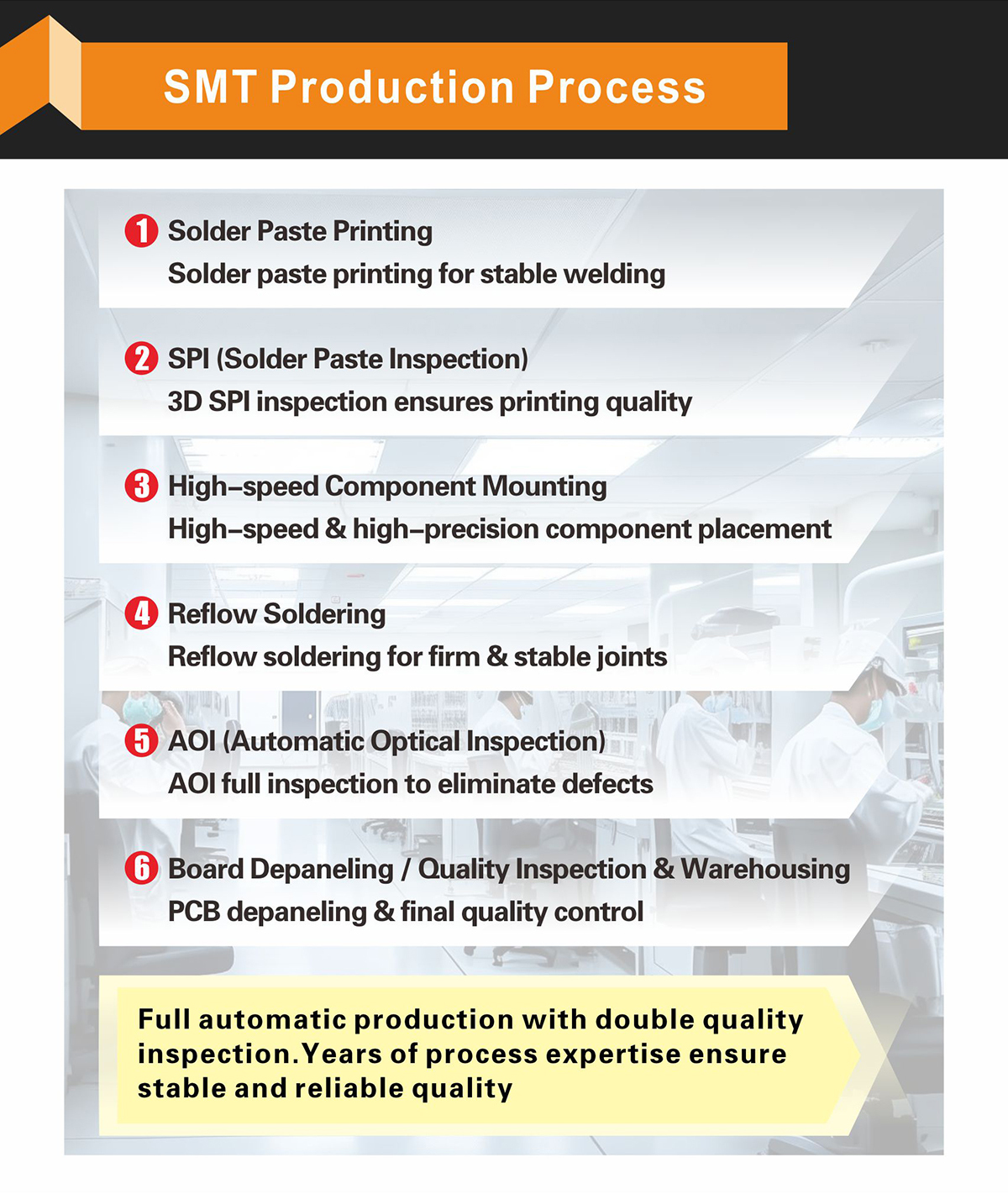
- Standard reflow soldering processes achieve high yield. Hand soldering of the dsPIC33FJ256GP710A is also possible using flux and drag-soldering techniques.
- Does it require external clock or reset circuitry?
- The dsPIC33FJ256GP710A features a built-in high-accuracy on-chip oscillator and PLL, enabling stable operation without an external crystal, saving PCB space and BOM cost.
- Integrated Power-on Reset (POR) and Brown-out Reset (BOR) of the dsPIC33FJ256GP710A ensure reliable start-up without an external reset IC.
- What new designs is the dsPIC33FJ256GP710A suitable for?
- The dsPIC33FJ256GP710A is suitable for standard industrial control, precision instrumentation, and communication gateway projects requiring massive program storage (256KB Flash), abundant capture/compare channels (16 each), and multi-channel analog acquisition (32-channel ADC).
- Its 30KB SRAM and 4-channel DMA provide a powerful hardware foundation for data-intensive and real-time multi-tasking applications, making the dsPIC33FJ256GP710A a flagship choice for resource-intensive general-purpose control.
- Property:
- Specification
- Product Type:
- 16-bit Digital Signal Controller (DSC)
- Brand:
- Microchip
- Core Architecture:
- 16-bit dsPIC33F core, 40 MIPS
- Program Memory:
- 256KB Flash
- Data RAM:
- 30KB SRAM (incl. 2KB DMA RAM)
- DMA Controller:
- 4-channel
- Enhanced Timers & Signal Processing:
- 5× 16-bit timers, 16× input capture, 16× output compare/PWM
- ADC:
- 10-bit, 1.1 Msps, up to 32 channels
- Analog Comparators:
- 4 analog comparators
- Communication Interfaces:
- 2× UART, 2× SPI, 2× I2C, with PPS
- Operating Voltage & Package:
- 3.0V – 3.6V, TQFP-100, -40°C to +85°C