Electronic components
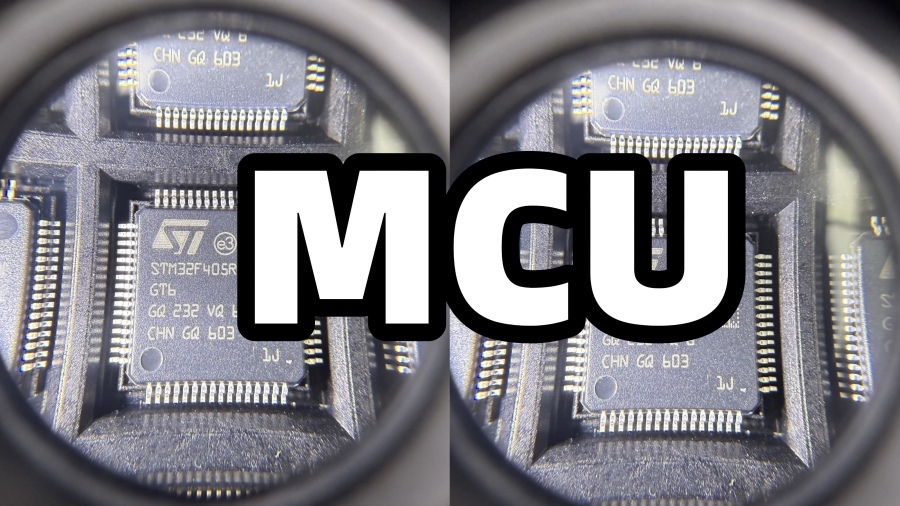
How to Choose a Microcontroller: Popular MCU Models, Selection Guide, Replacement and BOM Sourcing
Choosing the right microcontroller is one of the most important decisions in embedded hardware development. The microcontroller directly affects system performance, power consumption, peripheral functions, software development, product cost, and long-term supply stability. For a new product, simply selecting a microcontroller based on CPU frequency or memory size is usually not enough. Engineers also need to consider GPIO resources, communication interfaces, ADC and PWM functions, operating voltage, package, development ecosystem, lifecycle, availability, and the possibility of future replacement.
The global microcontroller market includes a wide range of manufacturers and product families. STMicroelectronics, NXP, Renesas, Microchip, Infineon, GigaDevice, Espressif and other semiconductor manufacturers offer microcontrollers for applications ranging from simple control boards and consumer electronics to industrial automation, automotive systems and IoT devices.
For purchasing teams and hardware engineers, another practical issue is part-number selection. Two microcontrollers may look similar in specifications but have different packages, memory configurations, temperature ranges, peripheral resources or pin assignments. These differences can directly affect PCB design and firmware development. Therefore, microcontroller selection should be considered together with engineering requirements and the BOM supply chain.
What Is a Microcontroller?
A microcontroller, commonly abbreviated as MCU, is an integrated circuit designed to control embedded electronic systems. A typical microcontroller integrates a CPU core, Flash memory, RAM, GPIO, timers, communication interfaces and other peripherals into a single chip.
Compared with a general-purpose processor, a microcontroller is usually designed for dedicated control applications. It can directly interact with sensors, switches, motors, displays, communication modules and power-control circuits. This makes microcontrollers widely used in industrial equipment, smart home products, consumer electronics, automotive electronics, IoT terminals, motor control systems and embedded control devices.
Different microcontroller families use different CPU architectures and peripheral configurations. Common architectures include Arm Cortex-M, AVR, PIC, RISC-V and proprietary architectures. Within the same product family, manufacturers may also provide devices with different Flash sizes, RAM capacities, package types and peripheral combinations.
Key Parameters to Consider When Selecting a Microcontroller
The first parameter to consider is the CPU core and performance requirement. A simple control application may only need a low-cost microcontroller with a relatively low clock frequency, while motor control, digital power, industrial communication or edge-processing applications may require a more capable Cortex-M4, Cortex-M7, Cortex-M33 or other high-performance core. CPU frequency is only one part of the equation, however. Interrupt response, Flash access performance, DSP instructions, FPU support and peripheral architecture can also have a significant impact on actual system performance.
Memory is another important factor. Flash determines how much program code and data can be stored, while SRAM affects runtime buffers, communication stacks and application data. A project that barely fits into a small Flash device during the prototype stage may become difficult to maintain after additional functions are added. It is therefore useful to leave reasonable memory headroom when selecting a microcontroller for a long-term product.
Peripheral resources should be checked against the actual hardware design. GPIO count, UART, SPI, I2C, CAN, USB, Ethernet, ADC, DAC, PWM, timers and other interfaces may determine whether a particular microcontroller can support the complete system without additional external components. For motor-control and power applications, PWM channels, ADC performance, timers and control peripherals can be more important than the CPU frequency itself.
Power supply requirements also need attention. Microcontrollers designed for battery-powered equipment may focus on low-power modes and low operating current, while industrial and automotive applications may require specific voltage ranges, temperature grades and reliability characteristics. The selected device should therefore be checked against the actual operating environment rather than evaluated only by its typical current consumption.
Package and pin configuration are particularly important when considering replacement. QFN, LQFP, BGA and other packages may have very different PCB requirements. Even when two devices use the same package and have similar functions, engineers still need to verify pin assignments, electrical characteristics, peripheral behavior and firmware compatibility before treating them as replacement candidates.
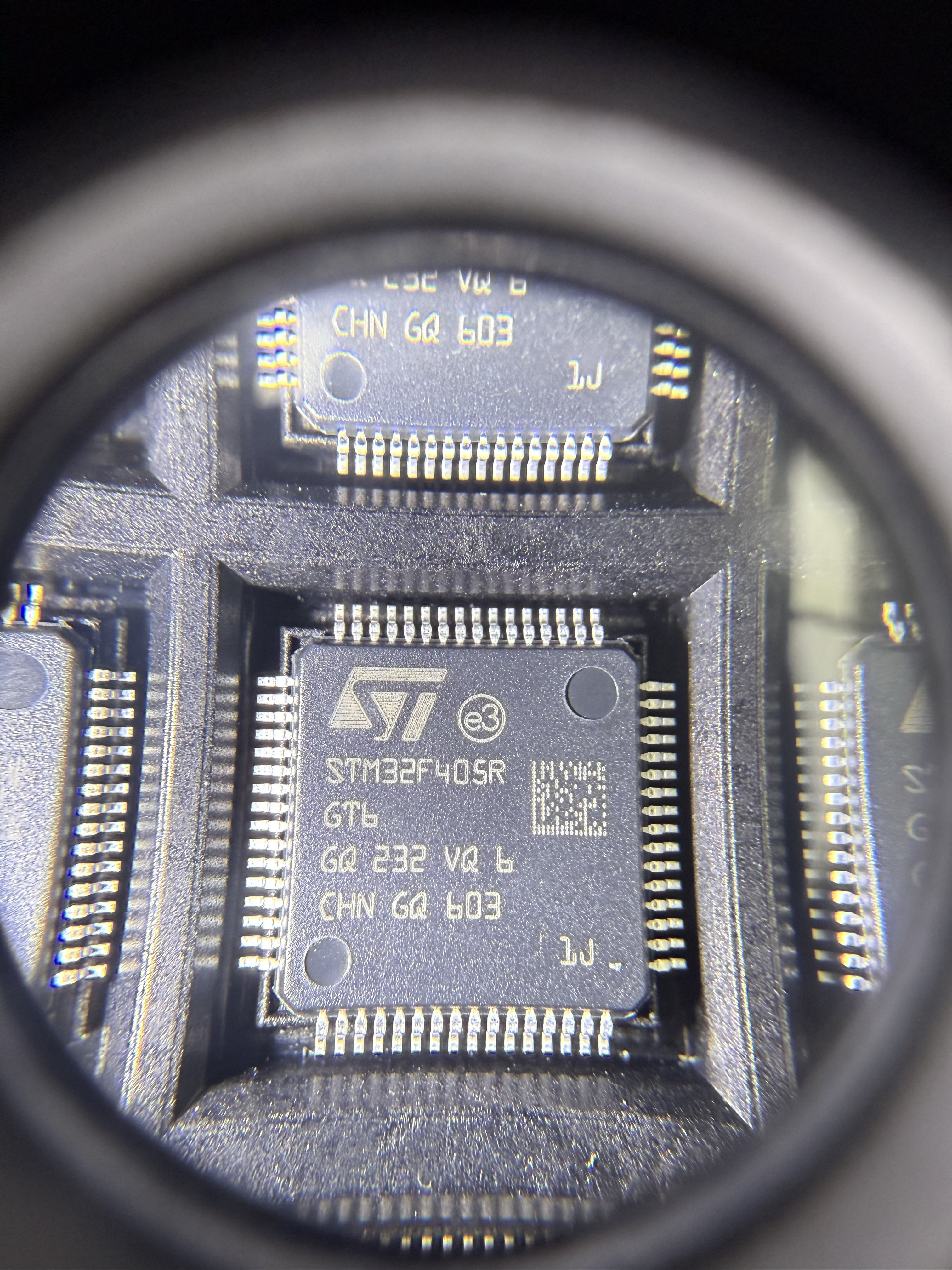
STMicroelectronics STM32 Microcontrollers
STM32 is one of the most widely used Arm Cortex-M microcontroller families in embedded development. The portfolio covers entry-level control, general-purpose applications, motor control, connectivity, low-power applications and high-performance embedded systems.
Commonly encountered STM32 devices include the STM32F103C8T6, STM32F103RCT6, STM32F407VGT6, STM32F429IGT6, STM32G030, STM32G431, STM32G474, STM32L431, STM32U575 and STM32H743. Different series target different application requirements, so selecting an STM32 device should start with the required peripherals and performance rather than simply choosing a familiar part number.
One of the major advantages of STM32 is its mature development ecosystem. Engineers can find extensive reference designs, development tools, middleware, application notes and third-party resources for many STM32 families. This can reduce development effort when a project requires complex peripherals or long-term software maintenance.
When sourcing STM32 components, however, the complete part number should always be confirmed. Differences in Flash capacity, package, temperature range, revision and ordering code can result in different purchasing specifications even when the base model appears similar.
NXP Microcontrollers
NXP provides a broad range of microcontrollers and processors for industrial, automotive, consumer and embedded applications. Its microcontroller portfolio includes families such as LPC, Kinetis and MCX, while i.MX RT devices target higher-performance crossover applications.
LPC1768 and LPC1114 are examples of commonly encountered LPC devices, while LPC55Sxx devices provide more advanced Arm Cortex-M capabilities. Kinetis K64 and KL series have also been used extensively in embedded applications. For applications requiring higher processing performance, i.MX RT1052 and i.MX RT1062 are frequently considered in crossover MCU designs.
NXP's automotive portfolio also includes the S32K family, which is designed for automotive control applications. When selecting an NXP microcontroller, engineers should consider not only CPU performance but also communication interfaces, security functions, automotive requirements and long-term product lifecycle.
Renesas Microcontrollers
Renesas offers several major microcontroller families covering general-purpose, industrial, automotive and low-power applications. RA devices are based on Arm Cortex-M architecture, while RX and RL78 represent other important Renesas MCU product lines.
RA2, RA4 and RA6 devices can be considered for different levels of embedded control and connectivity. RX130 and RX65N are used in industrial and embedded applications, while RL78/G13 is well known for low-power and cost-sensitive control designs. Automotive applications may involve Renesas RH850 devices.
When replacing an existing Renesas microcontroller or evaluating an alternative from another manufacturer, engineers should compare the actual peripheral functions, clock system, memory architecture and package rather than comparing CPU specifications alone.
Microchip PIC and AVR Microcontrollers
Microchip has a broad microcontroller portfolio covering 8-bit, 16-bit and 32-bit devices. PIC and AVR are two of its well-known MCU families, while dsPIC devices are designed for applications that require digital signal processing and motor-control capabilities.
ATmega328P, ATmega2560 and ATtiny devices are frequently encountered in embedded and development projects. PIC16 and PIC18 families are also widely used in control systems, consumer products and industrial equipment. For more advanced applications, engineers may consider PIC24, dsPIC33 and SAM devices.
One advantage of choosing a mature Microchip family is the large amount of existing development knowledge and application resources. For long-running products, engineers should also pay attention to product lifecycle information, package availability and the exact ordering code when planning procurement.
Infineon Microcontrollers
Infineon provides microcontrollers for general embedded control, industrial applications, motor control and automotive electronics. XMC devices are widely associated with industrial control and power-related applications, while PSoC devices combine MCU processing with configurable analog and digital resources.
Common XMC families include XMC1100, XMC1400, XMC4500 and XMC4700. Depending on the application, engineers may also encounter PSoC 4 and PSoC 6 devices. Infineon's automotive portfolio includes AURIX and TRAVEO families, which target more demanding automotive control and processing requirements.
For industrial and automotive designs, the selection process should include operating temperature, communication interfaces, safety requirements, development tools and product lifecycle considerations.
GigaDevice GD32 Microcontrollers
GigaDevice GD32 is a widely recognized microcontroller family in the Chinese embedded market. The portfolio includes Cortex-M based devices covering entry-level control, general-purpose applications, performance-oriented designs and low-power applications, as well as RISC-V products in selected families.
Commonly encountered models include GD32F103C8T6, GD32F103RCT6, GD32F303CCT6 and GD32F407VGT6. Other product families such as GD32E230, GD32E103, GD32L233 and GD32VF103 cover different performance, power and architecture requirements.
GD32 devices are sometimes considered when engineers are evaluating alternatives to STM32. However, similar naming, package and peripheral resources do not automatically mean that two devices are fully interchangeable. A replacement project should verify pin assignment, electrical specifications, peripheral behavior, clock configuration, startup code, firmware dependencies and actual application performance.
Espressif ESP32 Microcontrollers
Espressif's ESP32 family is widely used in wireless embedded products. Compared with traditional general-purpose microcontrollers, ESP32 devices are particularly attractive when Wi-Fi, Bluetooth or other wireless connectivity is required.
The ESP32 family includes products such as ESP32, ESP32-S2, ESP32-S3, ESP32-C3, ESP32-C6 and ESP32-H2. Different generations and variants provide different wireless standards, CPU architectures, peripheral resources and memory configurations.
For connected products such as smart-home devices, IoT terminals, wireless control equipment and consumer electronics, selecting an ESP32 device can reduce the need for a separate wireless communication chip. However, engineers should still check antenna design requirements, wireless certification, memory resources, operating system or SDK requirements and supply availability before finalizing the design.
Chinese Microcontroller Manufacturers
China has developed a growing ecosystem of microcontroller manufacturers covering 8-bit, 32-bit Arm Cortex-M, RISC-V and application-specific devices. Depending on the project, engineers may encounter products from GigaDevice, Chipsea, Hangshun, Puya and other manufacturers.
Chipsea provides MCU products as well as analog and measurement-related ICs, making its products relevant to applications involving sensing and measurement. Hangshun offers HK32 microcontroller families covering different performance and application requirements. Puya provides PY32 devices that are used in cost-sensitive embedded applications, including low-power and general-purpose control.
Other domestic MCU families, including CMS and MM32 products, may also appear in industrial control, consumer electronics and embedded applications. The appropriate choice depends on the project's actual requirements, existing firmware, production volume and supply-chain conditions.
For domestic replacement projects, the most important point is that replacement should be treated as an engineering verification process rather than simply a part-number substitution.
Can a Domestic Microcontroller Replace an STM32?
This is one of the most common questions in microcontroller selection and procurement. The answer depends on the specific STM32 model, the proposed replacement device and the requirements of the existing hardware and firmware.
Some domestic microcontrollers are designed with similar Arm Cortex-M architectures and may provide comparable peripheral resources or package options. In certain cases, the hardware migration effort can be reduced. However, similar CPU architecture does not mean complete compatibility.
Engineers should compare the package, pin assignment, power supply, clock system, Flash and SRAM organization, GPIO electrical characteristics, ADC performance, timers, communication peripherals and interrupt system. Firmware should also be reviewed because startup code, peripheral registers, clock configuration and SDK libraries may differ between manufacturers.
Therefore, terms such as "pin-to-pin compatible" should be understood correctly. Pin-to-pin compatibility mainly describes the physical relationship between pins and does not automatically guarantee complete electrical, peripheral or software compatibility.
Why the Complete Microcontroller Part Number Matters
A microcontroller should never be purchased based only on a short model name. The complete ordering code may contain information about Flash capacity, package, temperature grade, speed grade, revision or other configuration details.
For example, two devices from the same MCU family may use different packages and have different memory sizes. One may be suitable for an industrial temperature range while another is intended for commercial applications. These differences can affect both the PCB design and the production BOM.
For procurement teams, confirming the exact part number before placing an order can prevent mismatched specifications, unexpected substitutions and unnecessary engineering changes. This is particularly important when dealing with shortage situations or when sourcing older and EOL microcontroller models.
Microcontroller Procurement and BOM Matching
Microcontroller procurement is not simply a matter of finding the lowest quoted price. For production projects, engineers and purchasing teams also need to consider source traceability, available stock, batch consistency, delivery schedules and long-term supply.
A complete BOM often contains dozens or hundreds of components, and the MCU may be one of the components with the greatest impact on firmware and hardware compatibility. If the original device becomes difficult to source, the replacement process should start with the electrical and functional requirements defined by the existing design.
For prototype development, sample availability and small-quantity supply can be important. During mass production, stable batch delivery, source traceability and continuity of supply become more significant. When an MCU reaches EOL or becomes difficult to obtain, an alternative device may need to be evaluated through datasheet comparison, sample testing and actual board verification.
Frequently Asked Questions About Microcontrollers
What is the difference between an MCU and a microcontroller?
MCU is the common abbreviation for microcontroller. In engineering documentation, "MCU" and "microcontroller" generally refer to the same type of integrated circuit.
How do I choose the right microcontroller for a new project?
Start with the required peripherals, memory, processing performance, operating voltage, package and power consumption. Then consider development resources, lifecycle, availability and cost. Selecting a familiar MCU family can also reduce software development and maintenance effort.
Is a higher CPU frequency always better?
No. CPU frequency is only one performance indicator. Peripheral architecture, memory access, interrupt response, FPU/DSP capabilities and software efficiency can also affect actual system performance.
Can GD32 directly replace STM32?
Some GD32 devices may have similar architecture, package or peripheral resources to specific STM32 devices, but direct replacement should not be assumed. Hardware and firmware verification is required for each specific part number.
Can a domestic microcontroller replace an imported MCU?
In some applications, yes. The feasibility depends on the original MCU, the proposed replacement and the required level of compatibility. Hardware, electrical characteristics, peripheral behavior and firmware should all be evaluated.
What should I check before replacing an MCU?
Check the package, pinout, supply voltage, Flash, SRAM, clock system, GPIO characteristics, ADC, timers, communication interfaces and peripheral functions. Firmware dependencies and development tools should also be reviewed.
What does pin-to-pin compatible mean?
Pin-to-pin compatible generally means that the physical pin locations and corresponding functions can match under defined conditions. It does not necessarily mean that the replacement MCU is electrically or software compatible.
Which microcontroller is suitable for low-power applications?
Low-power STM32, Renesas RL78 or RA families, selected Microchip devices, Puya PY32 products and other low-power MCUs can be considered depending on the application. The actual standby current, sleep modes, wake-up behavior and peripheral requirements should be compared using the relevant datasheets.
Which microcontroller is suitable for wireless IoT products?
ESP32 devices are widely used when Wi-Fi or Bluetooth connectivity is required. The specific ESP32 variant should be selected according to wireless standards, processing requirements, memory, peripherals and power consumption.
Why does the exact MCU package matter?
Different packages can have different pin counts, thermal characteristics and PCB footprints. Even when two devices belong to the same family, changing the package may require PCB modifications.
What should I do if an MCU is EOL or difficult to source?
First confirm the exact original part number and application requirements. Then evaluate available inventory, manufacturer-recommended alternatives and technically compatible devices. Samples and engineering verification should be completed before changing the production BOM.
Is the cheapest MCU always the best choice?
Not necessarily. A lower unit price may be offset by higher development costs, additional external components, limited availability or more difficult future replacement. The total project cost and supply-chain stability should be considered together.
Conclusion
Microcontroller selection is a combination of technical requirements and supply-chain considerations. CPU architecture, memory, peripherals, power consumption and package determine whether an MCU can meet the hardware requirements, while software ecosystem, lifecycle and component availability affect the long-term maintainability of the product.
For common MCU families such as STM32, NXP, Renesas, Microchip, Infineon, GigaDevice and Espressif, engineers can usually find multiple device families for different application requirements. Domestic microcontrollers also provide additional options for cost optimization and supply-chain diversification, but replacement should always be verified at the specific part-number level.
When a project involves MCU sourcing, BOM matching, sample procurement, shortage management or domestic replacement, Shenzhen QIXINWEI Technology Co., Ltd. provides electronic component sourcing and supply-chain support for engineering development and production projects. Services can include MCU model matching, BOM sourcing, sample support, parameter comparison, replacement evaluation and batch procurement, helping engineers and purchasing teams evaluate component options based on the actual project requirements.
QIXINWEI provides electronic component sourcing, BOM matching, bulk procurement, replacement solutions and supply chain support for customers in different markets and application fields.
0users like this.