qixinwei-pcba


Analog TDS Sensor Module for UNO Water Electrical Conductivity Sensor Liquid Detection Water Quality Testing Module
Analog TDS Sensor Module Product Overview
This analog TDS sensor module is a plug‑and‑play water quality sensor designed for UNO and other microcontrollers, measuring Total Dissolved Solids (TDS) to reflect water purity. The module consists of a signal converter board and a waterproof TDS probe. It operates on 3.3‑5.5V and outputs an analog signal of 0‑2.3V, compatible with both 5V (Arduino) and 3.3V (ESP32/STM32) systems. Measurement range is 0‑1000ppm with an accuracy of ±10% F.S. (at 25℃). The AC excitation signal prevents probe polarisation, extending probe life and improving output stability. The waterproof probe can be submerged for long‑term monitoring, with an 83cm cable. Ideal for tap water, water tanks, aquariums, hydroponic nutrient solutions, and other water quality monitoring applications.
Analog TDS Sensor Module Core Features
AC Signal Excitation: Uses AC excitation to prevent DC polarisation, extending probe life and providing stable output
Wide Voltage Compatibility: 3.3‑5.5V power, 0‑2.3V analog output – compatible with both 5V (Arduino) and 3.3V (ESP32/STM32) systems, no level shifting needed
Plug‑and‑Play Design: Gravity interface (PH2.0‑3P) – no soldering, direct connection to sensor expansion boards
Waterproof Probe: Fully encapsulated probe head for long‑term submersion – ideal for online water quality monitoring
Range & Accuracy: 0‑1000ppm TDS range, ±10% F.S. accuracy at 25℃ – sufficient for everyday water quality testing
Low Power Consumption: 3‑6mA operating current, suitable for battery‑powered portable devices
Standard Connectors: Signal board 42×32mm, probe connector XH2.54‑2P, total probe length 83cm
Analog TDS Sensor Module Applications
Drinking Water Testing: Check TDS of tap water, filtered water, bottled water
Aquarium/Fish Tank Monitoring: Long‑term online monitoring of water quality for fish health
Hydroponic Nutrient Management: Measure nutrient salt concentration in hydroponic solutions
Water Tank/Reservoir Monitoring: Online quality monitoring of stored water
Environmental Water Assessment: Quick TDS evaluation of rivers, lakes, ponds
DIY Water Quality Tester: Build handheld TDS pens or remote monitoring stations with Arduino
Analog TDS Sensor Module Key Advantages
Optimised for Arduino – Plug‑and‑Play: Gravity series interface, no soldering, direct connection with Arduino expansion board – read TDS values in minutes using example code
AC Excitation Prevents Polarisation: Low‑cost TDS pens use DC signals, causing probe polarisation and accuracy drift over time. This module uses AC excitation – significantly longer probe life, more stable data
Wide 3.3V/5V Compatibility: 0‑2.3V analog output spans the full ADC range of both 5V and 3.3V MCUs – no voltage divider or level shifter needed
Waterproof Probe for Online Monitoring: IP67‑rated probe can be submerged long‑term, enabling 24/7 water quality logging – far more capable than ordinary TDS pens
Cost‑Effective DIY Solution: Professional online TDS meters cost hundreds of dollars; this module offers similar functionality at a fraction of the price – the maker's choice
Mature Open‑Source Ecosystem: Official Arduino library and examples include temperature compensation (with separate temperature sensor) for calibrated TDS readings
Flexible Mounting: 83cm probe cable allows remote placement; signal board has mounting holes for enclosure installation
0‑1000ppm Covers Most Needs: Pure water 0‑20ppm, tap water 100‑300ppm, wastewater >500ppm – the range covers typical water quality monitoring scenarios
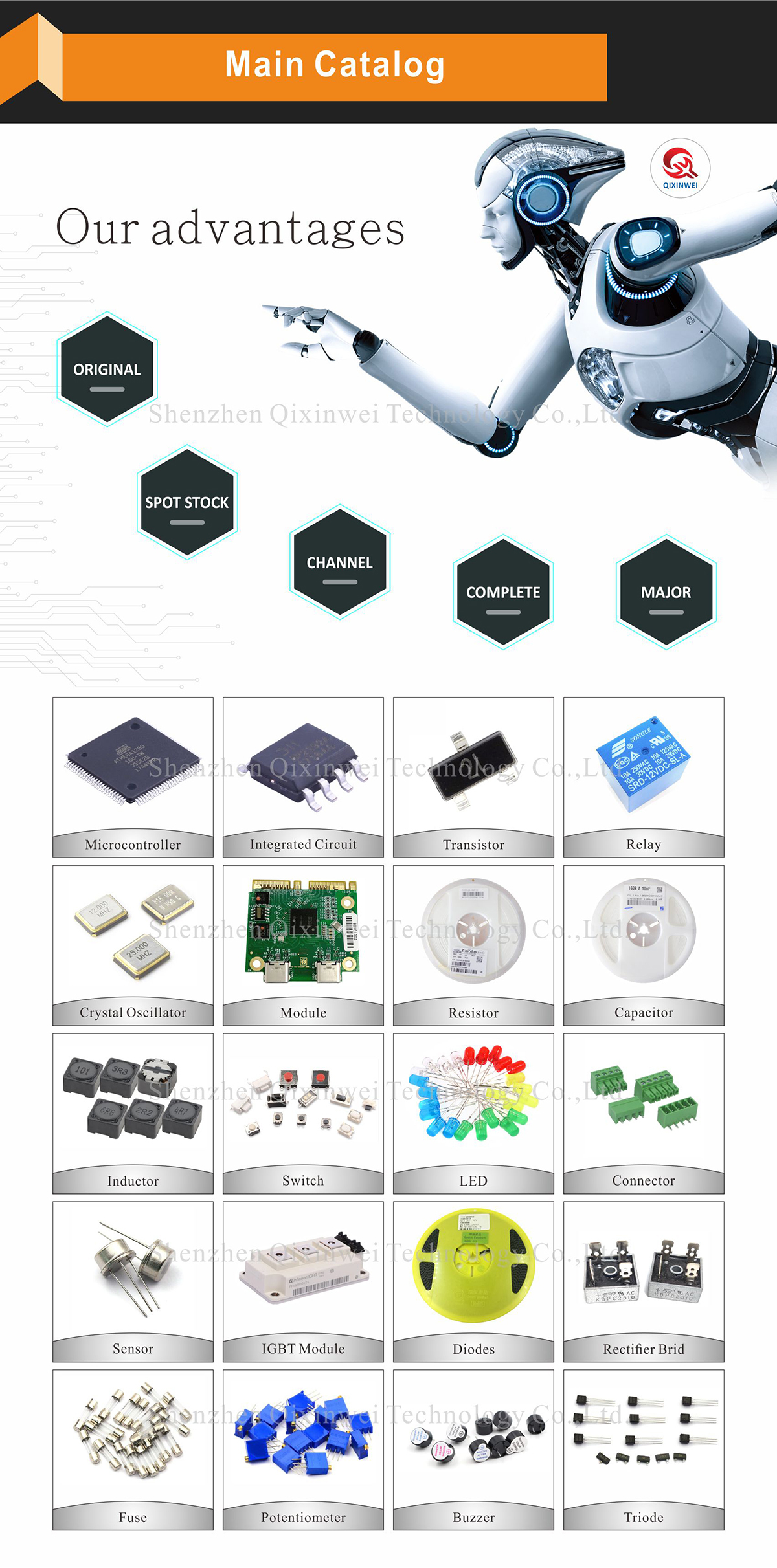
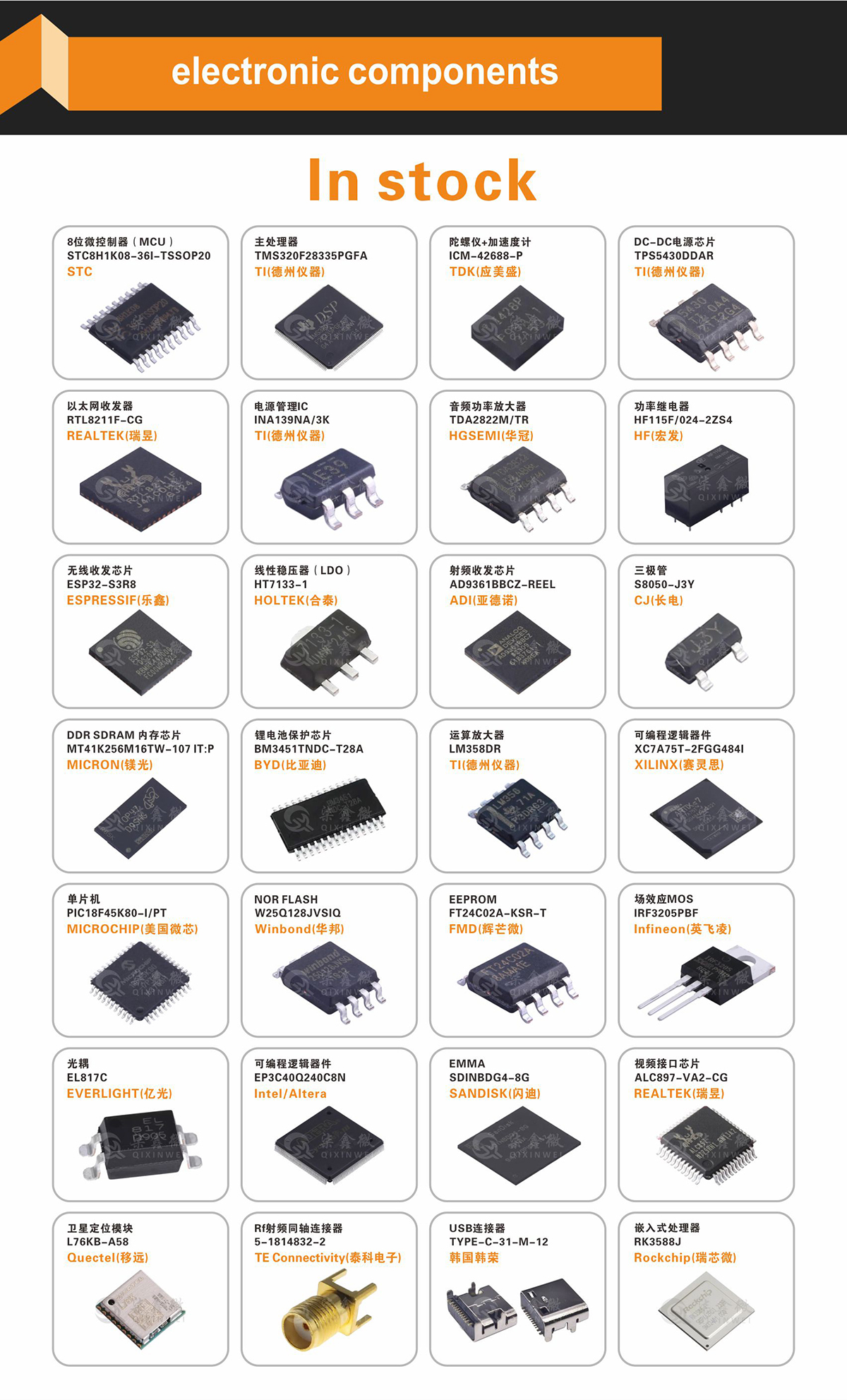
Why Choose QIXINWEI
Years of experience in the electronics industry. Trusted by global customers.
Massive In-Stock Inventory – Ready to ship promptly
BOM Matching Service – One-stop solution, save time
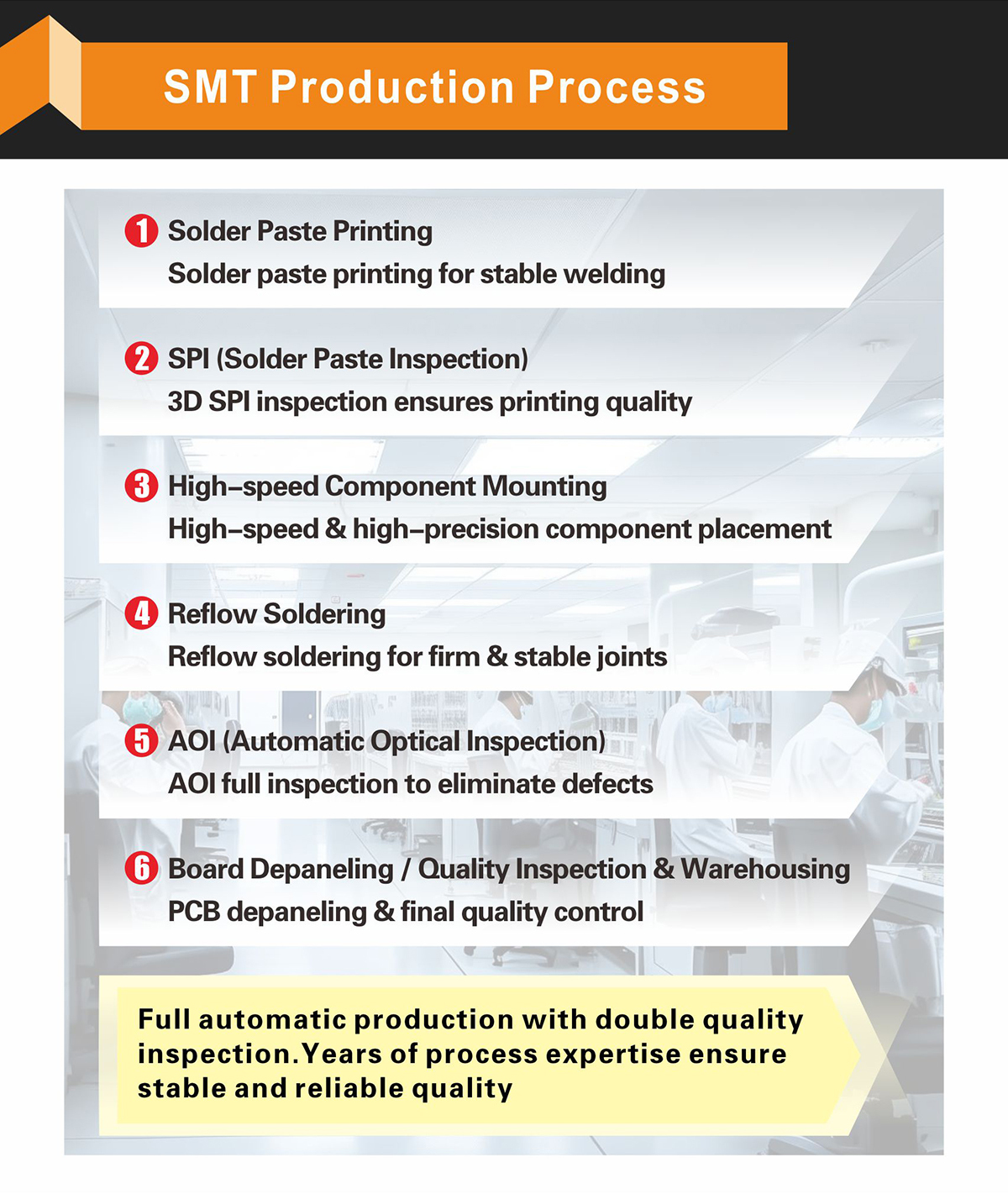
PCBA Customization – Professional engineering team creates tailor-made solutions based on your needs
Cost-Effective & Efficient – Better channel, better cost
A dedicated team makes your procurement smoother.
Contact us for BOM quotes or PCBA inquiries





FAQ:
What is an analog TDS sensor module and what does it measure?
An analog TDS (Total Dissolved Solids) sensor module measures the electrical conductivity of a liquid and converts it into an analog voltage signal. Because dissolved ions in water increase its conductivity, the sensor indirectly indicates the total amount of dissolved salts, minerals, and other solids. It outputs a 0–2.3 V analog signal that can be read by any microcontroller with an ADC input, such as an Arduino UNO. This makes it a popular, low‑cost tool for checking water quality in aquariums, hydroponics, drinking water, and laboratory experiments.How do I connect the TDS sensor module to an Arduino UNO?
Connect the module's VCC to the Arduino's 5 V pin (or 3.3 V if the module is 3.3 V‑compatible—check your specific board). Connect GND to GND, and the analog output pin (often labelled A or SIGNAL) to any analog input on the Arduino, for example A0. The module also has two probe terminals where you attach the included TDS probe. No additional components are needed. The sensor draws very little current and can be powered directly from the Arduino.How do I convert the analog reading from the TDS sensor to an actual TDS value in ppm?
You read the analog voltage with `analogRead()`, convert it to a voltage (typically 0–5 V or 0–3.3 V depending on your board), and then apply a linear calibration formula. A common approach is: `TDS_ppm = (133.42 × voltage³ – 255.86 × voltage² + 857.39 × voltage) × 0.5`. However, every sensor has slight variations, so for accurate results you should calibrate it using a known TDS calibration solution (e.g., 1413 µS/cm standard). Measure the voltage with the probe in the calibration solution and adjust the formula coefficients accordingly, or create a lookup table.What is the typical measurement range and accuracy of this TDS module?
The module typically measures TDS values from about 0 to 1000 ppm (parts per million), with an accuracy of ±10% without calibration, and significantly better accuracy (±5 % or less) after proper calibration with a standard solution. The analog output voltage ranges from approximately 0 V (dry probe) to 2.3 V at the high end of the TDS range. The probe must be fully submerged and not touching the container sides for a stable reading. Temperature affects conductivity, so some advanced modules include a temperature sensor for compensation; if not, you should apply a manual temperature correction.Why does my TDS sensor give unstable or drifting readings, and how can I fix it?
Unstable readings are commonly caused by air bubbles trapped on the probe electrodes, electrical noise from the power supply, or poor probe contact. To fix this, gently tap the probe to dislodge bubbles, use a clean, well‑regulated 5 V power supply, and take multiple readings (e.g., 10 samples) and average them in your code. Also, ensure the probe is fully immersed and not touching the container. A small capacitor (10–100 nF) across the analog input to GND can help filter high‑frequency noise. If drift persists, recalibrate with a fresh calibration solution.Can this TDS sensor be used for continuous monitoring in water, or will it corrode?
The probe is typically made of stainless steel or gold‑plated electrodes and is designed for intermittent immersion. For long‑term continuous monitoring, especially in saltwater or acidic solutions, the electrodes may corrode over time, leading to measurement drift. To extend probe life, always rinse the probe with clean water after each use, store it dry, and avoid continuous immersion. For permanent installations, consider a more rugged industrial conductivity sensor, and use AC excitation instead of DC to reduce polarization and corrosion.What is the difference between TDS and electrical conductivity (EC)? How are they related?
TDS (Total Dissolved Solids, in ppm) and EC (Electrical Conductivity, in µS/cm) are two ways of expressing the same physical property. EC measures how well the water conducts electricity; TDS estimates the total mass of dissolved solids based on that conductivity. They are related by a conversion factor, usually between 0.5 and 0.7. For most natural waters and hydroponic solutions, TDS_ppm ≈ EC_µS/cm × 0.5. The TDS sensor is essentially an EC sensor with a built‑in conversion formula. Knowing the EC value is often more scientifically accurate, and you can output that instead if you skip the conversion.Can I use this TDS module to check if my drinking water is safe? What TDS value is considered good?
The TDS module gives a rough indication of mineral content but does not directly tell you if water is safe to drink, because it cannot distinguish between harmful contaminants (lead, arsenic) and beneficial minerals (calcium, magnesium). In general, the US EPA recommends a maximum TDS of 500 ppm for drinking water; values below 300 ppm are considered excellent. However, a low TDS reading does not guarantee that the water is free of bacteria or toxic chemicals. For a complete water quality assessment, you need additional tests for specific contaminants and biological safety.What maintenance does the TDS probe require, and how should I clean it?
After each use, rinse the probe thoroughly with distilled or deionized water and gently wipe the electrodes with a soft, lint‑free cloth. If mineral deposits build up, soak the probe in a mild acidic solution (e.g., dilute white vinegar) for a few minutes, then rinse with distilled water. Never use abrasive materials or scrub the electrodes, as this can damage the coating and change the cell constant. Store the probe dry in a protective case. Periodic recalibration with a known standard solution is recommended every few months or if readings become inconsistent.What are the most typical applications for this TDS sensor module?
It is used in aquarium water quality monitoring, hydroponic and aquaponic systems, drinking water testing, pool and spa water checks, educational STEM projects, and laboratory experiments. Its low cost and easy Arduino integration make it a popular choice for DIY environmental monitoring and smart home projects where basic water quality data is needed.
- Product Name:
- Analog TDS Sensor for UNO
- Signal Board Supply:
- 3.3 - 5.5V DC
- Output Signal:
- 0 - 2.3V analog
- Operating Current:
- 3 - 6mA
- TDS Range:
- 0 - 1000 ppm
- Accuracy:
- ±10% F.S. (25℃)
- Excitation Source:
- AC signal (polarisation‑free)
- Probe Type:
- Waterproof, submersible
- Signal Board Size:
- 42mm × 32mm
- Connectors:
- Gravity PH2.0-3P (board), XH2.54-2P (probe)