qixinwei-pcba


ADAU1463WBCPZ300 ADI SigmaDSP Digital Audio Processor 294MIPS 32-Ch ASRC SPDIF LFCSP-72
ADAU1463WBCPZ300 Product Overview
The ADAU1463WBCPZ300 is a high-performance SigmaDSP digital audio processor from Analog Devices, supplied in an LFCSP-72 package. It features a 28/56-bit DSP engine running at 294 MIPS, along with expanded program RAM (3072 Words) and parameter RAM (10240 Words), enabling the loading of more complex and full-featured audio algorithm libraries. The device also integrates an 8-channel asynchronous sample rate converter (ASRC) and an S/PDIF transceiver (1 receiver + 1 transmitter), greatly simplifying the design of multi-clock-domain digital audio systems. Together with the SigmaStudio graphical development tool, users can implement audio routing, mixing, filtering, equalization, dynamics processing, and delays—without low-level coding. The device provides up to 32 digital audio input/output channels via four serial input ports and four serial output ports, each configurable as I2S or TDM, supporting sampling rates up to 192 kHz. Control is via SPI or I2C, with a 1.2 V core and 3.3 V I/O supply and an on-chip PLL. The -40°C to +105°C operating temperature range makes it suitable for automotive audio, high-end TVs and soundbars, digital mixers, professional audio equipment, and a wide range of embedded audio systems requiring flexible clocking and digital connectivity. The ADAU1463WBCPZ300 is a powerful audio processor. ADAU1463WBCPZ300 offers excellent integration and flexibility.
ADAU1463WBCPZ300 Core Features
DSP Architecture: 28/56-bit SigmaDSP, 294 MIPS. The ADAU1463WBCPZ300 is a powerful audio processor. ADAU1463WBCPZ300 offers excellent integration and flexibility.
Large Memory: Program RAM 3072 Words, Parameter RAM 10240 Words. The ADAU1463WBCPZ300 is a powerful audio processor. ADAU1463WBCPZ300 offers excellent integration and flexibility.
Digital Audio Channels: 4 serial inputs + 4 serial outputs, up to 32 channels. The ADAU1463WBCPZ300 is a powerful audio processor. ADAU1463WBCPZ300 offers excellent integration and flexibility.
ASRC: 8-channel asynchronous sample rate converter. The ADAU1463WBCPZ300 is a powerful audio processor. ADAU1463WBCPZ300 offers excellent integration and flexibility.
S/PDIF: Integrated 1 receiver + 1 transmitter. The ADAU1463WBCPZ300 is a powerful audio processor. ADAU1463WBCPZ300 offers excellent integration and flexibility.
Digital Audio I/F: I2S, TDM, left/right-justified. The ADAU1463WBCPZ300 is a powerful audio processor. ADAU1463WBCPZ300 offers excellent integration and flexibility.
Sampling Rate: Up to 192 kHz. The ADAU1463WBCPZ300 is a powerful audio processor. ADAU1463WBCPZ300 offers excellent integration and flexibility.
Control Interface: SPI, I2C. The ADAU1463WBCPZ300 is a powerful audio processor. ADAU1463WBCPZ300 offers excellent integration and flexibility.
Power Supply: 1.2 V core + 3.3 V I/O, on-chip PLL. The ADAU1463WBCPZ300 is a powerful audio processor. ADAU1463WBCPZ300 offers excellent integration and flexibility.
Software Tool: SigmaStudio graphical development, no coding required. The ADAU1463WBCPZ300 is a powerful audio processor. ADAU1463WBCPZ300 offers excellent integration and flexibility.
Package: LFCSP-72 (10×10 mm). The ADAU1463WBCPZ300 is a powerful audio processor. ADAU1463WBCPZ300 offers excellent integration and flexibility.
Temperature Range: -40°C to +105°C (industrial). The ADAU1463WBCPZ300 is a powerful audio processor. ADAU1463WBCPZ300 offers excellent integration and flexibility.
ADAU1463WBCPZ300 Applications
Automotive Audio: Multi-channel routing, active noise cancellation, ASRC handles clock domain differences. The ADAU1463WBCPZ300 is a powerful audio processor. ADAU1463WBCPZ300 offers excellent integration and flexibility.
High-End TVs & Soundbars: Virtual surround, multi-channel processing, direct S/PDIF digital audio I/O. The ADAU1463WBCPZ300 is a powerful audio processor. ADAU1463WBCPZ300 offers excellent integration and flexibility.
Digital Mixers & Sound Reinforcement: Multi-channel mixing, EQ, dynamics processing. The ADAU1463WBCPZ300 is a powerful audio processor. ADAU1463WBCPZ300 offers excellent integration and flexibility.
Professional Audio Equipment: Effects processors, audio matrices, active speakers. The ADAU1463WBCPZ300 is a powerful audio processor. ADAU1463WBCPZ300 offers excellent integration and flexibility.
Embedded Audio Systems: Conferencing, smart home audio hubs with enhanced flexibility via ASRC and S/PDIF. The ADAU1463WBCPZ300 is a powerful audio processor. ADAU1463WBCPZ300 offers excellent integration and flexibility.
ADAU1463WBCPZ300 Key Advantages
Integrated ASRC: 8-channel hardware ASRC seamlessly connects digital audio sources with different clocks. The ADAU1463WBCPZ300 is a powerful audio processor. ADAU1463WBCPZ300 offers excellent integration and flexibility.
S/PDIF Transceiver: Direct coaxial/optical digital audio I/O, reducing external components. The ADAU1463WBCPZ300 is a powerful audio processor. ADAU1463WBCPZ300 offers excellent integration and flexibility.
Large Memory Capacity: 3072 Words program RAM enables more complex, full-featured audio processing chains. The ADAU1463WBCPZ300 is a powerful audio processor. ADAU1463WBCPZ300 offers excellent integration and flexibility.
High Performance 294 MIPS: High-speed DSP core easily handles parallel multi-channel audio processing. The ADAU1463WBCPZ300 is a powerful audio processor. ADAU1463WBCPZ300 offers excellent integration and flexibility.
32-Channel Digital Audio: Flexible I2S/TDM interfaces for large-scale audio systems. The ADAU1463WBCPZ300 is a powerful audio processor. ADAU1463WBCPZ300 offers excellent integration and flexibility.
Industrial Wide Temperature: -40°C to +105°C, suitable for automotive and harsh industrial environments. The ADAU1463WBCPZ300 is a powerful audio processor. ADAU1463WBCPZ300 offers excellent integration and flexibility.
Rich Ecosystem: Drag-and-drop SigmaStudio, extensive algorithm library, and reference designs. The ADAU1463WBCPZ300 is a powerful audio processor. ADAU1463WBCPZ300 offers excellent integration and flexibility.
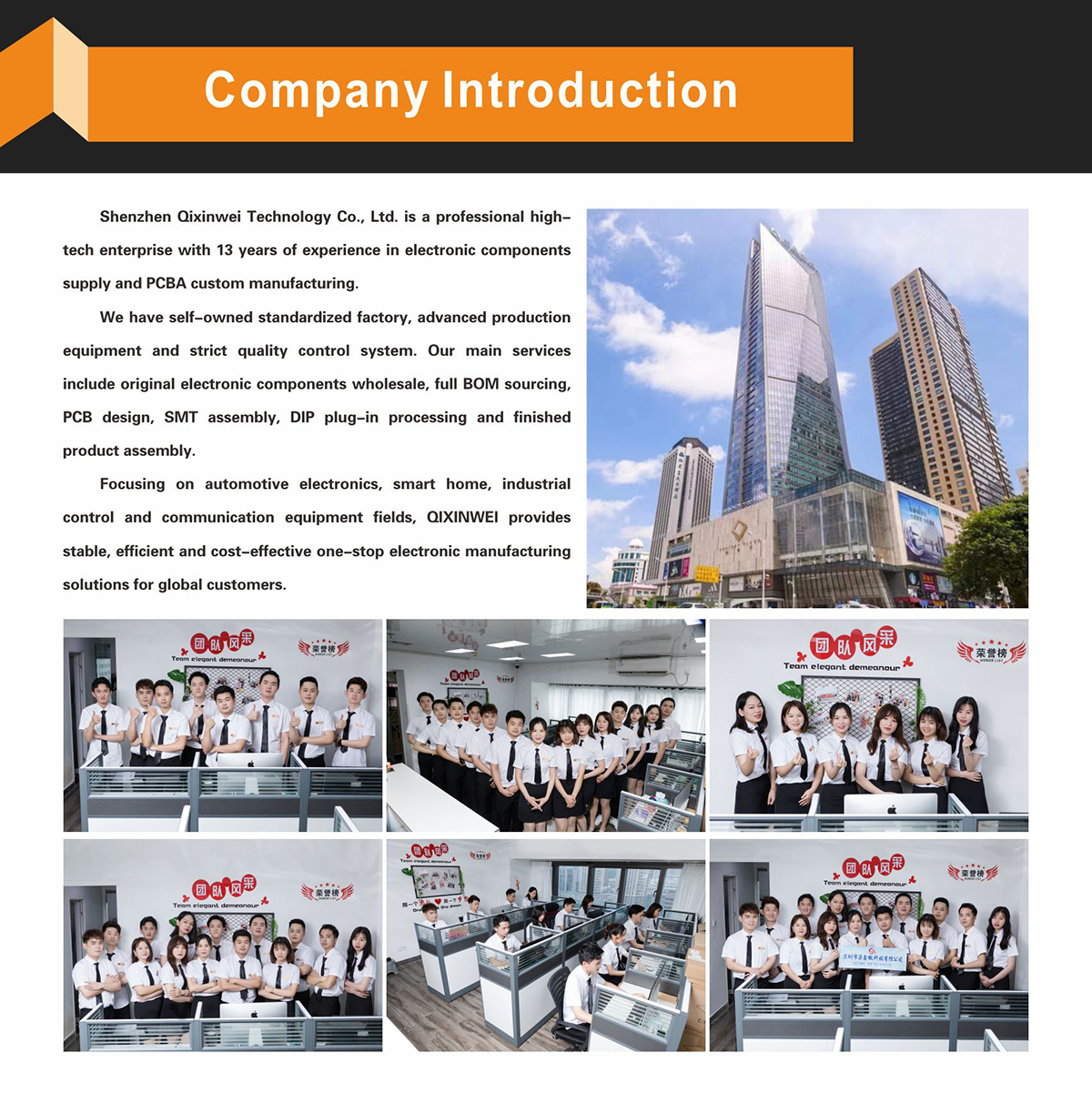
Why Choose QIXINWEI
Years of experience in the electronics industry. Trusted by global customers.
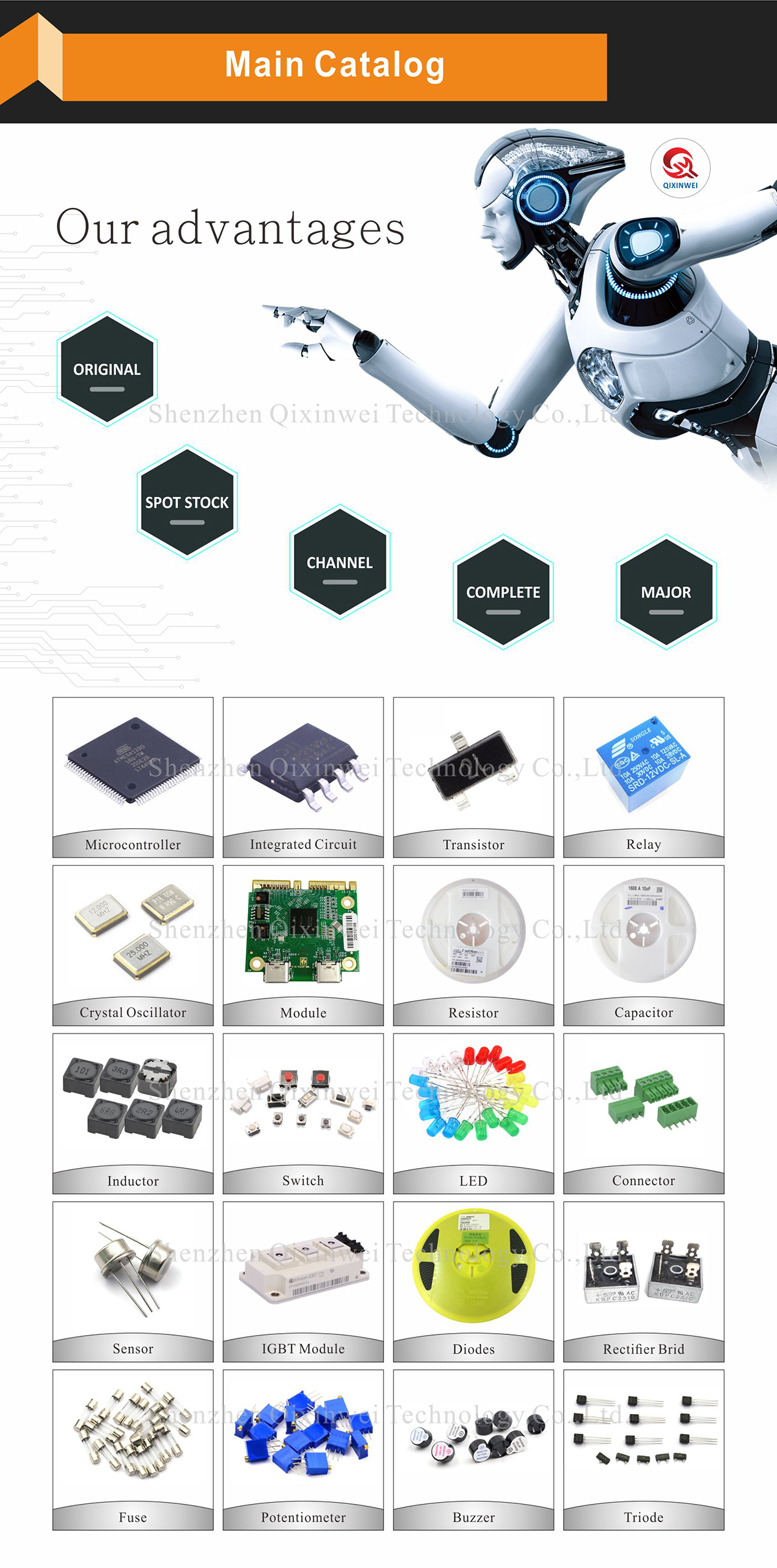
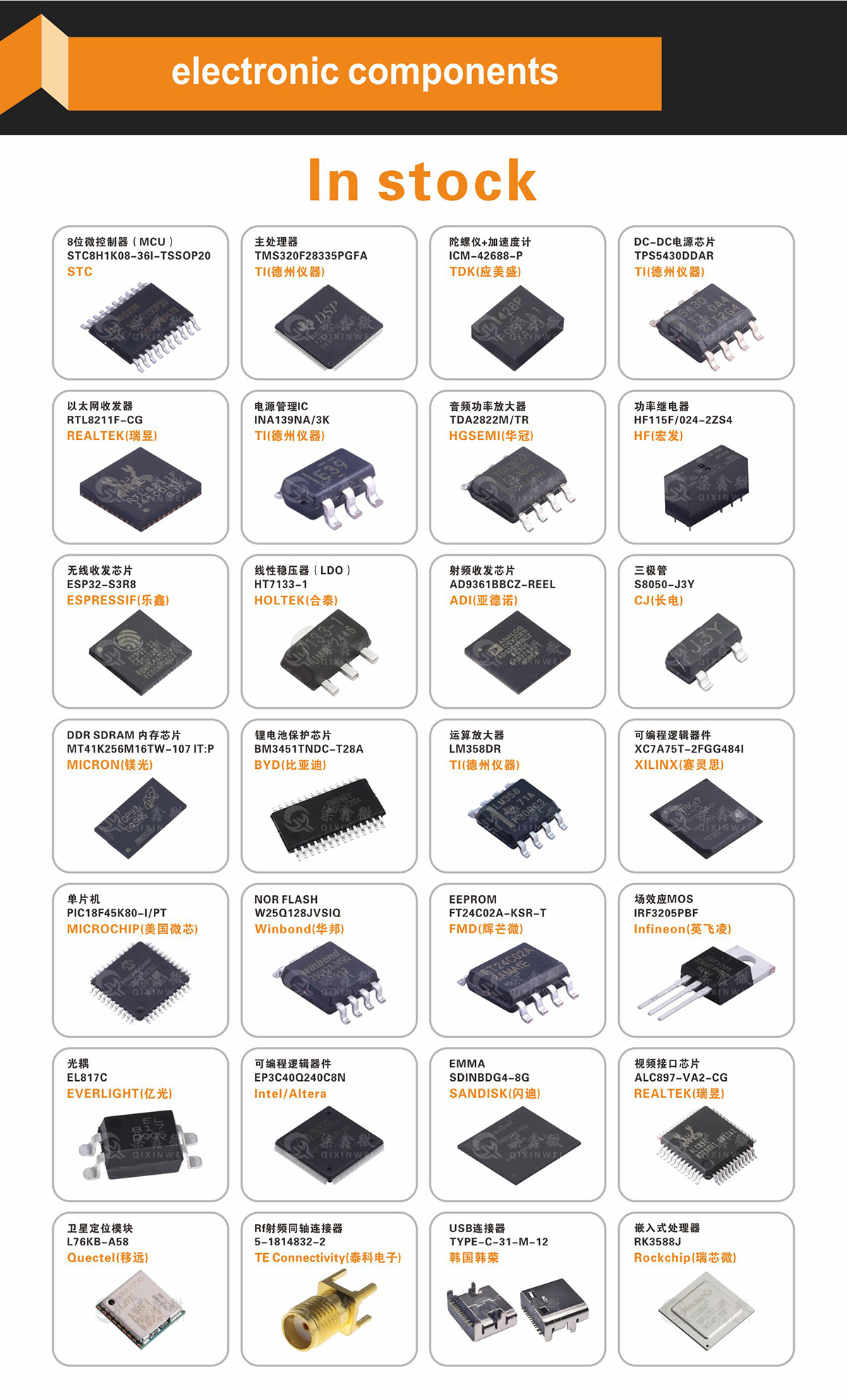
Massive In-Stock Inventory – Ready to ship promptly.
BOM Matching Service – One-stop solution, save time.
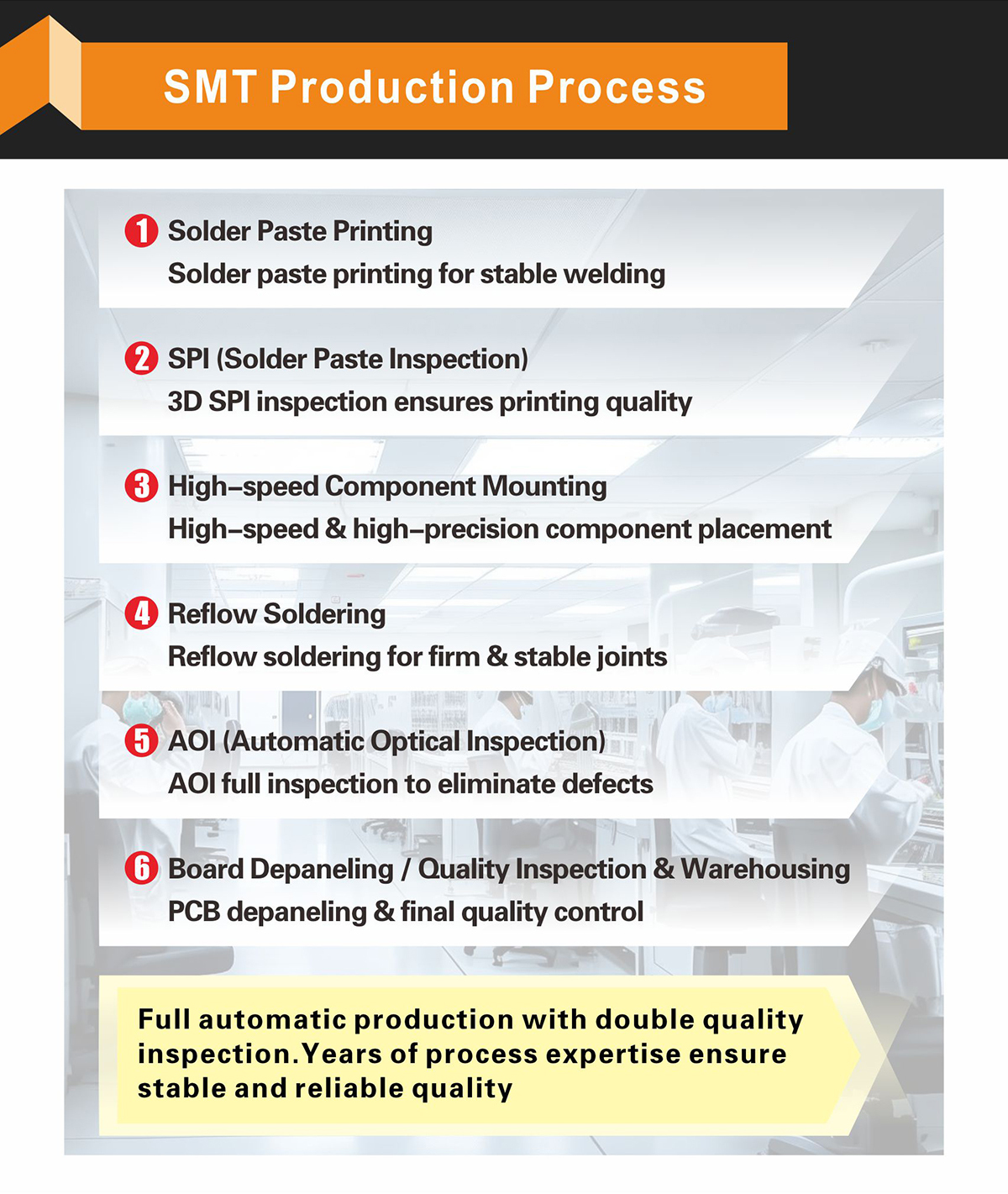
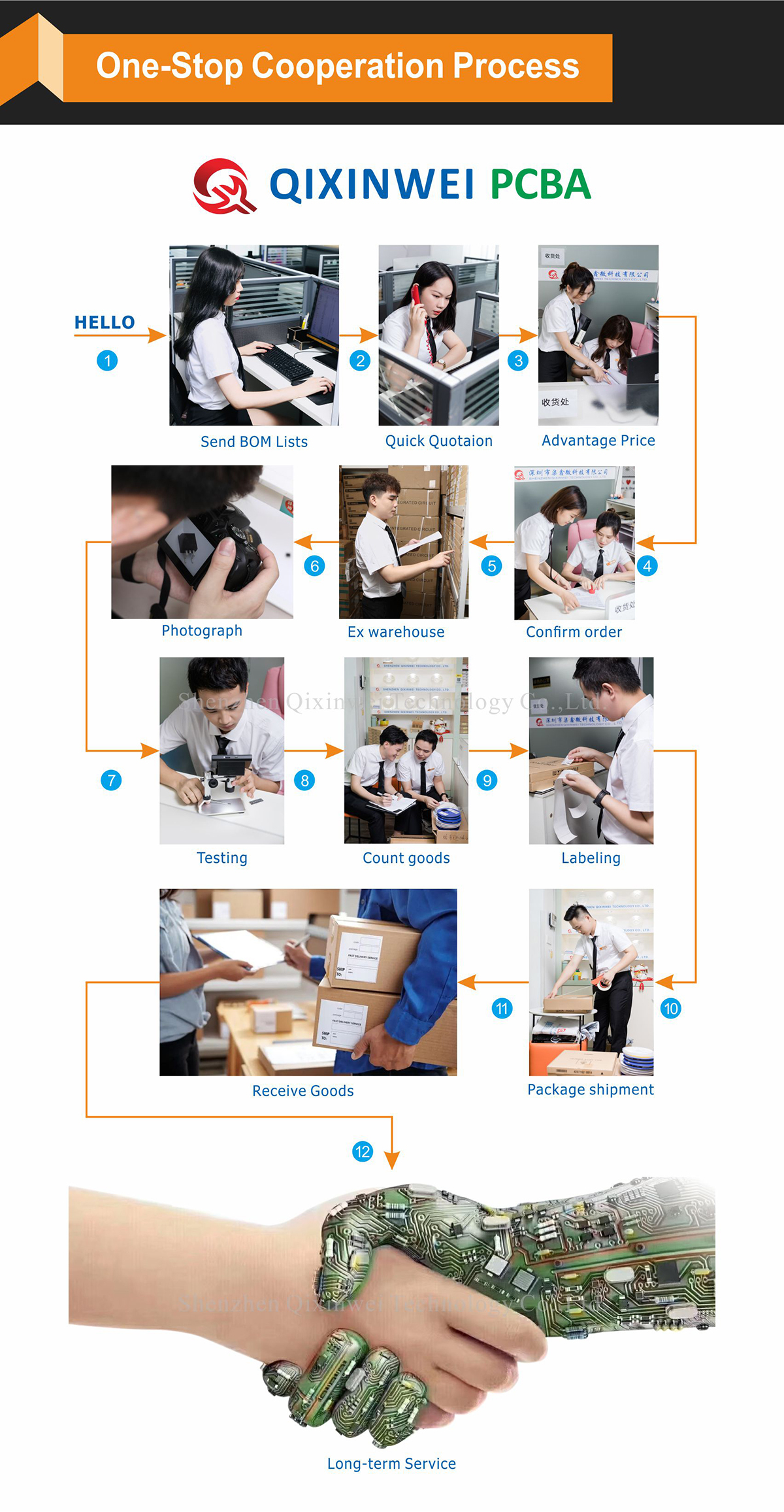
PCBA Customization – Professional engineering team creates tailor-made solutions based on your needs.
Cost-Effective & Efficient – Better channel, better cost.
A dedicated team makes your procurement smoother.
Contact us for BOM quotes or PCBA inquiries.






FAQ:
What is the difference between ADAU1463 and ADAU1466? Which one should I choose?
Both are high-performance SigmaDSPs. The ADAU1466 has 8 serial input and output ports (up to 48 channels) and more program memory (7680 Words), while the ADAU1463 provides 4 inputs and 4 outputs (up to 32 channels) with 3072 Words of program RAM. Choose the 1466 if your design needs more than 32 audio channels or more complex algorithms; the 1463 offers excellent value for systems within 32 channels.What external components can the integrated 8-channel ASRC eliminate from my design?
In traditional multi-clock-domain systems, you would need multiple standalone sample rate converter (SRC) chips and complex clock distribution circuitry. The ADAU1463’s on-chip ASRC converts I2S/TDM inputs with different sample rates to a common internal rate, eliminating external SRC ICs and clock PLLs, resulting in a cleaner PCB layout and lower BOM cost.Can the S/PDIF interface connect directly to optical fiber? Do I need extra transceivers?
The S/PDIF transmitter and receiver operate on electrical signals. For optical (TOSLINK) connections, you simply add a standard TOSLINK receiver module on the input side and a TOSLINK transmitter module on the output side—these are simple photoelectric converters with no complex protocol translation. Coaxial connections can be implemented with DC-blocking capacitors and AC-coupling circuits.Is SigmaStudio free for developing with the ADAU1463?
Yes, SigmaStudio is completely free and available for download. The built-in algorithm libraries, example projects, and signal processing blocks all come at no cost and can be used directly in commercial products, significantly lowering the barrier to entry for audio DSP development.I want to build a 7.1-channel car amplifier. Is the ADAU1463 sufficient?
Absolutely. 7.1 channels require 8 outputs plus input channels (e.g., stereo or 8-channel input), which fits well within the 32-channel capability. The ASRC handles multiple digital sources (Bluetooth, radio, head unit) without extra clock handling, and the 3072 Words of program memory comfortably runs multi-band parametric EQs, crossovers, and dynamic bass enhancement algorithms.Can this chip run reliably at full load in a 105°C environment?
Yes, the -40°C to +105°C range is fully tested and certified for industrial-grade operation. All specifications are guaranteed within this range. For optimal thermal performance, use the exposed pad on the package bottom to conduct heat into the PCB copper plane, ensuring the junction temperature remains within limits.How can an external MCU control volume and switch effects on the ADAU1463?
Via the SPI or I2C interface, the MCU reads and writes the DSP's parameter registers directly. In SigmaStudio, you assign a control address to volume faders, effect toggles, and other controls. The MCU then adjusts those parameters in real time, enabling a complete user interface and even reading VU meter data for display.Does the ADAU1463 support TDM16 mode? What is the maximum channel count?
It supports TDM2, TDM4, and TDM8 modes. Each serial data line can carry 8 channels in TDM8. With 4 input and 4 output ports, the maximum channel count is 32 inputs and 32 outputs, providing ample capacity for most multi-channel audio systems.How do I save user presets on the ADAU1463 so they survive a power cycle?
The DSP has no on-chip user flash. A common approach is to add a small SPI EEPROM or Data Flash. At boot, the MCU reads saved parameters from the external memory and writes them to the DSP registers over the control interface, restoring the previous state.Are there ready-made audio algorithms for implementing active crossover networks in powered speakers?
Yes. The SigmaStudio algorithm library includes a variety of crossover blocks—Butterworth, Linkwitz-Riley, etc.—as well as parametric EQs and dynamic bass enhancement algorithms for speaker compensation. Simply drag and drop these blocks into your project, adjust parameters, and you have a complete electronic crossover for highs, mids, and lows.
- Property:
- Specification
- Product Type:
- SigmaDSP Digital Audio Processor
- Brand:
- Analog Devices
- DSP Core:
- 28/56-bit, 294 MIPS
- Memory:
- Program RAM 3072 Words, Param RAM 10240 Words
- Digital Audio Channels:
- 4 inputs + 4 outputs, up to 32 channels
- ASRC:
- 8-channel asynchronous sample rate converter
- S/PDIF:
- 1 receiver + 1 transmitter
- Sampling Rate:
- Up to 192 kHz
- Package:
- LFCSP-72 (10×10 mm)
- Temperature:
- -40°C to +105°C