PCB/PCBA Assembly

SMT Assembly Process: From Stencil Printing to AOI Inspection
If you are sourcing or building PCBA, the SMT assembly process is where most of your yield — and most of your hidden risk — actually happens. It is not one step; it is a chain, and a board is only as good as its weakest link. Get the process right and defects drop before they start. Get it wrong and you find out at functional test, or worse, in the field.
What SMT assembly actually is
SMT (surface-mount technology) is how tiny components get soldered onto the surface of a PCB instead of through holes. It is the default for nearly all modern electronics because it packs more parts into less space at higher speed. The assembly line runs the same four beats every time: print solder paste, place parts, reflow, inspect.
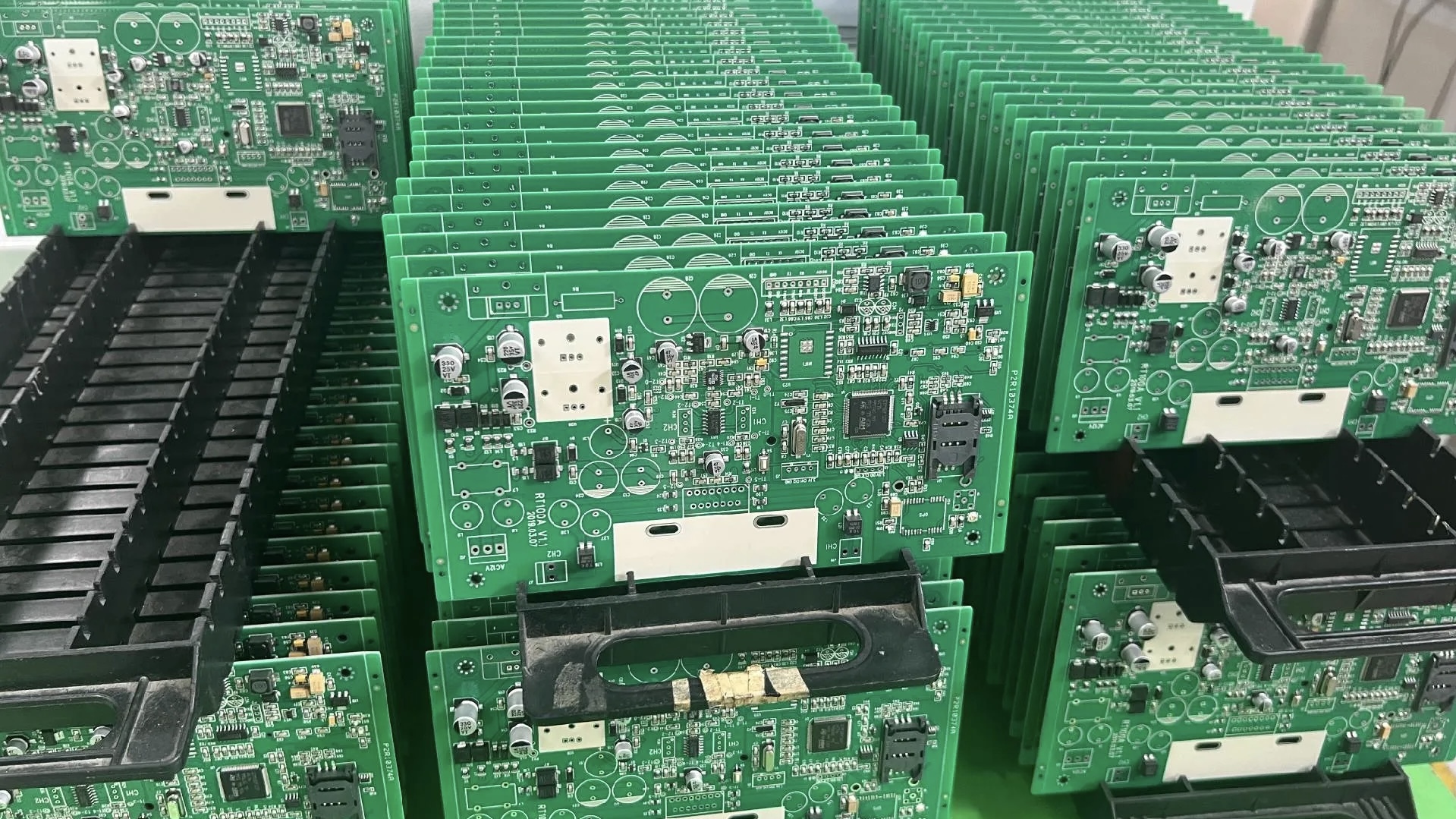
Step 1 — Stencil printing (where most defects are born)
The stencil lays down solder paste on the pads. Sounds simple; it is where roughly half of all SMT defects originate. Aperture size, stencil tension, paste viscosity, and even room temperature and humidity all shift the result.
We have reworked boards where 01005 resistors tombstoned in volume because the stencil aperture was opened a hair too wide — fix the stencil and the defect rate fell off a cliff. The paste print is not a formality; it is the foundation.
Step 2 — Component placement
Pick-and-place machines set each part by vision alignment. As products shrink, placement speed and accuracy become the bottleneck. A capable line handles 01005, BGA, QFP, and double-sided and odd-form parts without breaking stride. For precision ICs and sensors, a second vision pass catches the parts a single pass misses.
Step 3 — Reflow soldering
The board goes through a reflow oven with multiple temperature zones — ramp, soak, peak, cool. The temperature profile decides whether joints form cleanly or you get solder balls, tombstoning, or shifted parts. Profiles are not one-size: board thickness, component mix, and paste type each change the curve. Monitor oven temperature, airflow, and belt speed per batch, not just once.
Step 4 — Inspection and rework
Start with visual and manual sampling to pull the obvious failures. Then AOI: high-resolution cameras compare every board against the golden reference and flag cold joints, missing or wrong parts, offsets, and bridges — things the eye misses on dense boards. For hidden joints under BGAs and QFNs, X-ray is the only honest check. Good suppliers hand you the inspection report, not just the boards.
What to check in an SMT supplier
· Process control at stencil printing, not just at the final step.
· Vision (and dual vision) placement for fine-pitch parts.
· Per-batch reflow profile tuning, documented and repeatable.
· AOI plus X-ray for hidden joints, with reported results.
· Prototype to mass production under one roof, so the process does not change between samples and volume.
At QIXINWEI (Shenzhen Qixinwei Technology Co., Ltd.) we run the full SMT chain in-house — stencil through AOI and X-ray — and we have spent 13 years supplying the components that go on those boards. When you send a BOM, we look at where the process is likely to bite before we quote. If you are moving a design from prototype to production, send the files and we will tell you which steps need attention.
FAQ
Q: What are the main steps of the SMT assembly process?
A: Four core steps: stencil printing (solder paste), component placement (pick-and-place), reflow soldering (forms the joints), and inspection (visual, AOI, and X-ray for hidden joints).
Q: Which SMT defects start at stencil printing?
A: Most of them. Wrong aperture size or poor paste viscosity causes insufficient or excess solder, cold joints, and tombstoning — defects that surface later if the print step is not controlled.
Q: Why is AOI inspection important in SMT?
A: AOI catches subtle defects — offset parts, missing or wrong components, cold and bridged joints — automatically across the whole board. It is far more consistent than manual inspection, especially on high-density PCBs.
Q: What is reflow soldering and why does the profile matter?
A: Reflow melts and re-solidifies the solder paste in a controlled temperature curve. The profile (ramp, soak, peak, cool) must match board thickness, parts, and paste; a bad profile causes solder balls, tombstoning, and shifts.
Q: Can SMT handle small and double-sided boards?
A: Yes. Modern lines place 01005 parts, BGAs, and QFPs, and run double-sided and odd-form assembly. The limiting factor is placement accuracy and stencil/reflow tuning, not the technology itself.
0users like this.