PCB/PCBA Assembly
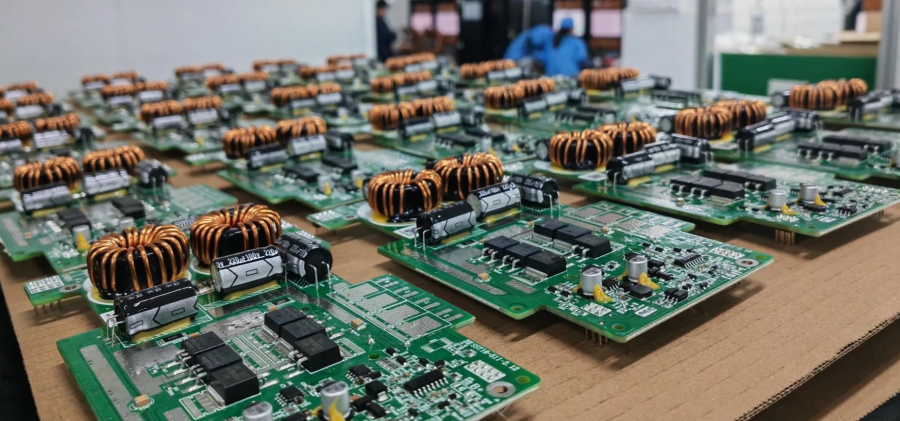
BMS PCBA for Lithium Battery Packs: Design, Manufacturing & Supplier Guide
If you're putting together a lithium battery pack, the BMS PCBA is the one board you can't afford to get wrong. It's the circuit assembly that sits between your cells and the outside world, and its only job is to keep the pack alive and safe: watch every cell, cut off before anything overheats or overcharges, and balance the cells so you actually get the capacity you paid for.
Skip it or cheap out on it, and you're one thermal runaway away from a fire. Get it right, and a pack can run for years instead of months.
What the board actually does
A BMS PCBA isn't a single function — it's a small system.
· Cell monitoring — watches every cell for silent drift. One weak cell drags the whole pack down.
· Overcharge / over-discharge cutoff — the two fastest ways to kill a Li-ion pack; the board cuts power before damage happens.
· Cell balancing — equalizes cell voltage so you get the full capacity you paid for.
· Communication (CAN / I2C / SPI) — lets the host controller see what the pack is doing.
· SOC / SOH estimation — accurate state-of-charge so operators aren't guessing runtime.
The "brain" analogy gets tossed around a lot, but it's accurate enough: without it, the cells are just a pile of chemicals waiting for something to go wrong.
Where BMS PCBA shows up
You'll find these boards in e-bikes and scooters, home and grid energy storage, EV battery modules, power tools, and medical devices where a surprise shutdown isn't an option. The grade of the board scales hard with the application:
· Consumer (e-bikes, tools): 2–4 layers, cost-driven, basic protection.
· Industrial (storage, UPS): wider temperature range, higher reliability, more testing.
· Automotive (AEC-Q100, ASIL-B/D): 4–8 layers, vibration resistance, full traceability.
We've seen consumer-grade designs dropped into industrial enclosures to save a few cents, then fail in the field within a season. The grade isn't a suggestion — it's matched to the failure mode.
The specs that actually change the outcome
MCU. Automotive and industrial boards lean on NXP S32K3, Infineon AURIX, or STM32. Consumer boards can get away with cheaper parts, but the MCU is what runs your balancing and protection logic, so don't treat it as a commodity.
Protection IC. TI's BQ series and Maxim MAX14920 are the workhorses here. They handle cell measurement and the fast cutoff path that the MCU firmware is too slow for.
MOSFETs. Low RDS(on) matters more than people expect — every milliohm heats up under load and eats into efficiency.
Board material and stack-up. FR-4 covers most jobs. Aluminum substrate when heat is the enemy, polyimide when the board has to flex. Layer count runs 2–4 for consumer, 4–8 for automotive. For high-current paths, 2oz–4oz copper isn't optional — thin copper is why some boards quietly cook themselves.
How a BMS PCBA gets built
1. PCB fabrication — Gerber review, drilling, plating, solder mask, silkscreen, bare-board test.
2. Component sourcing & kitting — original parts from TI, NXP, Infineon, Murata, Samsung; kitted BOM so assembly doesn't stall waiting on one line item.
3. SMT assembly — paste print, placement, reflow, AOI. X-ray for the hidden joints under QFNs and BGAs.
4. Functional test — continuity, voltage/current calibration, protection trip test (overcharge, short), communication protocol check.
5. Certification baseline — ISO9001 for the quality system, IATF16949 if automotive is in scope, IPC-A-610 for acceptability.
The step most buyers never see is step 4. A board that passes AOI can still have a protection threshold set wrong. If a supplier can't show you the functional test plan, that's the red flag.
What to check before choosing a manufacturer
· Do they actually build BMS boards, or just any PCBA? Automotive and industrial BMS have failure modes general assemblers miss. In-house SMT and test equipment matters more than a pretty brochure.
· Can they support the full chain? Design review, firmware, prototype, and a BOM they can actually source. A partner who only places parts you hand them will bottleneck the moment one IC goes long-lead.
· Original components, or gray market? For a safety-critical board, counterfeit passives and clone ICs aren't a cost saving. Ask about their component channels.
· Turnaround that fits your stage. 24-hour prototype, 3–7 days to mass production, and a flexible MOQ (1 piece to prove it works, 100+ to ship) is the range you want.
At QIXINWEI (Shenzhen Qixinwei Technology Co., Ltd.), we've spent 13 years in electronic components and PCBA — so the conversation starts with the BOM, not the bare board. We run one-stop from design support and original-component sourcing through in-house SMT assembly and full functional testing, and we ship worldwide. If a lithium pack is on your roadmap, send the spec or the BOM and we'll tell you where the risks are before you commit to a build.
FAQ
Q: What's the difference between a BMS and a BMS PCBA?
A: The BMS is the system (firmware, logic, protection strategy); the BMS PCBA is the physical assembled board that carries it. People often use them interchangeably, but the board is the hardware half.
Q: How many layers does a BMS PCBA need?
A: Consumer packs usually run 2–4 layers; automotive and high-current industrial boards go 4–8. More layers help with isolation, current handling, and noise — but add cost, so match it to the application.
Q: Which MCU is best for a BMS?
A: There's no single answer. NXP S32K3 and Infineon AURIX dominate automotive; STM32 covers a lot of industrial and cost-sensitive designs. The right pick depends on your safety level, communication needs, and budget.
Q: Why does cell balancing matter?
A: Cells in a pack drift over time. Balancing equalizes their voltage so the pack delivers its full rated capacity instead of being capped by the weakest cell — directly extending usable cycle life.
Q: Can a BMS PCBA be customized?
A: Yes. Series count, current rating, communication bus, and protection thresholds are all design variables. A capable manufacturer will review your spec and flag where a standard design won't hold up.
0users like this.