Electronic components
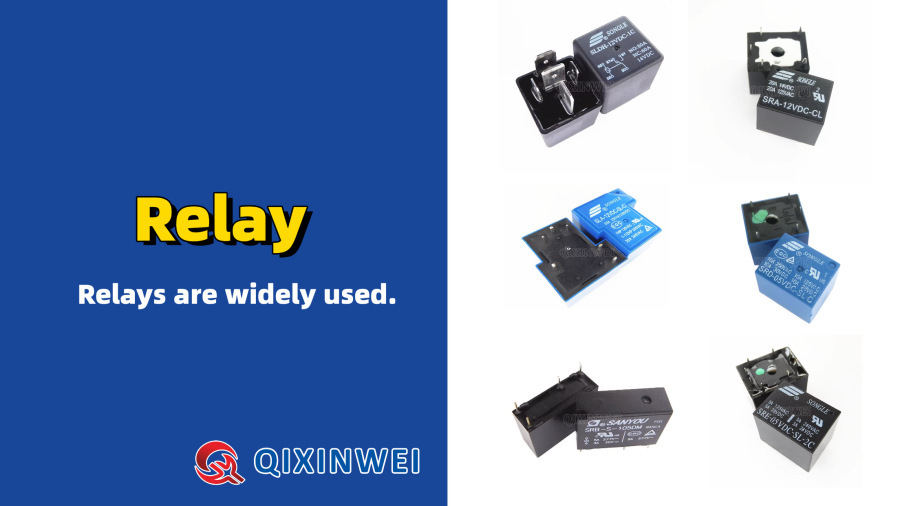
What Is a Relay: Types, Applications, and Leading Brands
A relay is the simplest, most reliable way to let a small signal safely switch a big load. If you have ever had a microcontroller turn on a 220V motor, a relay was almost certainly in between. It is a switching device that uses a low-power control signal to open or close contacts in a separate circuit — giving you isolation, protection, and remote control in one package.
What a relay actually does
The coil side takes a small control current. That current creates a magnetic field, which moves an armature to open or close the contacts on the load side. Because the two sides are physically separate, the low-voltage control circuit and the high-power load never touch — that isolation is the whole point. It lets a 3.3V signal switch 220V, or a PLC command trip a 30A contactor, without the control electronics ever seeing the danger.
Key features that matter
· Electrical isolation between control and load circuits — the reason relays exist.
· High switching capability: a small signal drives a high-current or high-voltage load.
· AC and DC compatibility across a wide voltage range.
· Low cost and long mechanical life compared with solid-state alternatives for many jobs.
Where relays show up
· Household appliances: AC compressor, washing machine, smart-socket power control — small-power relays are the workhorses here.
· Industrial automation: PLC cabinets, CNC machines, production-line motor interlocks.
· New energy: EV battery management, charging-pile pre-charge loops, solar inverter and storage — high-voltage DC relays.
· Smart meter and telecom: remote-reading meters, base-station power modules, access control.
· Automotive: headlights, fuel pump, central-control power management.
Four relay brands worth knowing
· Hongfa (Xiamen, China): the largest relay maker by shipment volume globally. Covers miniature signal, power, and high-voltage DC relays for EV and PV. Strong cost-performance for both local and import-substitution needs (series such as HF3FF, HFV, HFE).
· Songle (Ningbo, China): small-power electromagnetic relays built for home appliances — air conditioners, kitchen equipment, smart home. Short lead time and competitive price (SLA, SLD, SRD series).
· Sanyou (Sanyou Lianzhong, listed): focused on industrial control and smart-meter relays, with strong latching-relay technology for energy storage and power cabinets (SY, SM series).
· Omron (Japan): the premium precision choice, known for anti-interference and stable performance in medical devices, lab instruments, and precise automation (classics like G5V and G2R).
We have seen relay contacts weld shut in an EV pre-charge loop because the rated current was picked for steady-state running and ignored the inrush surge. The contact rating has to cover the spike, not just the normal load — pick it wrong and the relay either fails early or sticks closed, which is the dangerous one.
What to check when sourcing relays
· Genuine/original channels — counterfeit relays fail silently and without warning.
· Contact rating that covers the inrush surge, not just the running current.
· Coil voltage that matches your control circuit (5V, 12V, 24V DC, or AC coils).
· Stock of the specific series you designed in, not just "a relay that fits".
· A supplier who can source the whole BOM around the relay, not only the one part.
At QIXINWEI (Shenzhen Qixinwei Technology Co., Ltd.) we keep original stock of Hongfa, Songle, Sanyou, and Omron relays in our Shenzhen warehouse and supply worldwide — from samples to bulk. Because we also run PCBA, we can source the entire BOM around the relay instead of just the single component. Send your BOM or part numbers and we will confirm authenticity and availability before you place an order.
FAQ
Q: What is a relay used for?
A: A relay lets a low-power control signal switch a high-current or high-voltage load safely, providing isolation, protection, and remote control. It is common in appliances, industrial automation, EVs, and telecom.
Q: How does a relay work?
A: A small current through the coil creates a magnetic field that moves an armature to open or close the contacts in a separate circuit, so the control side and the load side stay electrically isolated.
Q: Which relay brand is best?
A: It depends on the job. Hongfa leads on volume and HV DC for EVs and PV; Songle suits home appliances; Sanyou focuses on industrial and meter latching relays; Omron is the premium precision choice for medical and instrumentation.
Q: What does contact rating mean for relay selection?
A: It is the maximum current and voltage the contacts can switch. Choose a rating that covers the inrush surge, not just the steady running load — otherwise contacts can weld or fail early.
Q: Can relays be used in EV and solar applications?
A: Yes. High-voltage DC relays (such as Hongfa's HV DC line) are standard in EV battery management, charging pre-charge loops, and solar inverters. Rating and isolation requirements are stricter than in low-voltage use.
0users like this.