Electronic components
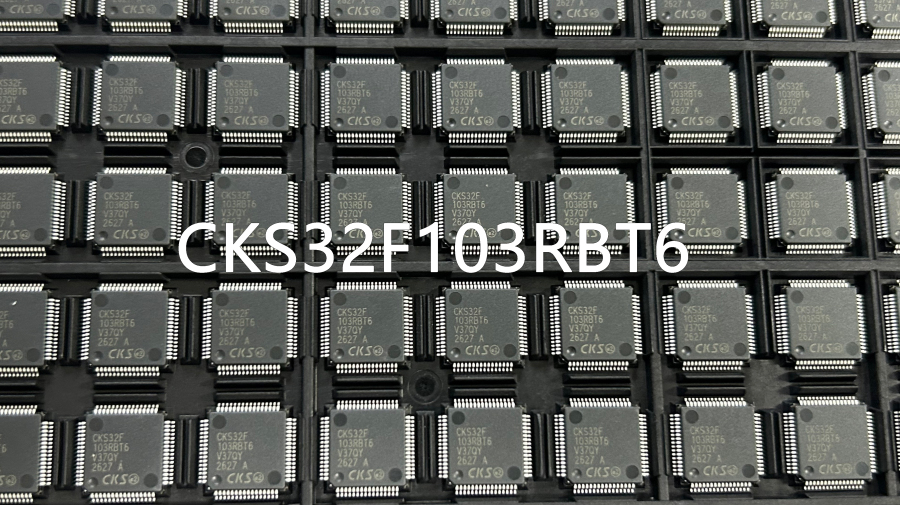
The CKS32F103RBT6 Guide: Pin-to-Pin STM32F103 Replacement, 72MHz Cortex-M3, LQFP-64
If you are picking an MCU for a new industrial or consumer design, the first question is not “which part has the highest clock speed” — it is “what happens when the primary supplier’s lead times stretch to 50 weeks.” A BOM that looks solid on paper falls apart when the STM32F103RBT6 is out of stock. The CKS32F103RBT6 from China Electronics Technology Group (CKS) is a drop-in replacement that addresses both the supply chain risk and the cost pressure, without forcing a PCB redesign.
Overview
The CKS32F103RBT6 is a 32-bit microcontroller built on the ARM Cortex-M3 core, positioned as a direct replacement for the STM32F103RBT6. It integrates a 72MHz CPU, 128KB of Flash, and 20KB of SRAM into a standard LQFP-64 (10×10mm) package. The pin definitions are highly consistent with the STM32F103RBT6, allowing for Pin-to-Pin hardware replacement without changing the PCB layout. At the software level, it features register-level compatibility. Existing STM32 application code can be compiled and run, with development environments like Keil and IAR fully supported. Amidst STM32 supply fluctuations and cost pressures, the CKS32F103RBT6 offers a domestic supply chain, an approximate 30% price advantage, and lower operating power consumption, making it a practical alternative for industrial control, consumer electronics, and IoT devices.
Specifications Parameters, Features, and Applications
Core Specifications:
| Core | ARM Cortex-M3, 32-bit |
| Max Frequency | 72 MHz (1.25 DMIPS/MHz) |
| Memory | 128 KB Flash, 20 KB SRAM |
| Package | LQFP-64 (10×10mm) |
| I/O Count | 51 |
| Operating Voltage | 2.0V to 3.6V |
| Operating Temperature | -40°C to +85°C |
| ADC | 12-bit, up to 16 channels |
| Timers | 3x general-purpose 16-bit, 1x PWM timer |
| Interfaces | 2x I2C, 2x SPI, 3x USART |
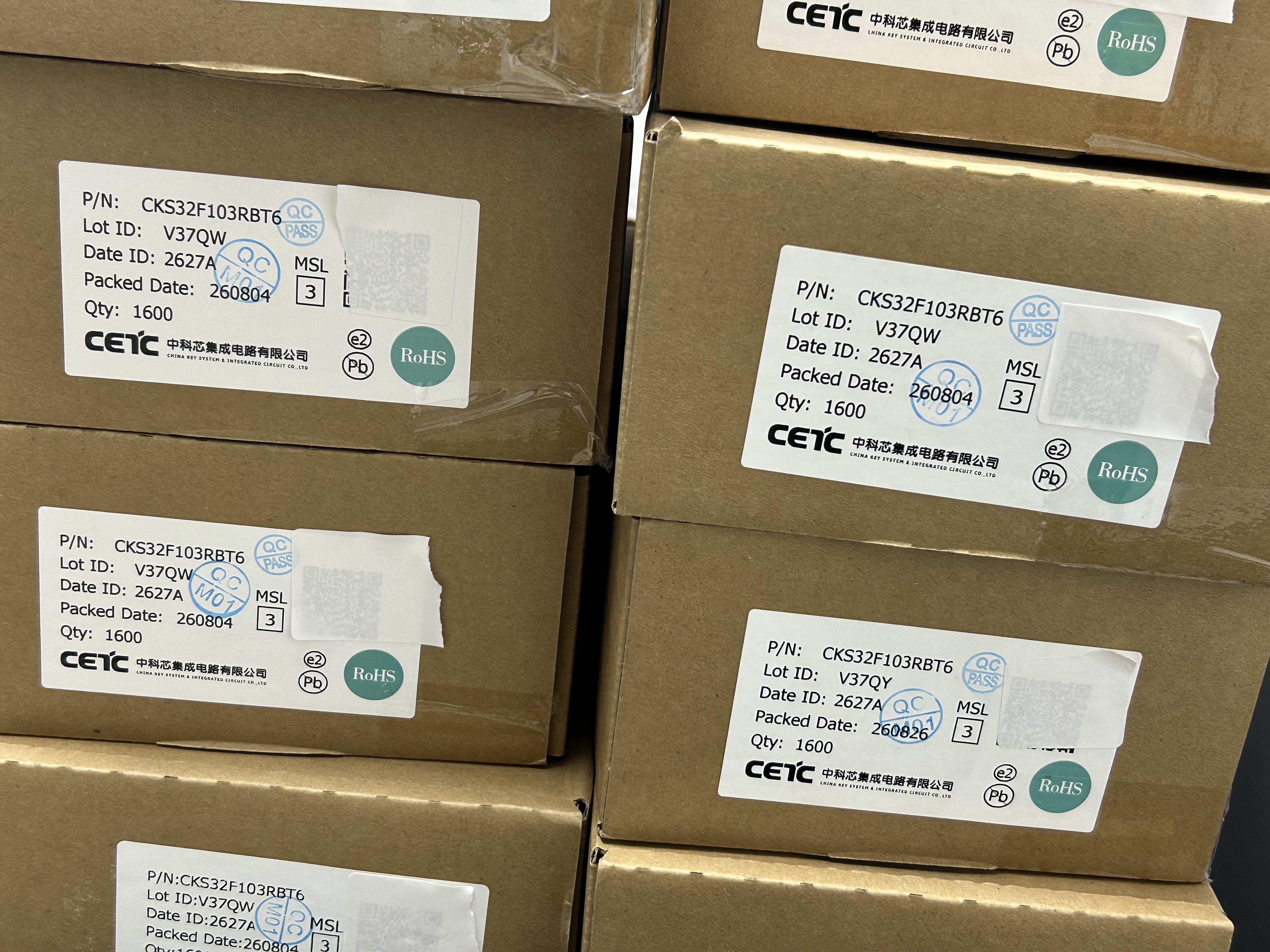
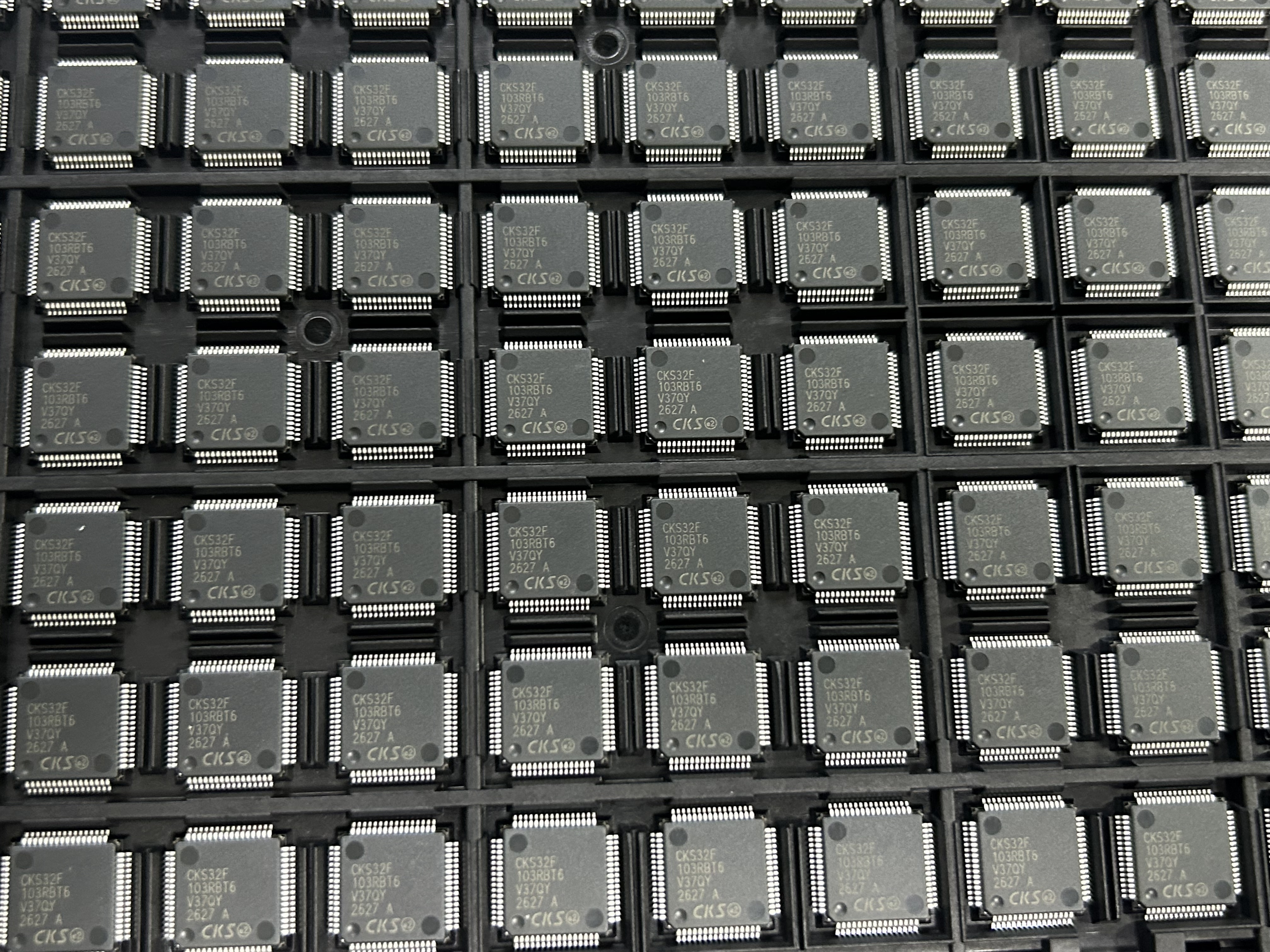
Key Features:
Hardware Drop-in Capability: Pin definitions are highly consistent with the STM32F103RBT6. Existing PCBs can accept the new part without layout changes, avoiding expensive EMC re-testing and debugger changes.
Low Software Migration Threshold: Register-level compatibility means Standard Peripheral Library (SPL) and HAL-based code can largely be reused. Keil and IAR projects can compile directly for the new device. Differences are mainly concentrated in Flash programming timing and certain low-level register behaviors.
Lower Power Consumption: The CKS32F1 series consumes about 10mA less current than the STM32F103 series, a tangible improvement for battery-powered or power-sensitive designs.
Domestic Supply Chain & Cost Advantage: Bulk pricing is typically about 30% lower than the STM32F103RBT6, insulating production from ST's allocation and lead-time fluctuations.
Typical Applications:
Industrial Control: PLC modules, inverter control boards, servo drives, industrial sensor transmitters.
Consumer Electronics: Smart lock main controllers, smart home control panels, small appliance control boards.
IoT Terminals: Sensor nodes, LoRa/NB-IoT gateway co-processors, wireless module protocol conversion.
General Embedded Control: Any medium-complexity device requiring a 64-pin LQFP, 128KB Flash, and a 12-bit ADC.
Which Models Can It Replace?
Direct Replacement: STM32F103RBT6 (Primary Target)
This is the core positioning of the CKS32F103RBT6. They share the LQFP-64 package, pin definitions, core architecture, Flash/RAM capacity, and peripheral configuration. Hardware can be directly replaced, and software can run after adapting Flash programming-related logic.
Functional Equivalents Within the CKS32F103 Series:
STM32F103R8T6 (64KB Flash): Replaced by CKS32F103R8T6 (smaller Flash, functional downgrade).
STM32F103RBT6 (128KB Flash): Replaced by CKS32F103RBT6 (exact match, preferred choice).
STM32F103CBT6 (128KB Flash, LQFP-48): Replaced by CKS32F103CBT6 (different package for 48-pin designs).
STM32F103VBT6 (128KB Flash, LQFP-100): Replaced by CKS32F103VBT6 (more pins for I/O-heavy designs).
Non-Direct Replacement Scenarios:
If the original design uses an STM32F103RET6 (512KB Flash, 64KB RAM, LQFP-64), the CKS32F103RBT6 cannot be a direct replacement due to insufficient memory. You must either trim the firmware to fit 128KB/20KB or select a larger CKS32F103 variant.
Comparison with Other Domestic Alternatives:
While GD32F103, HK32F103, and APM32F103 also target the STM32F103, the CKS32F103RBT6 differentiates itself with a high degree of pin compatibility completeness and register-level software compatibility. For products already developed with the ST Standard Peripheral Library, the migration effort is typically lower than switching to alternatives with greater core or peripheral behavioral differences.
FAQ
Q: Is the CKS32F103RBT6 fully compatible with the STM32F103RBT6?
A: Hardware-wise, the pin definitions are highly consistent for Pin-to-Pin replacement. Software-wise, it is register-level compatible, and HEX files can run after necessary Flash programming adaptations. However, "highly compatible" is not "absolute zero modification." It is recommended to specifically verify code involving Flash erasure, Bootloader jumps, and low-level clock configurations.
Q: Will my STM32 program need modifications after replacement?
A: Most application-layer code and standard peripheral library calls do not require modification. However, users have reported potential compatibility issues in Bootloader and Flash write logic, such as APP jump anomalies or Flash write failures. Focus testing on Flash programming, interrupt vector table remapping, and low-power wake-up paths.
Q: What is the operating temperature range of the CKS32F103RBT6?
A: -40°C to +85°C, covering the standard industrial temperature range of the STM32F103RBT6. If a wider range (e.g., +105°C or +125°C) is required, confirm if CETC has a high-temperature grade variant.
Q: Can the CKS32F103RBT6 replace the STM32F103RET6?
A: No. The STM32F103RET6 has 512KB Flash and 64KB RAM, whereas the CKS32F103RBT6 has only 128KB Flash and 20KB RAM. If the firmware exceeds 128KB or RAM usage exceeds 20KB, select a larger capacity model in the CKS32F103 series.
Q: Do I need to change development tools and debuggers?
A: No. The CKS32F103RBT6 supports Keil and IAR and is compatible with mainstream debuggers (ST-Link, J-Link, etc.). Existing project configurations and debug chains can be reused.
Conclusion
The core value of the CKS32F103RBT6 can be summarized in one sentence: In the LQFP-64 footprint, run the code already validated on the STM32F103RBT6, at a lower cost and with a more controllable supply chain. It is not a chip that requires learning a new architecture; it is a device that allows existing STM32 designs to "continue running on a different supply path."
For teams evaluating alternatives, proceed in this order: First, confirm if the original design's Flash/RAM usage fits within the 128KB/20KB budget. Second, use the existing HEX file on a CKS32F103RBT6 evaluation board to specifically verify Flash erasure/writing, Bootloader jumps, and low-power wake-up. Finally, confirm bulk pricing and lead times with an authorized distributor to complete the BOM switch. For projects exceeding this model's memory capacity, move to larger capacities in the CKS32F103 series rather than forcing an adaptation at the resource boundary.
Shenzhen Qixinwei Technology Co., Ltd. focuses on electronic component supply, BOM kitting, part number matching, and supply chain solutions, and can assist in selecting corresponding products according to specific project requirements.
0users like this.