Electronic components
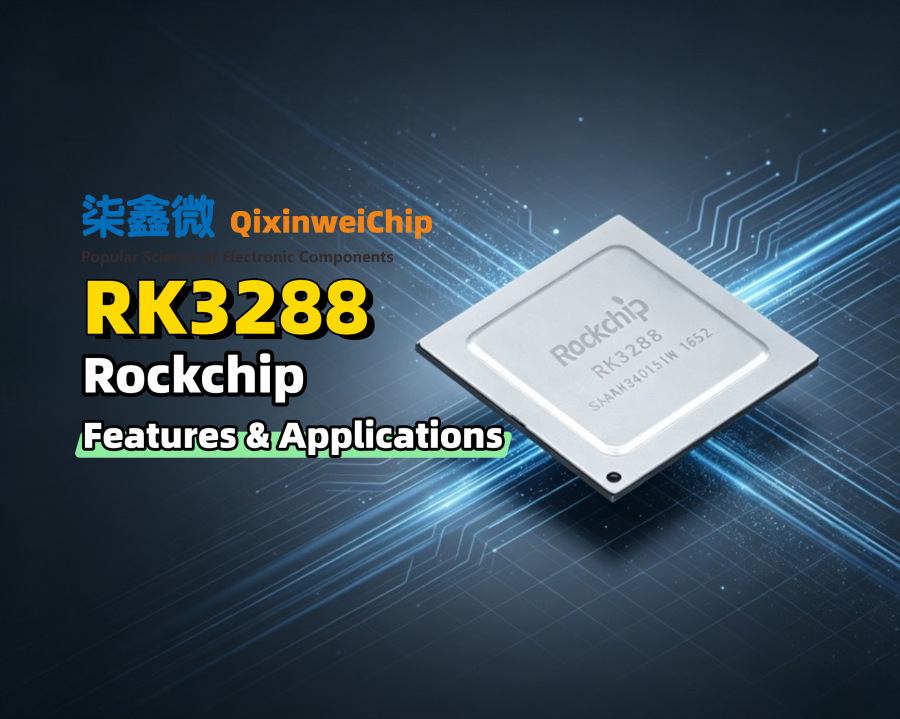
Can RK3288 Be Directly Replaced with RK3568? — In-Depth Analysis and Selection Guide
Introduction: The Most Critical Question for Engineers
"Can RK3288 be directly replaced with RK3568?" — This is perhaps the most pressing question for many embedded engineers, product managers, and procurement professionals today. With the RK3288 gradually entering its end-of-life (EOL) phase, finding a suitable successor has become an urgent priority. However, behind the word "replacement" lie multiple considerations: hardware compatibility, software adaptation, performance differences, and cost trade-offs.
This article provides an in-depth analysis of this question, comparing the core specifications of both chips, explaining the true meaning of "replacement," outlining the performance gains and expanded application scenarios after upgrading, and offering real-world case studies and a comprehensive FAQ to serve as a clear decision-making reference for your selection process.
Core Specifications Comparison: The "Genetic" Differences Between Two Generations
Before discussing whether "replacement" is feasible, let's first understand the fundamental differences between these two chips.
In terms of basic positioning, the RK3288 is a classic quad-core processor released by Rockchip in the third quarter of 2014. Manufactured using a 28nm process and based on the Cortex-A17 architecture, it was positioned as an entry-level to mid-range multimedia application processor. The RK3568, by contrast, is a next-generation general-purpose processor released by Rockchip in the second quarter of 2020. Built on a 22nm process with the Cortex-A55 architecture, it is positioned as a versatile SoC for industrial, commercial, and light-AI scenarios. With roughly six years of technological advancement separating the two, the gaps in performance, power efficiency, and functional integration are substantial.
In terms of CPU performance, the RK3288 features a quad-core Cortex-A17 processor clocked at up to 1.8GHz, belonging to the 32-bit ARMv7 architecture. While it delivered impressive performance in its day, it is now considered entry-level. The RK3568, on the other hand, features a quad-core Cortex-A55 processor clocked at up to 2.0GHz, belonging to the 64-bit ARMv8.2 architecture. In terms of architectural evolution, the Cortex-A55 delivers approximately 30% to 40% better energy efficiency than the Cortex-A17 at equivalent frequencies, with overall compute performance improving by roughly 50% to 70%. More critically, the 64-bit architecture enables the RK3568 to support a larger memory addressing space and newer operating system versions, whereas the RK3288, constrained by its 32-bit architecture, cannot run pure 64-bit environments such as certain domestic operating systems.
Regarding GPU graphics capabilities, the RK3288 integrates ARM's Mali-T764 GPU with eight shader cores, delivering approximately 82 GFLOPS of floating-point performance — sufficient for smooth 3D interfaces and light gaming in its era. The RK3568 integrates the Mali-G52 2EE MC2 GPU. Although it may not have a higher core count, its newer Bifrost architecture provides significantly better graphics rendering efficiency, power consumption control, and API support (including Vulkan and OpenGL ES 3.2). Real-world graphics performance improves by about 30% to 40%, with the difference becoming especially noticeable in high-resolution display and complex UI interaction scenarios.
The most fundamental difference between the two chips lies in AI acceleration. The RK3288 has no dedicated AI acceleration unit whatsoever. All artificial intelligence tasks — such as face detection and speech recognition — must rely on the CPU for purely software-based computation, which is not only slow but also power-hungry, making it largely impractical for real deployment. The RK3568, however, integrates Rockchip's proprietary NPU (Neural Processing Unit) with approximately 0.8 to 1.0 TOPS of compute power. It supports mainstream AI frameworks including TensorFlow Lite, ONNX, and Caffe, enabling efficient execution of lightweight AI inference tasks such as face recognition, object detection, and image classification at a fraction of the power consumption of CPU-based solutions.
In video encode/decode capabilities, the gap is equally significant. The RK3288 supports hardware decoding of 4K H.264 but does not support hardware decoding of H.265 (HEVC). This means that the vast amount of 4K video content now encoded in H.265 can only be software-decoded on the RK3288, severely compromising playback smoothness. The RK3568, by contrast, fully supports hardware decoding of 4K@60fps H.265, H.264, and VP9, delivering smooth playback across mainstream 4K video formats. For encoding, the RK3288 only supports 1080P H.264, while the RK3568 supports 1080P encoding with higher efficiency.
For display interfaces and multi-screen capabilities, both chips support various display interface combinations, but with different upper limits. The RK3288 supports HDMI 2.0 (4K@60Hz), dual-channel LVDS, dual MIPI-DSI, and eDP, enabling dual-screen simultaneous or independent display. The RK3568 goes further with support for HDMI 2.0, eDP, LVDS, MIPI-DSI, and other combinations, and more importantly, it can achieve triple-screen simultaneous independent display — a significant feature for multi-screen interaction scenarios such as digital signage, POS terminals, and industrial control panels.
For memory and storage support, the RK3288 supports dual-channel 64-bit DDR3/DDR3L/LPDDR2 memory with a maximum capacity of 4GB, along with eMMC 4.51 and MLC NAND Flash for storage. The RK3568 upgrades to LPDDR4/LPDDR4X memory with up to 8GB capacity, offering higher frequency and lower power consumption, along with eMMC 5.1 for significantly faster read/write speeds.
In interface and expandability, another major differentiator emerges. The RK3288 primarily offers USB 2.0 and Fast Ethernet (100Mbps), with relatively limited expansion capabilities. The RK3568 introduces USB 3.0 (10x faster transfer speeds), Gigabit Ethernet, SATA 3.0 (for direct connection to HDDs or SSDs), and PCIe 2.1 (supporting WiFi 6 modules, 5G modules, etc.), along with an integrated CAN bus controller. These additions make the RK3568 far more suitable for industrial control, automotive devices, NAS storage, and other demanding scenarios.
Interestingly, despite their vast internal differences, the package specifications of the two chips are highly consistent — both measure 19×19mm, use the FCCSP636L package type, and share a 0.65mm ball pitch. This means that at the PCB design level, the pad layouts are compatible, enabling physical replacement at the system-on-module (SoM) level. Solution providers have already verified that RK3288 and RK3568 modules designed with identical form factors share the same PCB dimensions and mounting hole positions, requiring only minor adjustments to interface bezel openings during replacement.
In operating system and software ecosystems, the RK3288 officially supports Android 4.4 through Android 8.1, with relatively old Linux kernel versions. The RK3568 supports Android 11, Ubuntu 18.04/20.04, Debian, Buildroot, and — crucially — has been adapted for domestic operating systems such as StarFive's Kylin and OpenHarmony, which is especially valuable for government and enterprise projects with localization requirements. However, due to the architectural differences between ARMv7 and ARMv8.2, the software stacks are entirely incompatible — firmware built for the RK3288 cannot run directly on the RK3568.
Overall, the RK3568 surpasses the RK3288 in virtually every dimension — CPU performance, GPU graphics capability, AI compute, video decoding, interface expansion, memory support, and OS adaptability. The gap between them is generational rather than incremental. The only trade-off is that upgrading to the RK3568 requires software redevelopment and adaptation, with associated development cycle and manpower costs that must be factored into project planning. However, for new projects facing RK3288 EOL and supply shortage risks, this upgrade represents an opportunity for a significant leap in product capabilities rather than a mere migration.
Five Core Advantages of Upgrading to RK3568
First, comprehensive performance gains. Compared to the RK3288, the RK3568 delivers approximately 50% to 70% higher overall CPU compute performance and 30% to 40% better single-core performance. Meanwhile, the more advanced 22nm process delivers superior power efficiency, making it ideal for 24/7 commercial and industrial applications.
Second, AI capability from zero to one. The RK3568 integrates an NPU with 0.8 to 1.0 TOPS of compute power, supporting TensorFlow Lite, ONNX, and other mainstream frameworks. It can efficiently execute lightweight AI tasks such as face recognition, object detection, and voice wake-up, adding intelligence to end products.
Third, multimedia capabilities leap forward. Support for 4K@60fps H.265 and VP9 hardware decoding — features entirely absent from the RK3288 — is especially critical today as mainstream video content increasingly shifts to H.265 encoding.
Fourth, significantly expanded interfaces and expansion. The introduction of USB 3.0, Gigabit Ethernet, SATA 3.0, and PCIe 2.1 expands the RK3568's application scope from consumer electronics to industrial control, NAS storage, edge computing gateways, and beyond.
Fifth, domestic OS adaptation. The RK3568 has been adapted for domestic operating systems such as StarFive's Kylin and OpenHarmony, meeting the compliance requirements of China's "Xinchuang" (information technology application innovation) and localization initiatives — an area where the RK3288's 32-bit architecture falls short.
Application Scenarios: RK3568's Expanded Market Footprint
The RK3288's primary application scenarios have been concentrated in digital signage and advertising displays, TV boxes, entry-level educational tablets, and industrial HMI. Its 4K H.264 decoding capability and mature ecosystem still hold value in these areas, but its limitations are becoming increasingly apparent with the spread of H.265 content and emerging AI requirements.
The RK3568 dramatically expands the application landscape. In intelligent NVR and security surveillance, its 4K H.265 hard decoding combined with NPU-based edge AI enables human detection, license plate recognition, and other intelligent analytics. In industrial control and HMI, multi-screen independent display, Gigabit Ethernet, and CAN bus enable more complex equipment control tasks. In lightweight NAS storage, SATA 3.0 allows direct hard drive connection, and dual Gigabit Ethernet supports link aggregation for home or small-office network storage solutions. In edge AI computing gateways, the 0.8 TOPS NPU can run TensorFlow Lite models, suitable for edge-side inference in smart retail, precision agriculture, and other scenarios. Additionally, the RK3568 meets the requirements of domestic localization initiatives with its support for StarFive's Kylin, OpenHarmony, and other domestic operating systems.
Case Studies: Real-World Migration Experiences
Case Study 1: Digital Signage Mainboard Upgrade
A customer previously used the RK3288 solution for wall-mounted advertising displays but faced chip EOL and rising procurement costs. After switching to an RK3568 system-on-module, they found that the PCB dimensions and mounting holes were identical to the original design, requiring only minor adjustments to the bezel openings for HDMI and Ethernet ports. After the upgrade, the device supported 4K@60fps H.265 hardware decoding and triple-screen independent display, with the system upgraded from Android 8.1 to Android 11. Both operational smoothness and video playback quality improved significantly, while the per-unit BOM cost actually decreased compared to continuing to purchase high-priced RK3288 inventory.
Case Study 2: Industrial HMI Localization Retrofit
An industrial equipment manufacturer's control panel was originally developed around the RK3288, but government and state-owned enterprise clients required the device to support domestic operating systems. Because the RK3288's 32-bit ARMv7 architecture cannot run the pure 64-bit StarFive Kylin OS, the customer switched to an RK3568 system-on-module. Hardware changes were minimal — only minor power management circuit adjustments were needed — while the software side required re-porting the StarFive Kylin OS and Qt interface based on the RK3568 BSP, with the entire migration taking approximately two months. The upgrade not only met localization compliance requirements but also provided NPU compute power, reserving hardware capability for future addition of AI-driven equipment fault diagnosis features.
Case Study 3: Smart Retail Dual-Screen POS Terminal Upgrade
A retail deployment required a dual-screen interactive terminal, with the main screen facing customers to display promotional content and the secondary screen for cashier operations. The original RK3288 solution supported dual-screen display but could not smoothly play H.265-encoded 4K promotional videos — severe stuttering significantly impacted the user experience. After upgrading to the RK3568, the main screen delivered smooth 4K@60fps video playback, the secondary screen responded with low-latency touch interaction, and the newly added face recognition capability (NPU-accelerated) integrated with the membership system for seamless identity and loyalty point verification, substantially enhancing the terminal's value proposition.
Product FAQ: The Ten Questions Engineers Ask Most
Q1: Can RK3288 be directly replaced with RK3568? Give me a one-sentence answer.
A: Physical package compatibility allows direct system-on-module replacement, but software requires re-adaptation and peripheral circuits need verification for power and pin definition differences — this is not a plug-and-play replacement.
Q2: Are the package dimensions and pin counts of the two chips identical?
A: Yes. Both measure 19×19mm, use FCCSP636L packaging, and share a 0.65mm ball pitch. Multiple solution providers have verified that PCB dimensions and mounting hole positions are fully compatible, enabling direct module installation.
Q3: Can the RK3288 firmware run directly on the RK3568?
A: No. The RK3288 uses the 32-bit ARMv7 architecture while the RK3568 uses the 64-bit ARMv8.2 architecture. The binary instruction sets are incompatible, requiring complete recompilation of the system kernel and all drivers.
Q4: What operating systems does the RK3568 support?
A: Android 11, Debian, Ubuntu 18.04 and 20.04, Buildroot, as well as domestic operating systems including StarFive Kylin and OpenHarmony, covering consumer, industrial, and localization-focused product directions.
Q5: How much AI compute power does the RK3568 have, and what can it do?
A: Approximately 0.8 to 1.0 TOPS, capable of supporting lightweight AI inference tasks such as face recognition, object detection, image classification, and voice wake-up — suitable for edge computing scenarios rather than cloud-based large model training.
Q6: Do I need to rewrite existing peripheral drivers when upgrading to RK3568?
A: Most drivers require rewriting or modification, as the internal peripheral controller addresses and register definitions have changed. Drivers for USB, Ethernet, display interfaces, GPIO, and others all need re-adaptation based on the RK3568 BSP.
Q7: How much more powerful is the RK3568 compared to the RK3288?
A: Overall CPU compute performance improves by approximately 50% to 70%, single-core performance by 30% to 40%, and GPU graphics performance by about 30% to 40%, with significantly better energy efficiency due to the 22nm process.
Q8: Does the RK3568 support 4K H.265 hardware decoding?
A: Yes, it supports 4K@60fps hardware decoding of H.265, H.264, and VP9. The RK3288 does not support H.265 hardware decoding at all — this is one of the most noticeable gaps between the two generations.
Q9: Can the RK3568 support domestic operating systems?
A: Yes. Solution providers have successfully adapted StarFive Kylin and OpenHarmony, meeting compliance requirements for "Xinchuang" and localization initiatives — a capability the RK3288 cannot achieve due to its 32-bit architecture.
Q10: How extensive are the hardware changes when migrating from RK3288 to RK3568?
A: If using a system-on-module approach, changes are minimal — PCB dimensions and mounting holes are consistent, with only minor adjustments to interface bezel openings and verification of power circuit differences. If using a direct chip-on-board approach, full PCB redesign and peripheral circuit layout adjustments are required.
Conclusion
Returning to the original question — can RK3288 be directly replaced with RK3568? The accurate answer is: physical replacement at the module level is feasible, but software and certain circuit details require re-adaptation. More importantly, the upgrade from RK3288 to RK3568 is not merely a side-by-side replacement but a comprehensive leap in computing power, AI capability, multimedia performance, and expandability. For projects facing RK3288 EOL and supply shortages, choosing the RK3568 is both a practical response to supply chain realities and a proactive opportunity to inject new vitality into your products.
If you are in the midst of R&D selection, facing component shortages or EOL challenges, or in need of a reliable supplier, Shenzhen Qixin Micro specializes in the full range of Rockchip products. Contact us for samples, parameter comparisons, and BOM configuration services.
0users like this.