Electronic components
What Is STM32? The Complete Guide to STMicroelectronics‘ 32-bit ARM Cortex-M Microcontroller
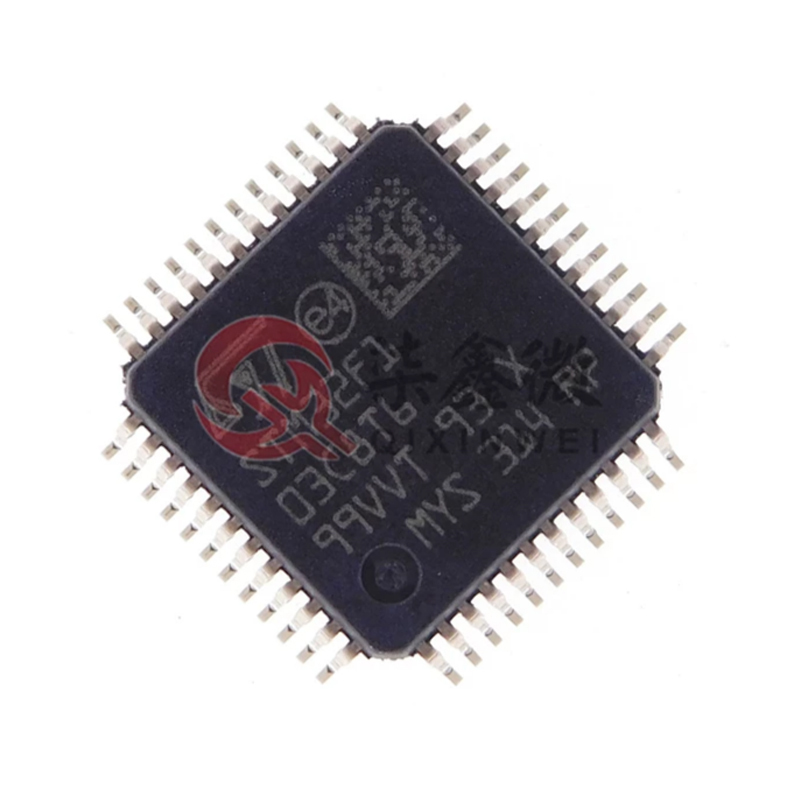
If you work with embedded hardware, you will frequently meet STM32. So what is STM32 exactly? STM32 is a huge family of 32‑bit microcontrollers manufactured by STMicroelectronics, built around ARM Cortex‑M processor cores. What is STM32 good for? STM32 covers low‑cost entry‑level chips, ultra‑low‑power models, high‑performance MCUs and wireless‑integrated devices. When engineers ask what is STM32, they are usually referring to the most widely‑used general‑purpose MCU platform for embedded projects worldwide.
In simple terms, an STM32 microcontroller is a 32-bit embedded computing device developed by STMicroelectronics (often abbreviated as ST). It is based on the ARM® Cortex-M® processor architecture — a family of 32-bit RISC processor cores optimized for cost- and power-sensitive microcontroller applications.
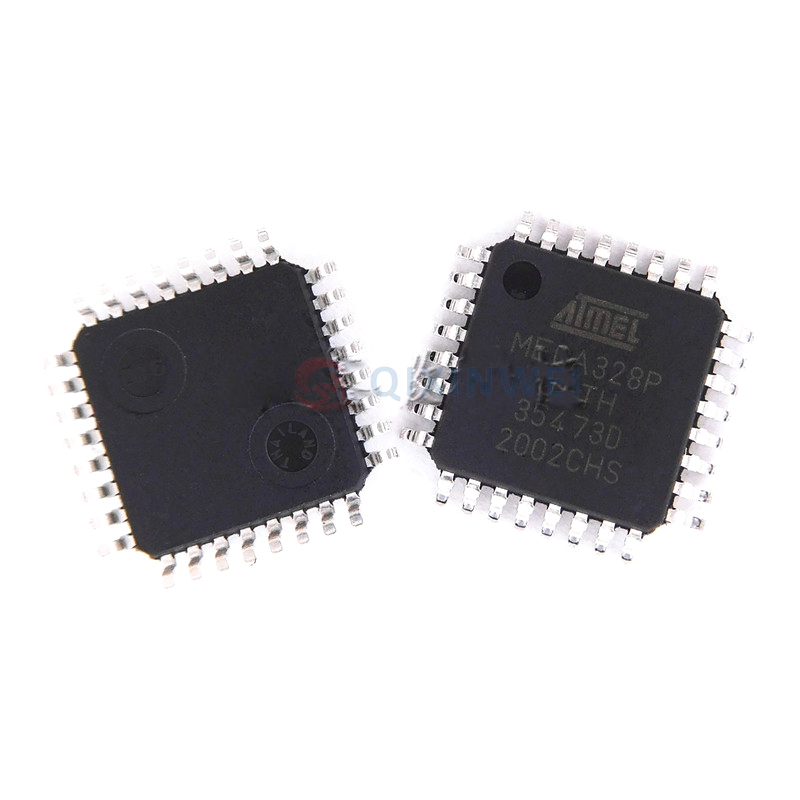
Unlike 8-bit microcontrollers like the ATmega328P found in Arduino Uno, STM32 devices offer significantly higher performance, larger memory, and a richer set of peripherals — all while maintaining excellent power efficiency. A typical STM32 microcontroller integrates a processor core, Flash memory, SRAM, and a wide range of I/O peripherals (GPIO, UART, SPI, I2C, ADC, DAC, timers, and more) into a single compact integrated circuit.
This is why you can find STM32 microcontrollers in industrial automation systems, robotics, medical instruments, smart home devices, electric vehicle battery management systems, drones, consumer electronics, and countless other applications. Since their introduction in 2007, STM32 has grown into one of the most widely used microcontroller families in the world, with thousands of part numbers across more than a dozen series.
STM32 Architecture: The ARM Cortex-M Core
At the heart of every STM32 microcontroller is the ARM Cortex-M processor core. The Cortex-M portfolio includes several architectures, each embedded in different STM32 series:
| Core | Instruction Set | Pipeline | MPU | Key Characteristics |
|---|---|---|---|---|
| Cortex-M0 | Armv6-M | 3-stage | No | Entry-level, ultra-low cost |
| Cortex-M0+ | Armv6-M | 2-stage | Yes | Enhanced low-power, cost-sensitive |
| Cortex-M3 | Armv7-M | 3-stage | Yes | Balanced performance, mainstream |
| Cortex-M4 | Armv7-M | 3-stage | Yes | DSP & FPU, mixed-signal |
| Cortex-M7 | Armv7-M | 6-stage | Yes | Highest performance, graphics |
| Cortex-M33 | Armv8-M Mainline | 3-stage | Yes | Security-enhanced, TrustZone |
| Cortex-M23 | Armv8-M Baseline | 2-stage | Yes | Ultra-low-power secure |
Key architectural features of STM32 microcontrollers include:
Nested Vectored Interrupt Controller (NVIC) — efficient interrupt handling with prioritized, low-latency responses
Wakeup Interrupt Controller (WIC) — detects interrupts and wakes the processor from sleep modes
Memory Protection Unit (MPU) — provides hardware memory protection for robust system design
Multiple low-power modes — enabling extended battery life in portable devices
STM32 Memory and Peripherals
Memory Configuration
STM32 microcontrollers come with different memory configurations tailored to various application requirements:
Flash memory — for program storage (from 16KB to 4MB, depending on the series)
SRAM — for runtime data storage (from 4KB to 2.5MB)
EEPROM — available on some models for non-volatile data storage
External memory interfaces — support for additional memory expansion
Peripheral Integration
One of the key strengths of STM32 microcontrollers is their extensive range of integrated peripherals:
GPIO — General Purpose Input/Output pins, organized into ports (PA, PB, PC, etc.)
USART/UART — for serial communication
SPI — high-speed serial peripheral interface
I²C — two-wire communication interface
ADC (Analog-to-Digital Converter) — for analog measurement
DAC (Digital-to-Analog Converter) — for analog output
Timers — for precise timing, PWM generation, and motor control
CAN — for automotive and industrial applications
USB — for host/device connectivity
Ethernet — for wired networking
Each GPIO pin can be configured in multiple modes: input, output, analog, or alternate function (AF) — allowing a single pin to serve different peripheral functions under software control.
STM32 Series Overview: Choosing the Right Family
The STM32 family is divided into several series, each targeting specific combinations of performance, power consumption, and cost.
F Series — The General-Purpose Workhorse
The STM32F series is the most widely used family. STM32F4 remains one of the most popular choices for general-purpose applications.
L Series — The Low-Power Specialist
The STM32L series is optimized for battery-powered devices, offering excellent low-power performance with features like multiple sleep modes and efficient wake-up.
H Series — The Performance Leader
The STM32H series delivers the highest performance, with clock speeds up to 600MHz and CoreMark scores exceeding 3,200.
G Series — The Cost-Effective Mainstream
The STM32G series offers a balance of performance and cost, making it ideal for cost-sensitive applications.
U Series — The Secure Choice
The STM32U series adds advanced security features including TrustZone, making it suitable for secure connected devices.
Wireless Series — Built-in Connectivity
The STM32WB and STM32WL series integrate wireless capabilities — Bluetooth LE, Zigbee, Thread, and LoRaWAN — directly on the chip.
STM32 vs ATmega: A Quick Comparison
Many engineers and makers transitioning from Arduino-based projects wonder how STM32 compares to the familiar ATmega platform:
| Feature | ATmega328P | STM32 |
|---|---|---|
| Architecture | 8-bit AVR | 32-bit ARM Cortex-M |
| Register Size | 8-bit | 32-bit |
| Clock Speed | 16 MHz | Up to 600 MHz |
| Flash | 32 KB | Up to 4 MB |
| SRAM | 2 KB | Up to 2.5 MB |
| Peripherals | Limited | Extensive (multiple UART, SPI, I2C, ADC, DAC, timers, etc.) |
| Power | 2.7–5.5V | 2–3.6V |
| Ecosystem | Arduino IDE | STM32CubeIDE, Keil, IAR, and more |
The STM32 is significantly more powerful than the ATmega328P, making it the preferred choice for complex, professional, and performance-demanding applications.
What Is STM32 Used For?
Industrial Automation and Control
Robotics
IoT Devices
Medical Instruments
Smart Metering and Building Automation
Consumer Electronics
Electric Vehicle Battery Management
Drones and UAVs
Signal Processing and Audio
FAQ:
Q1: What is STM32?
STM32 is a family of 32-bit microcontrollers developed by STMicroelectronics, based on the ARM Cortex-M processor architecture. They integrate a processor core, memory, and extensive peripherals on a single chip.
Q2: What does STM32 stand for?
STM stands for STMicroelectronics. The “32” refers to the 32-bit architecture. STM32 is the microcontroller unit series developed by STMicroelectronics.
Q3: What is the difference between STM32 and Arduino (ATmega)?
STM32 is a 32-bit ARM Cortex-M microcontroller family offering significantly higher performance, more memory, and richer peripherals. Arduino boards typically use 8-bit AVR microcontrollers like the ATmega328P. STM32 is better suited for complex, professional applications.
Q4: What peripherals does STM32 include?
STM32 microcontrollers include GPIO, USART/UART, SPI, I2C, ADC, DAC, timers, CAN, USB, and more.
Is STM32 a Good Choice?
The STM32 microcontroller family is one of the most important and widely used embedded platforms in the world because it solves a fundamental problem extremely well: providing high-performance, feature-rich, and power-efficient 32-bit processing for a vast range of applications.
But STM32 should not be viewed as a universal solution. For ultra-simple, cost-sensitive logic replacement, an 8-bit MCU may still be appropriate. For applications requiring even higher performance or complex operating systems, consider MPUs (microprocessors) rather than MCUs.
If you are developing a new electronic product, looking for STM32 microcontrollers, development boards, or other electronic components, or facing component shortages and need alternative parts, QIXINWEI can support component sourcing, BOM matching, model comparison, and supply-chain solutions. For engineering projects that require stable supply rather than simply the lowest unit price, selecting the right component configuration at the beginning can save much more time during testing and mass production.
0users like this.