Electronic components
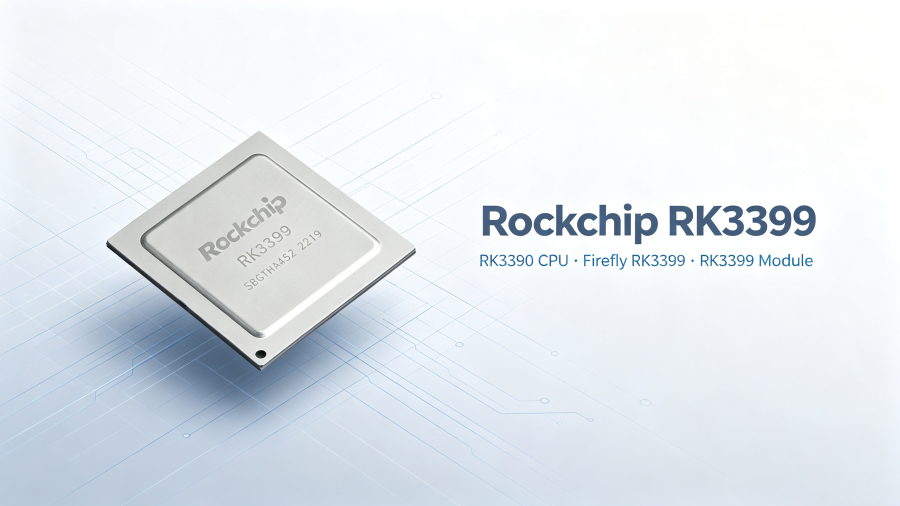
Rockchip RK3399: The Complete Guide to the Hexa-Core Powerhouse Behind Firefly RK3399 Boards and Modules
Rockchip RK3399: Complete Guide to the Hexa-Core ARM Cortex-A72/A53 SoC — Specifications, Firefly RK3399 Boards, RK3399 Modules (SoM), Development Boards Comparison, and Selection Tips for Industrial and AI Applications
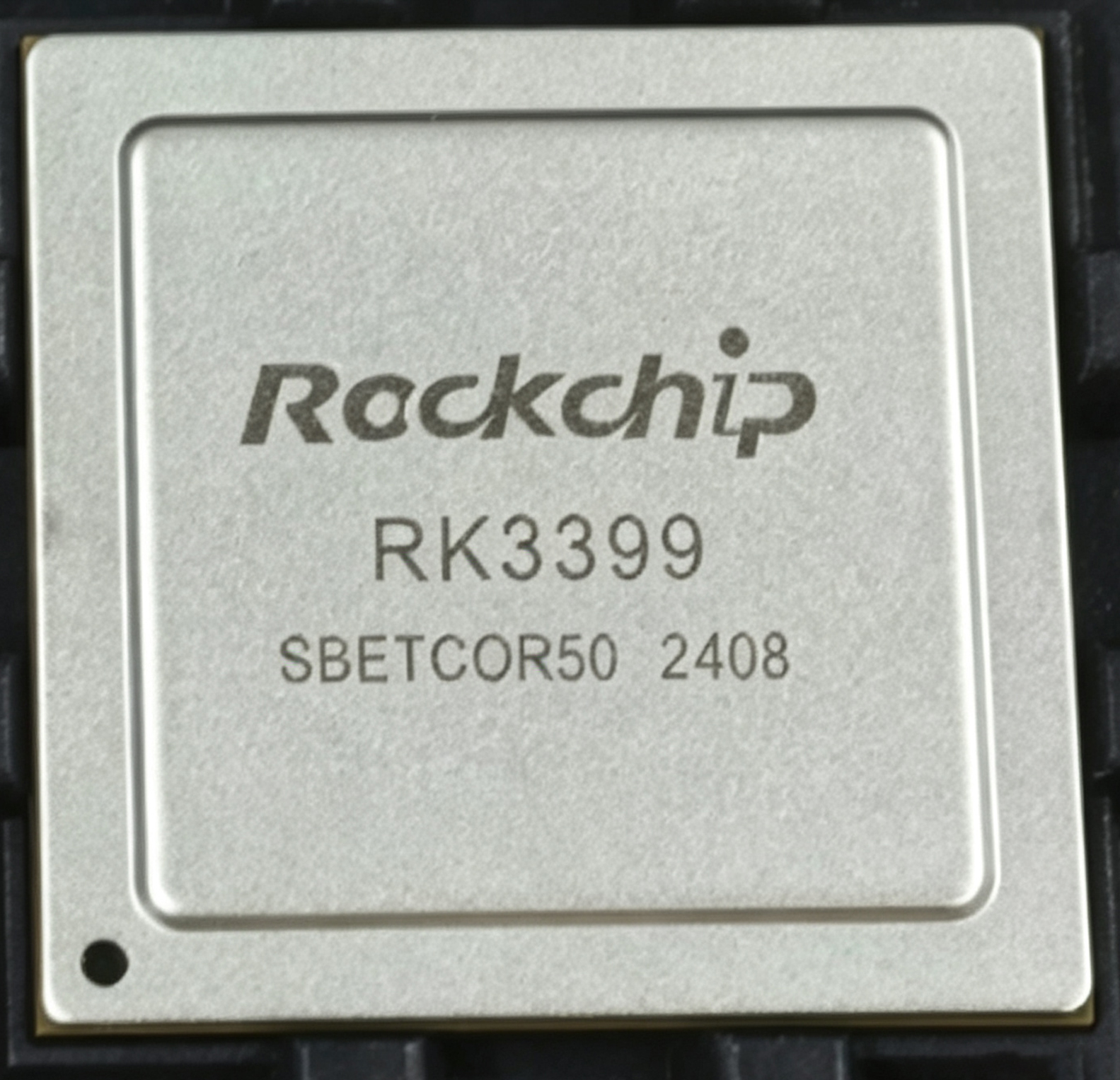
What Is the Rockchip RK3399?
If you are building an industrial control terminal, an AI edge computing gateway, a digital signage system, or any embedded application that demands both high performance and energy efficiency, you have likely encountered the Rockchip RK3399. So, what exactly is the RK3399 CPU, and why has it become one of the most respected processors in the embedded industry?
In simple terms, the Rockchip RK3399 is a high-performance, low-power hexa-core 64-bit processor designed for computing, personal mobile internet devices, and a wide range of smart device applications. It is built on ARM‘s big.LITTLE architecture, combining two Cortex-A72 cores (for high-performance tasks) with four Cortex-A53 cores (for energy-efficient tasks) into a single cohesive computing platform.
The RK3399 CPU integrates a Mali-T860 MP4 GPU for graphics rendering, supports 4K UHD video decoding at 60fps for H.265/H.264/VP9, and includes HDR10/HLG support. With dual-channel memory support (DDR3/DDR3L/LPDDR3/LPDDR4), dual USB 3.0 with Type-C, PCIe 2.1, and a rich set of display interfaces, the RK3399 is a remarkably versatile processor.
This is why you can find the Rockchip RK3399 in Firefly RK3399 boards, RK3399 modules (SoM), development boards, industrial control systems, AI edge gateways, digital signage, VR devices, facial detection systems, autonomous-driving prototypes, and countless other applications.
However, there is an important detail that is often overlooked: the RK3399 is not a single product but a platform available in multiple forms — from Firefly RK3399 boards and RK3399 modules to a diverse range of RK3399 boards from different manufacturers. Choosing the right form factor for your project is just as important as choosing the processor itself.
RK3399 CPU Specifications: The Hexa-Core Architecture
The RK3399 CPU is built around a big.LITTLE architecture that dynamically balances performance and power efficiency:
| Category | Specification |
|---|---|
| CPU | Dual-core Cortex-A72 (up to 1.8GHz) + Quad-core Cortex-A53 (up to 1.4GHz), 64-bit |
| Architecture | ARMv8-A, big.LITTLE |
| L1 Cache | 48KB I-cache + 32KB D-cache per A72 core; 32KB I-cache + 32KB D-cache per A53 core |
| L2 Cache | 1024KB for big cluster; 512KB for little cluster |
| GPU | ARM Mali-T864 MP4, supporting OpenGL ES1.1/2.0/3.0/3.1, OpenCL, and DirectX 11 |
| Memory | Dual-channel DDR3-1866/DDR3L-1866/LPDDR3-1866/LPDDR4 |
| Storage | eMMC 5.1 with HS400, SDIO 3.0 with HS200 |
| Video Decode | 4K VP9 and 4K 10-bit H.265/H.264 at up to 60fps |
| Video Encode | 1080P H.264/MVC/VP8 |
| Display | Dual VOP: 4096×2160 + 2560×1600; HDMI 2.0a (4K@60Hz with HDCP 1.4/2.2); DisplayPort 1.2; dual MIPI-DSI; eDP 1.3 |
| Camera | Dual MIPI-CSI with dual ISP, up to 13MP |
| USB | Dual USB 3.0 with Type-C, dual USB 2.0 |
| PCIe | PCIe 2.1 (4 full-duplex lanes, 20Gbps) |
| Audio | 8-channel I2S |
| Security | TrustZone/TEE/DRM |
| Package | FCBGA828, 21mm × 21mm, 0.65mm pitch |
The RK3399 CPU also includes an embedded low-power MCU for auxiliary applications, enabling advanced power management and always-on features.
Firefly RK3399: The Flagship Development Platform
When engineers search for an RK3399 board to begin development, Firefly RK3399 is one of the most recognized and widely adopted platforms in the market.
Firefly-RK3399 is positioned as a full-featured flagship development board, ideal for consumer electronics prototyping and complex scenario validation. It is built around the RK3399 hexa-core processor with dual Cortex-A72 at 2.0GHz and quad Cortex-A53 at 1.5GHz, paired with the Mali-T860 GPU.
Firefly-RK3399 Key Features:
Multi-display support — dual MIPI, HDMI, eDP, and DisplayPort interfaces with dual-screen display capability
High-performance peripherals — 1× USB 3.0, 1× PCIe M.2 (M-Key) for extending NVMe SSDs
Multiple network interfaces — dual-band WiFi, Bluetooth 4.1, Gigabit Ethernet, and Mini PCIe for 3G/4G modules
Rich OS support — Android 10, Ubuntu 20.04, and Linux with complete SDK and open-source community support
Flexible storage — eMMC 5.1 (8GB/16GB/32GB/128GB options), MicroSD, and NVMe SSD expansion
Core-3399J — The Firefly RK3399 Module (SoM)
For projects requiring a more compact, integration-ready form factor, Firefly offers the Core-3399J, a system-on-module (SoM) featuring the same RK3399 hexa-core processor. The Core-3399J supports multi-channel display (dual MIPI, HDMI, eDP, DisplayPort), dual-screen display, and includes a high-speed MXM3.0 connector (314-pin, 0.5mm pitch) for carrier board integration.
Users only need to expand a functional carrier board to quickly realize project production — making the Core-3399J an ideal RK3399 module for volume deployment.
RK3399 Module (SoM): Compact Power for Embedded Design
An RK3399 module — also called a System-on-Module (SoM) — packages the RK3399 CPU, memory, storage, and essential power management into a compact, connector-ready form factor. This allows engineers to design custom carrier boards for their specific application without redesigning the complex processor core each time.
Several notable RK3399 modules are available in the market:
SOM-RK3399 (FriendlyElec)
The SOM-RK3399 is a 260-pin high-performance ARM module measuring just 69.6 × 50 mm. It features 2GB DDR3 RAM, 16GB eMMC flash, onboard 2×2 MIMO dual-antenna WiFi, and native Gigabit Ethernet. The module has an independent Type-C power port and USB-C display port, meaning it can work standalone without a carrier board. It supports Android 8.1, Ubuntu 18.04, Armbian, and Buildroot, and includes NN SDK packages for neural networks, making it a perfect platform for startups developing facial detection, machine vision, VR, autonomous-driving, and deep learning applications.
Core-3399J (Firefly)
Firefly‘s Core-3399J uses an MXM3.0 connector (314-pin) and supports DDR3 (1GB/2GB/4GB) and eMMC 5.1 (8GB–128GB). It integrates the RK808 PMU for advanced power management and supports Android 7.1, Ubuntu 16.04, and Linux.
FET3399-C (Forlinx)
The FET3399-C is a system-on-module designed around the RK3399 processor, featuring dual Cortex-A72 at up to 1.8GHz and quad Cortex-A53 at up to 1.4GHz.
RK3399-Q7 (Theobroma Systems)
The RK3399-Q7 is a Qseven-compatible (70mm × 70mm, MXM-230 connector) SoM from Theobroma Systems.
ROM-5780 (Advantech)
The ROM-5780 is a SMARC 2.1 COM (Computer-on-Module) standard module based on the RK3399 Cortex-A72+A53 SoC.
When to Choose an RK3399 Module:
You need custom I/O and form factor for your product
You are designing for volume production and want to minimize development risk
You require long-term supply stability with a well-defined upgrade path
Your application demands compact integration in tight spaces
RK3399 Board Selection Guide: Which Platform Is Right for You?
The market offers a diverse range of RK3399 boards, each targeting different use cases and budgets. Here is a comparison of the most popular options:
| Board | Positioning | Key Features | Best For |
|---|---|---|---|
| Firefly-RK3399 | Full-featured flagship | PCIe 2.1, NVMe SSD support, dual-band WiFi 5, Android 10/Ubuntu 20.04, complete SDK | Consumer electronics prototyping, VR, industrial control terminals |
| iTOP-RK3399 | Industrial-grade | 4GB DDR4 + 16GB eMMC, EMC tested, -20°C~85°C, 10+ year supply cycle | Automotive, medical instruments, smart gateways |
| Orange Pi RK3399 | High cost-performance | 2GB/4GB DDR3, SATA + SSD expansion, gyroscope, compact size (60×45mm) | Education, makers, smart home, robotics |
| Khadas Edge1 | Modular edge computing | 314-pin gold connector, stacking expansion, dual independent display, hardware encryption | AI inference, cluster deployment, edge computing |
Advantages of Rockchip RK3399
- High-performance RK3399 CPU: The A72+A53 big.LITTLE architecture delivers much stronger computing power than entry-level Rockchip processors.
- Complete open-source ecosystem: Firefly RK3399 provides well-supported Android and Linux firmware, extensive documentation and community resources for both RK3399 module and RK3399 board users.
- Rich high-speed interfaces: PCIe, dual USB3.0, SATA, dual MIPI CSI make the RK3399 CPU flexible for camera, storage and network expansion.
- Stable 4K multimedia processing: Hardware video decode and encode engine handles multi-channel video workloads smoothly.
- Flexible development path: Prototype on RK3399 board, then switch to RK3399 module for mass production with minimal redesign work.
What Is the Rockchip RK3399 Used For?
The RK3399 CPU and its associated boards and modules are deployed across a remarkably wide range of industries:
1. Industrial Control and Automation
2. AI Edge Computing and Machine Vision
3. Digital Signage and Interactive Kiosks
4. VR and AR Devices
5. Smart Retail and POS Systems
6. Medical and Healthcare Devices
FAQs:
Q1: What is the Rockchip RK3399?
The Rockchip RK3399 is a hexa-core 64-bit processor based on ARM’s big.LITTLE architecture, featuring dual Cortex-A72 cores and quad Cortex-A53 cores, with a Mali-T860 MP4 GPU and support for 4K video decoding.
Q2: What is the difference between RK3399 and RK3328?
The RK3399 is a hexa-core processor with Cortex-A72 + A53 cores and Mali-T860 GPU, targeting high-performance applications. The RK3328 is a quad-core Cortex-A53 processor with Mali-450MP2 GPU, targeting cost-effective multimedia applications.
Q3: What is Firefly RK3399?
Firefly RK3399 is a full-featured flagship development board based on the RK3399 hexa-core processor, with PCIe 2.1, NVMe SSD support, dual-band WiFi 5, and complete SDK for Android and Ubuntu.
Q4: What is an RK3399 module?
An RK3399 module (SoM) packages the RK3399 CPU, memory, storage, and power management into a compact, connector-ready form factor. Examples include SOM-RK3399 (FriendlyElec), Core-3399J (Firefly), and FET3399-C (Forlinx).
Q5: Which RK3399 board should I choose?
Consumer prototyping: Firefly-RK3399
Industrial applications: iTOP-RK3399 (wide-temp, 10+ year supply)
Cost-sensitive projects: Orange Pi RK3399
Edge AI: Khadas Edge1 or SOM-RK3399
Custom product design: RK3399 module (SoM) + custom carrier board
The Rockchip RK3399 remains one of the most respected and widely deployed embedded processors in the industry because it solves a fundamental problem extremely well: delivering high-performance hexa-core computing with excellent power efficiency and a rich peripheral set.
For a Firefly RK3399 board project, an RK3399 module for custom product design, or any RK3399 board application, the platform offers:
Hexa-core big.LITTLE CPU — dual Cortex-A72 + quad Cortex-A53 for balanced performance
Mali-T860 MP4 GPU — capable graphics with OpenCL support
4K HDR video — VP9/H.265/H.264 decoding at 60fps
Rich connectivity — dual USB 3.0 Type-C, PCIe 2.1, Gigabit Ethernet, HDMI 2.0a, DisplayPort 1.2
Mature software ecosystem — Android, Ubuntu, Debian, Buildroot, Armbian
AI-ready — NN SDK packages and GPU acceleration for edge inference
Diverse form factors — development boards, modules (SoM), and industrial-grade platforms
If you are developing a new embedded product, looking for Rockchip RK3399 processors, Firefly RK3399 boards, RK3399 modules (SoM), or other electronic components, or facing component shortages and need alternative parts, QIXINWEI can support component sourcing, BOM matching, model comparison, and supply-chain solutions. For engineering projects that require stable supply rather than simply the lowest unit price, selecting the right component configuration at the beginning can save much more time during testing and mass production.
0users like this.